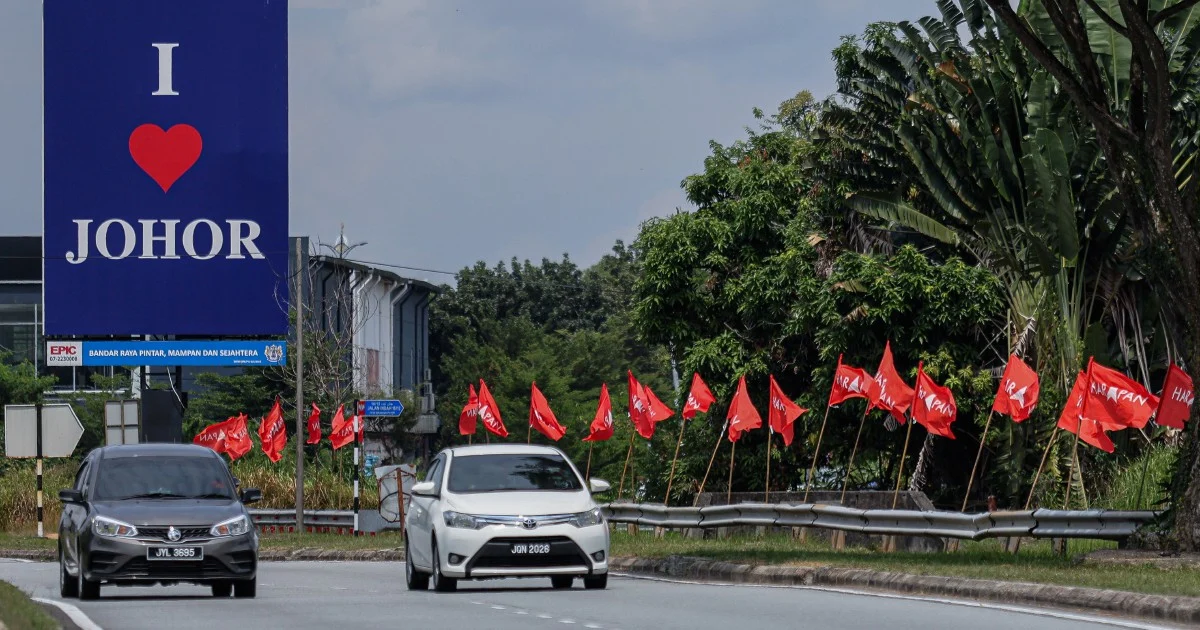
The upcoming Johor election represents far more than a straightforward battle to determine who will occupy the state's top administrative position, according to perspectives emerging from within the PKR youth movement. Rather than allowing public discourse to narrow around the menteri besar candidate, party representatives are positioning the contest as a comprehensive assessment of competing coalitions' capabilities, strategic thinking, and commitment to advancing the state's broader prosperity and social agenda.
This reframing carries significant implications for how Malaysian voters approach electoral calculations in Johor, a state whose economic performance and governance directly influence the national economy. The shift in emphasis reflects a growing recognition that state elections have become increasingly complicated affairs, where voter attention gets fragmented across multiple contests simultaneously. By highlighting the importance of examining institutional capacity and policy platforms, PKR youth leaders are attempting to elevate the conversation beyond personality-driven politics that has historically dominated local campaigns.
Johor's position as Malaysia's second-most populous state and a major industrial hub means its governance decisions ripple across the region. The state has long served as an economic engine, hosting significant petrochemical operations, port facilities, and agricultural production. Economic stability and strategic planning at the state level therefore carry consequences for businesses, workers, and communities across Southeast Asia's broader trading networks. A government focused on comprehensive development strategy rather than short-term patronage politics could substantially influence regional competitiveness.
The PKR youth perspective suggests that voters should scrutinise each coalition's detailed proposals for infrastructure development, human capital investment, and sectoral diversification. Johor faces specific challenges—including ageing manufacturing capacity in certain sectors, the need to transition toward higher-value industries, and demographic pressures in both urban and rural areas. Different coalitions may propose starkly different approaches to these issues, yet such distinctions often disappear when campaigns become personality-centred contests.
There exists a practical dimension to this argument that resonates particularly with younger voters and professionals in Johor's growing service sector. A menteri besar functions within institutional frameworks shaped by cabinet appointments, budgetary constraints, and legislative majorities. The quality of surrounding team members—including state secretaries, state assemblymen representing key constituencies, and department heads—substantially determines a government's execution capacity. An electoral contest that ignores these supporting players essentially ignores the machinery through which policy actually gets implemented across constituencies.
PKR's framing also addresses a structural feature of Malaysian politics that sometimes frustrates voters: the degree to which state elections become referendums on national political dynamics rather than genuine evaluations of state-level governance. By insisting that the Johor contest concerns state-specific development questions, the party's youth wing is making an implicit argument about democratic legitimacy. Voters who feel disconnected from national political theatre may reconnect with electoral participation when they perceive concrete local stakes involving investment priorities and service delivery standards.
The coalition approach highlights how modern state governance has grown increasingly complex and specialised. Education policy, industrial regulation, healthcare provision, and environmental management increasingly require technical expertise and coordination across multiple agencies. A menteri besar's personal qualities, while certainly important, represent only one element among numerous factors determining whether a state government delivers tangible improvements in residents' living standards. Examining coalition composition allows voters to assess whether candidates surrounding the chief minister bring relevant experience in these critical domains.
This strategic messaging also reflects competition within Malaysia's broader political landscape. As different coalitions negotiate power-sharing arrangements and candidate selections, they often highlight their internal diversity and the talent they can mobilise across portfolios. By validating this coalition-level discussion, PKR youth leaders are essentially arguing that voters should reward political arrangements that distribute leadership responsibilities broadly rather than concentrating power around individual personalities.
For Malaysian business communities watching Johor electoral dynamics, the emphasis on development planning and team capability carries particular relevance. Investors consistently identify political stability and coherent long-term strategy as crucial factors in location decisions. A state election campaign that foregrounds infrastructure plans, skills development initiatives, and sectoral growth targets provides valuable insight into whether subsequent governments will maintain strategic focus or become distracted by internal political management.
The PKR youth position also implicitly acknowledges that menteri besar candidates themselves carry baggage—whether previous governance records, personal controversies, or limited visibility outside their immediate constituencies. Rather than defending specific individuals, the party's youth wing is advancing an alternative evaluation framework. This approach permits supporters to acknowledge candidate imperfections while maintaining coalition loyalty on the basis of superior overall team strength and policy direction.
As Johor voters approach this election, the question becomes whether they will accept this reframing or remain focused on the traditional personality-centred contest. Historically, Malaysian state elections have often turned on leadership personalities and ethnic-religious appeals. However, growing economic complexity, younger voter demographics, and improved political information access may create receptivity to arguments emphasising institutional capacity and policy substance. The PKR youth intervention suggests a deliberate attempt to shift electoral terrain toward criteria favouring their coalition's particular strengths.
Ultimately, whether this expanded evaluation framework gains traction will help determine not merely who governs Johor, but also whether future Malaysian state elections become increasingly policy-focused affairs or continue operating primarily around leadership personalities and narrow partisan appeals.

