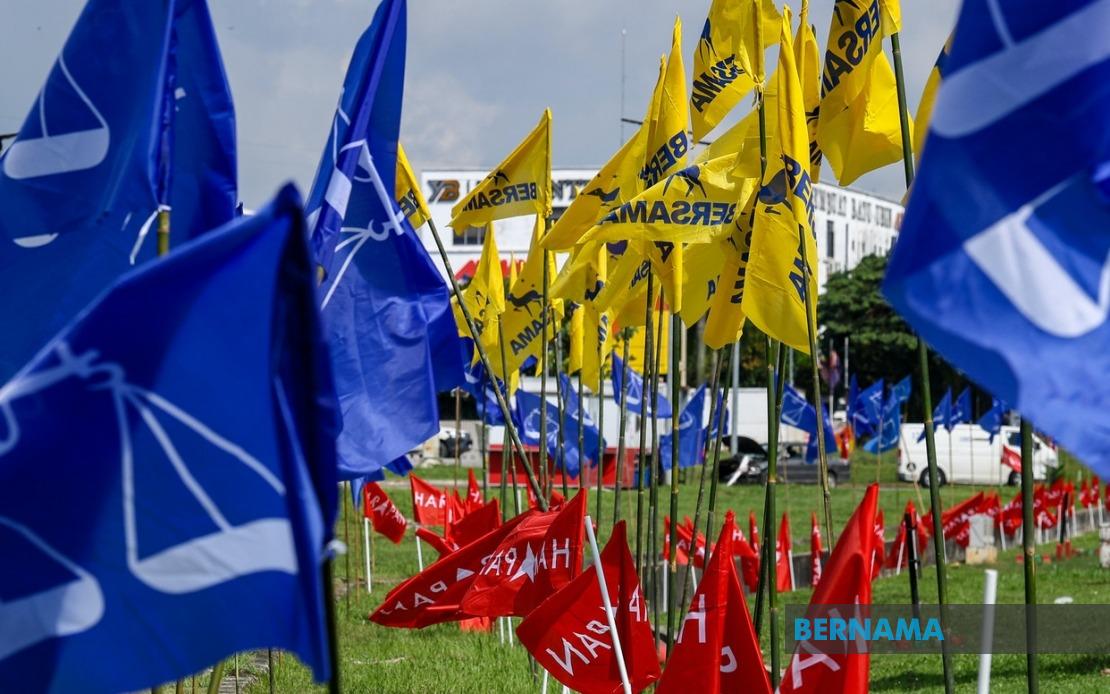
With 172 candidates vying for 56 seats in Johor's 16th state election set for this Saturday, political observers have stressed the importance of maintaining civility and substance throughout the campaign period. Rather than allowing competition to devolve into personal attacks and inflammatory rhetoric, analysts argue that voters deserve a genuine contest of ideas focused on the state's pressing challenges and each party's capacity to address them effectively.
Prof Datuk Dr Awang Azman Awang Pawi from Universiti Malaya, a leading sociopolitical analyst and fellow of the Malaysia National Civics Academy, contends that the electoral contest offers an opportunity for meaningful democratic engagement. He believes parties should use this platform to articulate their respective visions for Johor's development, comparing their policy platforms transparently and demonstrating their ability to manage state resources, generate investment, and connect with voters across urban and rural constituencies. This approach would allow genuine differentiation based on substantive governance proposals rather than personalised attacks that serve no constructive purpose.
The key concern raised by both analysts is the potential for campaign-related animosity to spill over into federal politics. Malaysia's complex coalition arrangements mean that parties competing fiercely in Johor will likely continue working together at the national level in Parliament, Cabinet positions, and federal policy-making structures. Awang Azman emphasises that while healthy political competition remains fundamental to democracy, it must be conducted with mutual respect and restraint, ensuring that campaigning does not sever the cooperative bridges necessary for effective national governance.
According to Awang Azman, parties should concentrate debates on issues directly affecting Johor residents' wellbeing: the cost of living crisis, employment opportunities, housing affordability, public transportation development, and social welfare provisions. These substantive topics offer clear differentiation without requiring politicians to resort to inflammatory identity-based attacks or portrayal of federal partners as existential enemies. Such framing would only confuse voters and complicate post-election coalition arrangements when rivals must suddenly become colleagues.
Specific policy areas merit particular attention in Johor's electoral discourse. The development of the Rapid Transit System Link, the Johor-Singapore Special Economic Zone, border-region economic strategies, technical education expansion, and congestion management all represent legitimate grounds for competitive debate. Each party can articulate distinct approaches to these challenges, demonstrating their administrative competence and forward-thinking strategies without compromising relationships with potential coalition partners or attacking the fundamental legitimacy of competing political organisations.
Dr Norman Sapar, a political analyst observing the campaign, concurs with this assessment while noting that campaign dynamics have remained relatively restrained so far. He observes that Johor's established political culture emphasises courtesy and indirect criticism rather than confrontational exchanges. This represents a positive development suggesting that the state's political actors understand the connection between state-level competition and national-level stability. However, this encouraging trajectory requires conscious maintenance throughout the remaining campaign period to prevent escalation as polling day approaches.
Norman defines political maturity differently from conventional notions that equate aggressive rhetoric with strong leadership. Rather, he argues that genuine maturity emerges when politicians demonstrate capacity to manage disagreements without compromising broader national interests. The true test comes not from who delivers the loudest attacks, but from who offers the most practical solutions to everyday voter concerns. This framing rewards substantive policy development over sensationalism, encouraging parties to invest intellectual capital in genuine problem-solving rather than theatrical confrontation.
The analyst observes that contemporary Johor voters increasingly possess the sophistication to distinguish between state-level electoral competition and the necessity for federal-level political stability. This voter maturity creates electoral incentives favouring parties that emphasise solutions and administrative performance over those relying primarily on opponent criticism. Campaigns maintaining this focus on voter welfare and practical governance tend to receive more favourable public reception than those fixated on attacking rivals, suggesting that responsible campaign strategies also serve parties' electoral interests.
Boundaries for acceptable campaign conduct, as outlined by Awang Azman, should explicitly exclude personal attacks, accusations based on race or religion, and rhetoric questioning the fundamental legitimacy of political competitors. These thresholds protect democratic norms while still permitting vigorous policy competition. Respecting such boundaries proves essential because post-election collaboration between current rivals will prove necessary regardless of Saturday's outcome. Political wounds running too deep during campaigning create lasting damage to working relationships, reducing governmental effectiveness when former competitors must jointly address national challenges in federal institutions.
The broader Malaysian context adds significance to Johor's electoral approach. As a state representing important economic significance and internal political diversity, how Johor's parties conduct this campaign may establish precedent for future state and federal elections. Demonstrating that robust democratic competition need not entail corrosive personal animosity or federal-level sabotage would provide valuable evidence that Malaysian democracy can sustain both healthy disagreement and necessary collaboration. Conversely, allowing campaign hostility to poison federal cooperation would suggest democracy functions only when one coalition dominates completely, contradicting principles of parliamentary government requiring organised opposition and coalition governance.
For Malaysian and Southeast Asian readers watching these dynamics, Johor's election represents a test case for navigating the tensions inherent in Westminster-style democracy combined with Malaysia's specific coalition requirements. The question becomes whether political competition can remain sufficiently robust to prevent complacency and corruption while remaining sufficiently restrained to permit the cross-party cooperation that modern governance increasingly demands. The coming days will reveal whether Johor's political actors rise to this challenge or allow short-term electoral advantage to undermine longer-term national stability and effectiveness.

