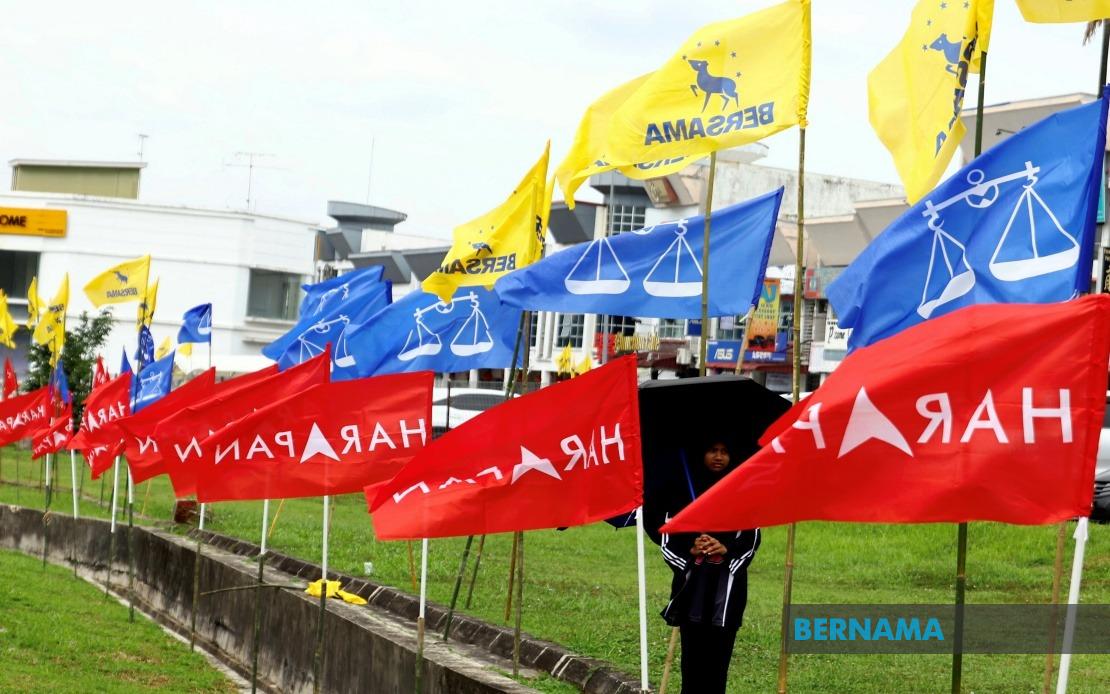
The race to shape Johor's governance for the next five years enters its decisive phase as political campaigning draws to a close tonight at 11.59 pm, ending a fortnight of relentless political mobilisation across the southern Malaysian state. Starting tomorrow morning at 8 am, voters will stream to 1,076 polling stations to determine the leadership landscape among 172 candidates vying for 56 state assembly seats—a notably reduced field from the 239 contenders who competed in the previous state election cycle.
The campaign period, which commenced on June 27, has witnessed an intense parade of political messaging from Malaysia's major coalitions and parties. Prime Minister Datuk Seri Anwar Ibrahim, leading Pakatan Harapan, and Deputy Prime Minister Datuk Seri Dr Ahmad Zahid Hamidi, steering Barisan Nasional, have both personally injected momentum into their respective campaigns during the final push. Their presence signals the elevated stakes this election carries, particularly given its implications for the fragile political equilibrium at both state and federal levels.
Economic concerns have dominated much of the campaign narrative, with political actors consistently prioritising discussions around the rising cost of living, employment generation, economic revitalisation, and targeted welfare provisions. These bread-and-butter issues reflect voter anxieties that transcend typical partisan divides, suggesting that whichever coalition emerges victorious will face immediate pressure to demonstrate tangible economic relief measures. The emphasis on these practical concerns rather than abstract political ideology indicates a maturing electorate focused on demonstrable governance outcomes.
With approximately 2.7 million eligible voters across the state, the Election Commission anticipates that comprehensive election results will be available by 10 pm tomorrow evening. An earlier voting process was already completed last Tuesday, when 20,607 members of the Malaysian Armed Forces, Royal Malaysia Police, General Operations Force, and their spouses cast early ballots—a procedural measure that acknowledges the operational requirements of security personnel unable to vote during regular polling hours.
Political analyst Dr Nazreena Mohammed Yasin from Universiti Tun Hussein Onn Malaysia emphasises that voter turnout will function as a crucial barometer for translating campaign enthusiasm into actual electoral support. She cautions, however, against treating turnout as a universal predictor, noting instead that its influence varies significantly across different constituencies and demographic clusters. In certain marginal seats with tightly-contested races, elevated participation could prove decisive, whereas in already-secured constituencies, turnout fluctuations may have minimal electoral impact. The 2022 Johor election witnessed an overall turnout of 54.92 per cent, providing a benchmark for assessing tomorrow's participation levels.
Beyond raw turnout figures, Dr Nazreena identifies party machinery efficiency as critical to electoral success, particularly in closely contested constituencies where ground-level organisation directly translates into votes. She also spotlights the role of fence-sitter voters—those who remain undecided until voting day—whose last-minute choices could prove outcome-determining in races with narrow victory margins. Changes in electoral victory margins between this election and its predecessor will offer analytical insight into whether political parties have consolidated, lost, or shifted voter support since the previous contest.
Associate Professor Dr Mazlan Ali from Universiti Teknologi Malaysia observes that both major coalitions have centred their campaigns heavily around political stability messaging, reflecting broader preoccupations with institutional equilibrium following Malaysia's recent political volatility. The comparative emphasis on stability narratives reveals how both Barisan Nasional and Pakatan Harapan are leveraging their respective federal and state-level track records as electoral assets. Notably, both coalitions have fielded exactly 56 candidates each, dominating the contest alongside Perikatan Nasional's 33 candidates, Parti Bersama Malaysia's 15, and smaller contingents from MUDA, Parti Orang Asli Malaysia, Parti Sosialis Malaysia, plus six independent contenders.
Dr Mazlan further notes that while detailed manifestos and policy pledges have circulated throughout the campaign, voters increasingly evaluate political parties based on their demonstrated performance in government and verifiable delivery on previous promises. This voter sophistication suggests that rhetorical campaigns matter less than substantive governance records. The heightened public engagement surrounding this election, he predicts, should contribute to above-average voter participation, amplifying the significance of individual votes in determining Johor's trajectory.
The electoral landscape carries particular weight because Johor's governance directly affects the stability of Malaysia's federal political settlement. Before the dissolution of the Johor State Legislative Assembly on June 1, Barisan Nasional controlled 40 seats, Pakatan Harapan held 12, Perikatan Nasional occupied three, and MUDA claimed one. This distribution meant neither major coalition held a simple majority, rendering the state assembly vulnerable to shifting coalitions and potential instability. Tomorrow's results will reveal whether voters have sought to strengthen one coalition's position or whether they intend to maintain a more balanced, competitive assembly structure.
Perhaps most significantly for Malaysian readers beyond Johor's borders, this election functions as a referendum on the broader Unity Government framework established at the federal level. A decisive victory for either Pakatan Harapan or Barisan Nasional could strengthen that coalition's negotiating position, while a fragmented result might reinforce existing political pluralism. The implications extend beyond state-level administration to encompass Malaysia's overall political direction and institutional stability in the coming years.

