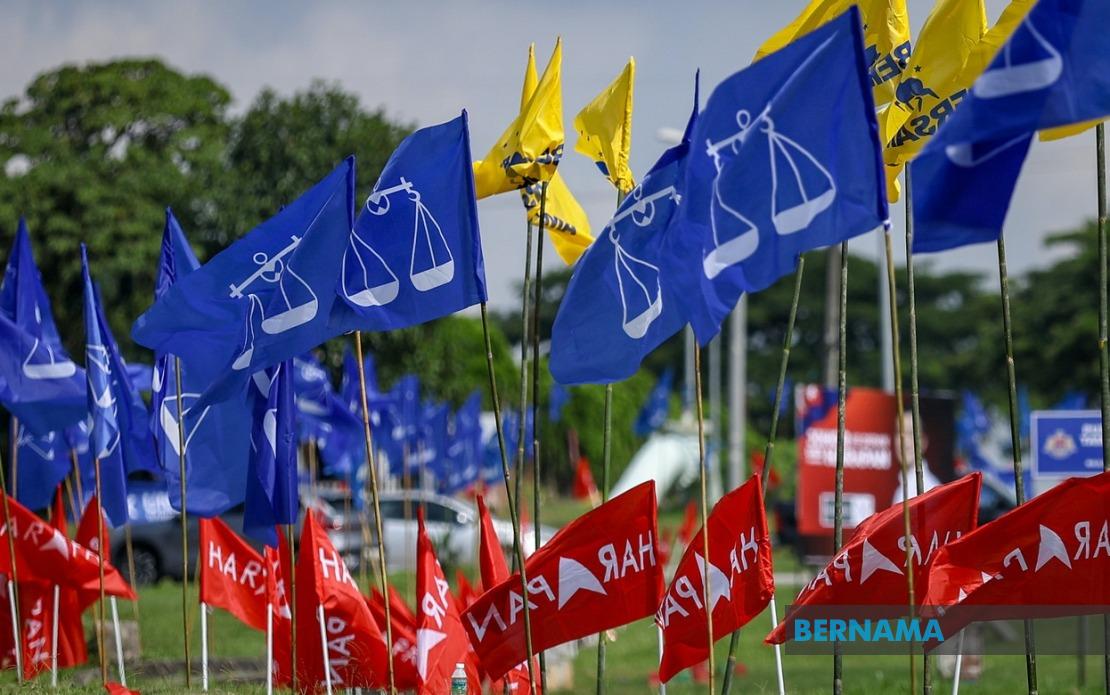
The Johor State Election Dialogue will move forward on July 7 at the RTM Auditorium in Johor Bahru despite the anticipated absence of Menteri Besar Datuk Onn Hafiz Ghazi, who is unable to clear his schedule for the event. Jointly arranged by three major Malaysian media organisations—RTM, Astro AWANI and Sinar Harian—the televised forum represents a significant platform for electoral discourse in one of the country's most politically consequential states. Beginning at 8 pm, the session is designed to give candidates space to articulate their competing visions for Johor's future, though the Menteri Besar's non-attendance will inevitably reshape the conversation's character and depth.
Onn Hafiz's empty chair carries considerable symbolic weight in the context of Johor's electoral calendar. As the sitting Menteri Besar leading the Barisan Nasional slate, his participation would have anchored the BN narrative at a critical juncture. Instead, the dialogue will feature Communications Minister Datuk Fahmi Fadzil representing the federal government perspective, while Dr Maszlee Malik, the Pakatan Harapan candidate for the Puteri Wangsa state seat, will advance the opposition's policy agenda. This configuration creates an imbalance that observers have already noted; the absence of the chief state executive undercuts the government side's ability to defend its record comprehensively and field direct questions about state administration.
A spokesperson for Onn Hafiz confirmed the Menteri Besar's non-participation, stating plainly that he was not listed in the programme schedule. The brevity of the response suggested the matter had been settled well in advance rather than emerging as a last-minute cancellation. Media organisations RTM, Astro AWANI and Sinar Harian had formally extended invitations to both Onn Hafiz and Maszlee weeks earlier, clearly signalling the importance they attached to this dialogue within the broader election campaign narrative. That Onn Hafiz's team chose not to adjust his commitments to accommodate what would normally be considered a high-profile engagement raises questions about prioritisation in the final stages of campaigning.
The Johor Information Department is expecting approximately 200 participants drawn from multiple government departments, agencies and MADANI Communities network groups. This carefully curated audience composition reflects an attempt to create a representative sample of stakeholder perspectives within a managed environment. The presence of officials and community representatives alongside the formal candidates creates a semi-formal setting that differs markedly from open public forums, potentially limiting the range of spontaneous questioning that might occur in less structured venues. Such dialogue formats in Malaysia have become increasingly important instruments for parties to communicate their platforms directly to engaged segments of the electorate.
The timing of this forum places it directly within the critical pre-election window. The 16th Johor State Election will see 172 candidates competing across 56 seats, representing a substantial electoral undertaking that will test all participating coalitions. Early voting is scheduled for July 7—the same day as the dialogue—while general polling follows on July 11. This compressed timeline means the dialogue serves as one of the final opportunities for parties to make substantive cases to voters before ballots are cast. The convergence of early voting with the dialogue itself suggests some segments of the electorate will have already voted before hearing the candidates' formal presentations, potentially limiting the dialogue's immediate electoral impact.
For Pakatan Harapan, the dialogue represents a crucial chance to amplify messaging in a state where the opposition has steadily gained ground but still faces an entrenched Barisan Nasional advantage. Dr Maszlee Malik's participation allows the coalition to demonstrate it has credible candidates with policy credentials capable of articulating substantive alternatives. The Puteri Wangsa state seat is among the constituencies where opposition momentum has been building, and a strong dialogue performance could reinforce support in such battlegrounds. Conversely, the PH campaign benefits from the BN's apparent failure to field its top leadership, an asymmetry that the opposition will certainly seek to exploit in subsequent campaign messaging.
The structure and focus of the dialogue—intended as a one-hour forum presenting vision, policies, priorities and solutions to issues affecting Johor residents—suggests organisers are aiming for substantive policy discussion rather than personalised attacks. This format preference reflects a broader Malaysian media trend toward elevating campaign discourse beyond personality-driven politics, though the actual quality of exchange will depend significantly on moderator direction and participant discipline. Three media organisations collaborating on such a dialogue indicates significant resources behind production values, likely ensuring professional presentation and audience engagement mechanisms.
Onn Hafiz's absence must be understood within the broader context of Johor state politics, where the Menteri Besar has cultivated a particular leadership style emphasising grassroots engagement and direct constituent interaction. His campaign approach has prioritised one-on-one and small-group settings over large-scale formal forums, a strategy that may reflect both personal preference and perceived electoral advantage in a state where traditional BN machinery remains powerful. However, skipping a nationally televised dialogue during an election campaign inevitably invites scrutiny about his confidence in defending the government's record or his willingness to engage opposition candidates in substantive debate.
The political implications for Malaysian electoral culture are worth considering. When sitting chief executives absent themselves from formal election dialogues, it sends signals about how seriously state-level campaigns prioritise public discourse versus tactical positioning. It also highlights the asymmetric nature of campaign engagement, where different candidates may adopt vastly different levels of public forum participation. The Johor dialogue, despite its reduced star power without the Menteri Besar, will still constitute an important documented exchange for voters seeking to distinguish between competing visions for the state's direction on education, economic development, urban management and social services.
For Southeast Asian observers and Malaysian political analysts, the Johor State Election itself represents significant data about voter preferences and coalition dynamics at the state level. Johor's size, economic importance and electoral competitiveness make it a bellwether for broader national political trends. The dialogue, even modified by one key participant's absence, provides insight into how parties are positioning themselves around key policy areas. The results of the July 11 polling will offer clearer indication of whether the opposition's growing appeal in the state translates into substantial seat gains or whether traditional BN advantages, reinforced by ground organisation and incumbent resources, prove decisive.
The July 7 dialogue will ultimately serve as a partial record of how the competing coalitions chose to present their cases during this critical electoral moment in Johor. Viewers will witness the opposition's substantive policy pitch through Dr Maszlee and the federal government's perspective via Communications Minister Fahmi Fadzil, but they will notably not experience direct exchange with the state government's chief executive—a conspicuous gap that may itself become a campaign talking point in the final days before voting.

