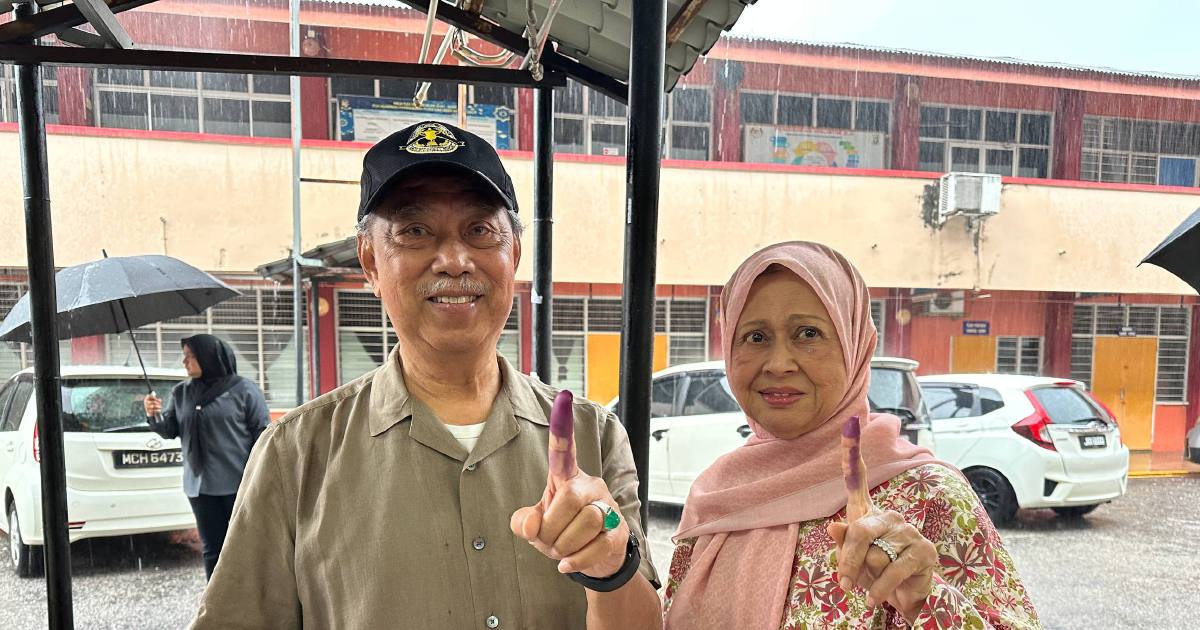
Voting is underway across Johor as political parties monitor participation levels, with Bersatu officials expressing optimism that the state election will draw more than 70 per cent of eligible voters to the polls despite wet weather conditions affecting multiple areas this morning.
Johor's political landscape has undergone significant shifts in recent years, with successive state elections drawing varying levels of public participation. The 70 per cent threshold represents a substantial engagement level in Malaysian electoral terms, suggesting healthy democratic participation and indicating that weather disruptions have not substantially deterred voters from fulfilling their civic duty.
Rain began falling heavily across several districts in Johor early in the polling day, potentially impacting voter accessibility and logistics for election day operations. Such weather patterns have historically influenced turnout figures in previous elections, as inclement conditions can reduce last-minute voting activity and complicate transportation for voters in more remote constituencies. The fact that Bersatu leadership remains confident despite these conditions suggests internal polling data or organisational assessment indicates resilience in voter motivation.
The party's public projection of high turnout carries political significance beyond mere statistics. Strong participation numbers can lend legitimacy to electoral outcomes and provide winning coalitions with a sense of popular mandate. For Bersatu, which has navigated complex coalition arrangements and internal party dynamics, achieving elevated voter engagement helps reinforce its claim to represent substantial segments of the Johor electorate.
State elections in Malaysia serve as crucial barometers of political sentiment between federal electoral cycles. The Johor contest provides early indication of voter preferences and can influence political calculations at the national level. The state's economic importance—as home to major industrial zones, ports, and manufacturing hubs—means its political composition carries weight beyond state governance, affecting federal-level coalition stability and policy directions.
Historical voting patterns in Johor reveal fluctuating turnout rates influenced by various factors including electoral competitiveness, campaign intensity, and public perception of election significance. When voters perceive contests as consequential or closely fought, participation typically increases. Bersatu's optimistic projection suggests the party assesses this election as generating such engagement levels among the state's voters.
For Malaysian election observers, turnout figures provide essential context for interpreting electoral results. A result achieved with 70 per cent participation carries different implications than one achieved with 50 per cent participation, as the former suggests broader coalitional support across the electorate. This distinction matters particularly in multi-party systems where coalition mathematics determine governing arrangements.
The weather situation underscores operational challenges election commissions and poll workers navigate during voting days. Despite infrastructure designed for all-weather operation, rain can create practical obstacles for voters in transport and accessibility. That Bersatu nevertheless anticipates strong turnout implies either voters have demonstrated strong motivation to overcome weather obstacles or that rain intensity has not reached levels that substantially impede access to polling stations.
Bersatu's visibility in making turnout projections also reflects party strategy to shape media narrative around the election's legitimacy and significance. By publicly declaring confidence in participation levels, the party stakes out position that election outcomes reflect genuine public preference rather than low-engagement decisions. This rhetorical positioning becomes particularly important in competitive electoral environments where legitimacy questions might otherwise arise.
For Malaysian voters and regional observers, the Johor election result—including both the electoral outcome and final turnout figures—will provide important data about evolving political preferences within one of Malaysia's most electorally significant states. The interplay between Johor's voting patterns and federal political developments has historically shaped broader governance trajectories, making this state's electoral performance relevant beyond its borders.
As polling continues throughout the day, election observers and party monitors track both voting progress and weather developments. Real-time turnout data will eventually confirm whether Bersatu's 70 per cent forecast proves accurate or whether rain and other factors ultimately suppress participation below that threshold. The actual figures will inform post-election analysis of voter engagement patterns and may influence campaign strategies for future electoral contests at both state and federal levels in Malaysia.

