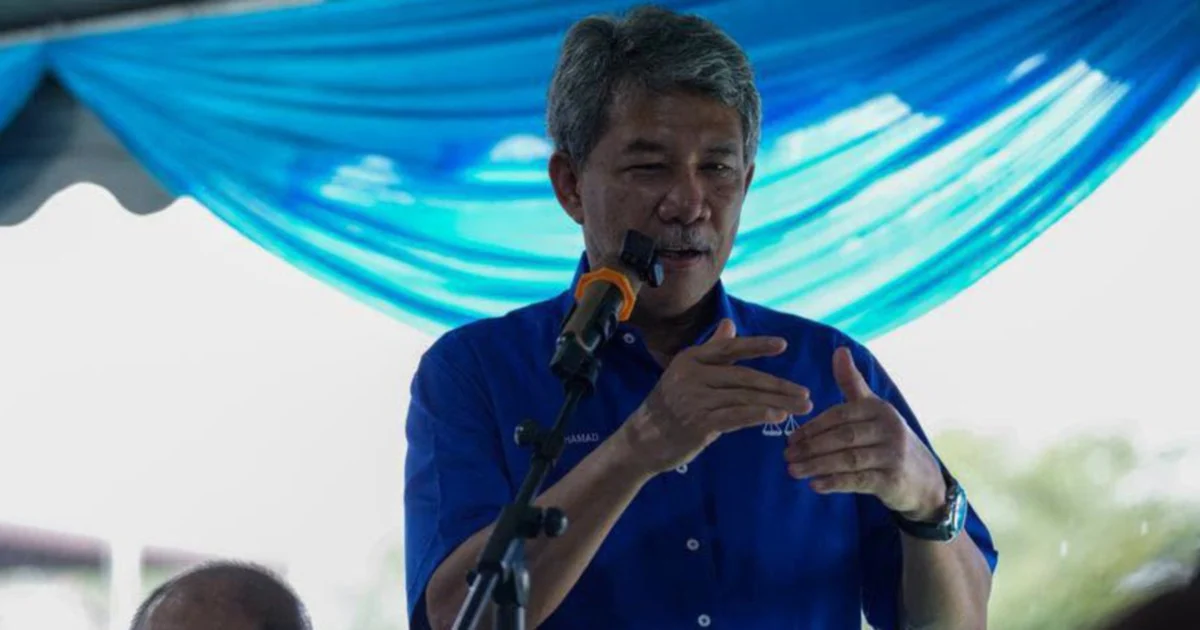
A senior Barisan Nasional figure has firmly rebutted opposition leaders who continue to assert that electoral success in Johor could translate into securing the freedom of imprisoned former prime minister Datuk Seri Najib Razak, dismissing such claims as politically motivated distortions at a Tebrau gathering.
The statement reflects deepening tensions surrounding how Najib's incarceration has become entangled with electoral calculations in Johor, one of Malaysia's most politically significant states. The timing is particularly contentious given upcoming electoral contests and the need to clarify what constitutional and legal mechanisms actually govern the fate of a convicted former leader.
Najib's conviction on charges related to abuse of power and money laundering has created an unusual intersection between criminal justice and party politics. His sentence and ongoing legal proceedings have become a recurring reference point in political discourse, with various stakeholders accused of instrumentalising his case for strategic advantage. The BN leader's intervention suggests frustration with repeated insinuations that electoral outcomes could unlock pathways to his release.
Under Malaysia's constitutional framework, executive clemency powers rest with the Yang di-Pertuan Agong, the country's constitutional monarch, acting on advice from the Cabinet. A menteri besar, despite heading a state government, possesses no direct authority over such processes. This constitutional reality underpins the BN assertion—no state election victory could unilaterally alter Najib's legal status or imprisonment. The conflation of electoral politics with judicial outcomes misrepresents the separation of powers and invites voters to participate in calculations that cannot logically produce the promised results.
Pakatan Harapan's continued linking of the Johor election to Najib's circumstances has drawn criticism for what opponents characterise as misleading electoral messaging. The assertion that state-level political outcomes could influence a federal-level clemency decision oversimplifies the institutional architecture of Malaysian governance and raises questions about whether voters are being offered realistic pathways or merely symbolic gestures.
For Johor specifically, the election carries its own substantial stakes independent of Najib's situation. The state has served as a BN stronghold but has experienced significant political volatility, with 2022 elections resulting in a razor-thin majority that required independent assemblymen to sustain government. Economic performance, development priorities, education policy, and infrastructure investment remain substantive issues requiring attention without reference to the former prime minister's case.
The controversy also reflects broader anxieties within both coalitions about their narratives and credibility. If Pakatan Harapan is perceived as making implausible promises about Najib's release, it risks voter backlash based on disconnects between campaign rhetoric and constitutional reality. Conversely, BN must navigate the sensitivity surrounding Najib without appearing dismissive of supporters who view his imprisonment as unjust or politically motivated.
Malaysia's political culture has frequently struggled with separating criminal accountability from partisan advantage. Najib's prosecution occurred under a PH-led administration following the 2018 general election, and perceptions about whether justice proceeded along proper legal channels or reflected political vengeance remain contested. These unresolved questions about political prosecutions and accountability frameworks now colour discussions of his case.
For Southeast Asian observers, Malaysia's handling of Najib's conviction carries implications for democratic stability and rule of law. Whether democracies can credibly pursue accountability for senior figures without appearing to weaponise the judiciary remains a persistent governance challenge across the region. The integration of his case into electoral politics risks deepening cynicism about the independence of criminal proceedings.
The Johor election itself occurs within a broader context of strengthening federalism assertions and renewed emphasis on state autonomy. Johor's government has sought greater control over resources and policy areas, making the election outcome significant for questions about the distribution of power between federal and state levels. These substantive constitutional questions deserve prominence in electoral discourse alongside traditional concerns about development and governance.
The BN leader's statement serves as a corrective to misleading political claims, yet the controversy highlights how Malaysian politics has absorbed Najib's case as a permanent feature of competitive narratives. Separating legitimate debates about his conviction's fairness and appropriate penalties from unrealistic promises about electoral outcomes represents an ongoing challenge for political maturity across Malaysia's parliamentary system.

