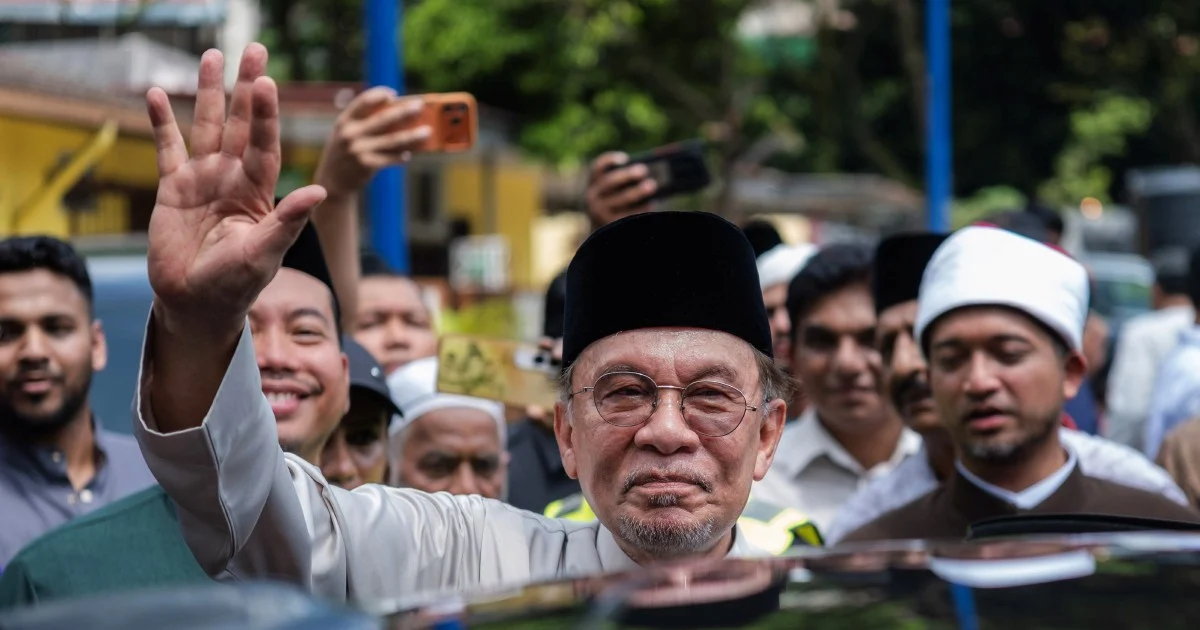
The Johor state election campaign is entering its most intense phase this weekend, with Prime Minister Anwar Ibrahim, Deputy Prime Minister Ahmad Zahid Hamidi and numerous other senior political figures converging on the state to lead a series of public engagements and grassroots speeches. The coordinated arrival of high-ranking leaders from multiple parties underscores the significance both ruling coalitions and opposition groups have assigned to Johor, a state that remains strategically vital to national political calculations and whose electoral outcome could influence perceptions about government stability heading into the next federal election cycle.
Johor holds particular weight within Malaysia's political landscape for several interconnected reasons. As the nation's second-largest state by population and the economic heartland of southern Malaysia, it commands considerable electoral strength and symbolic importance. The state has traditionally been a bellwether for broader political trends, with its voting patterns often reflective of or predictive of national sentiment. Success or failure in Johor carries ramifications extending well beyond state-level governance, affecting the coalition arithmetic in federal parliament and the morale of competing political machinery at all levels.
The concentration of leadership presence this weekend reflects the high stakes both government and opposition coalitions perceive in the electoral contest. For the ruling administration, Johor's performance directly impacts the government's narrative regarding public confidence and electoral viability. For opposition forces, Johor presents an opportunity to demonstrate that their message resonates in a major population center and to position themselves as credible alternatives to the current administration.
Prime Minister Anwar Ibrahim's participation in the campaign weekend carries particular significance given his role as head of government and his personal political legacy in the southern region. His engagement in Johor campaigning underscores the federal government's investment in securing a strong performance there. Meanwhile, Deputy Prime Minister Ahmad Zahid Hamidi's presence reflects the involvement of UMNO, which has played a central role in Johor politics historically and remains a key component of the federal ruling coalition.
The ceramah events and campaign forums scheduled for the weekend represent the traditional machinery of Malaysian electoral politics, wherein political leaders address gathered supporters and undecided voters directly. These grassroots engagements serve multiple purposes simultaneously: they energize party bases, disseminate campaign messaging to targeted audiences, and provide visual content for media amplification. The decision to hold multiple such events across the state this weekend suggests campaign managers on both sides believe momentum and public mobilization at this moment could decisively influence final voting behavior.
For Malaysian voters and international observers monitoring the political situation, this weekend's campaign activities offer a window into which issues dominate political discourse in Johor and how competing coalitions are framing their appeals. The messaging delivered by Anwar, Zahid and other leaders will reveal campaign priorities, whether focused on economic management, development promises, governance competence or ideological appeals. Such discourse patterns often illuminate deeper divisions within the electorate and the relative salience of different policy concerns across voter demographics.
The timing of this intensive leadership presence also warrants examination within the broader context of Johor's electoral dynamics and demographic composition. As a state encompassing both urban centers and rural areas, with significant Malay-Muslim populations alongside substantial ethnic Chinese and Indian communities, Johor presents complex electoral challenges requiring tailored messaging and broad coalition-building. The ability of competing political forces to navigate these compositional realities will substantially determine electoral outcomes.
Southeast Asian observers monitoring Malaysian politics should note that Johor's election occurs against a backdrop of broader regional democratic developments and shifting geopolitical considerations. Malaysia's domestic political fortunes and coalition stability have implications for ASEAN cohesion and Malaysia's regional standing. Consequently, the intensity of this weekend's campaign activities extends beyond domestic significance into the realm of regional political developments.
From an analytical perspective, the convergence of national leadership in Johor this weekend represents a calculated political gambit by competing coalitions to maximize their influence at a critical moment in the electoral calendar. The scale and coordination of leadership deployment suggests both sides view Johor not merely as one state election among many, but as a consequential contest with implications radiating throughout Malaysian politics and potentially affecting government stability and political legitimacy more broadly.
The weekend's campaign forums will likely generate substantial media coverage and social media engagement, amplifying messages beyond those physically present at rallies and speeches. This digital dimension of modern Malaysian campaigning means the events' political impact will extend well beyond Johor's borders, influencing perceptions among national and international audiences about the direction of Malaysian politics and the comparative strength of competing political forces.
For ordinary Johor residents preparing to cast their votes, the presence of these national figures signals the stakes their state election carries within broader political calculations. Voters will be making decisions not only about local governance and state-level issues but also contributing to a referendum on the current federal administration's performance and the viability of opposition alternatives. This layering of local and national considerations adds complexity to voter decision-making processes.
As the campaign reaches this crucial juncture, the effectiveness with which national leaders can connect their messages to local concerns and aspirations will significantly determine whether their presence galvanizes support or merely represents symbolic gestures of political theater. The coming weekend will provide illuminating evidence regarding the state of Malaysian political engagement and the relative persuasive capacity of competing leadership across party lines.

