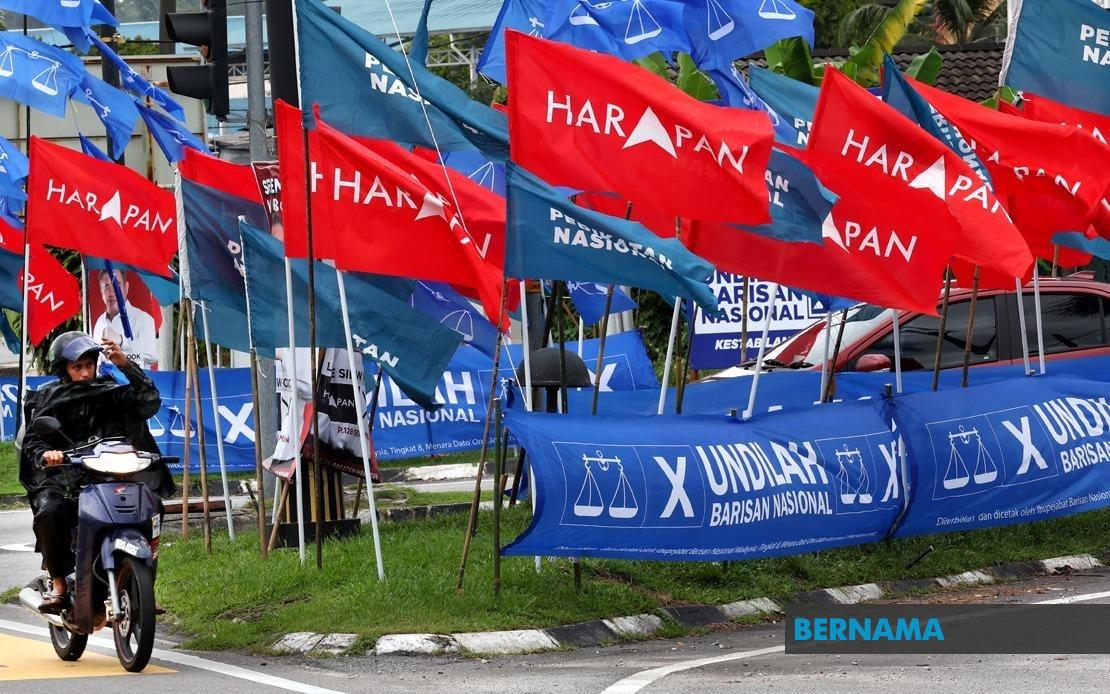
The Johor state election campaign is now in its most frantic and consequential phase, with just under two days remaining before the official campaign period closes at midnight tomorrow. Across the state, 172 candidates vying for 56 state assembly seats have visibly intensified their ground operations, deploying every available tactic to persuade voters before Saturday's polling day. The energy levels on the campaign trail show no signs of diminishing despite reaching the 13th day of continuous campaigning—if anything, the pace has accelerated as each coalition recognises that these final hours may determine the outcome in numerous marginal constituencies.
Pakatan Harapan, the ruling coalition at federal level, has committed its heaviest firepower to the Johor contest. Prime Minister Datuk Seri Anwar Ibrahim is personally campaigning at three key locations tonight, with particular focus on the hotly contested Puteri Wangsa state seat. Maszlee Malik, the PH candidate in that constituency, has leveraged social media to drum up attendance at the coalition's "Grand Finale Harapan Johor Selatan" rally, invoking the psychological appeal of fear of missing out to drive voter turnout. This approach reflects how modern Malaysian political campaigns now blend traditional mass rallies with digital engagement strategies. Elsewhere in PH's campaign machinery, Johor PKR chairperson Datuk Seri Dr Zaliha Mustafa participated in an innovative motorised convoy featuring 120 motorcyclists to support the Kemelah candidate Mohd Afif Abd Hamid, demonstrating how coalitions are experimenting with unconventional mobilisation methods to break through voter fatigue. Dr A. Ruban, the Paloh candidate, has returned to the campaign trail despite undergoing medical treatment, underscoring the gruelling physical demands placed on candidates during the final campaign push.
Barisan Nasional, the long-governing coalition now in opposition at state level, has deployed its own top-tier leadership to contest the election meaningfully. Coalition chairman Datuk Seri Dr Ahmad Zahid Hamidi has been conducting final campaign stops at the Endau and Kempas constituencies, attempting to energise BN's grassroots machinery and shore up candidate morale in what many observers view as a defensive electoral battle. Johor Menteri Besar and BN's Machap candidate Datuk Onn Hafiz Ghazi continues intensive campaigning across his constituency while using Instagram to appeal to voters to grant BN their mandate. The coalition's ground strategy emphasises personal voter contact, with candidates like Mohd Hairi Mad Shah in Larkin pursuing neighbourhood-level engagement through his ongoing "Ziarah Kasih" programme, which prioritises direct meetings with residents to articulate BN's development agenda. This granular approach suggests BN recognises that retaining its remaining strongholds requires sustained personal outreach rather than relying solely on rallies.
Perikatan Nasional, operating as the third major force in Johor politics, is staging a significant rally in Endau tonight that will feature both its chairman Datuk Seri Ir Dr Ahmad Samsuri Mokhtar and PAS president Tan Sri Abdul Hadi Awang in support of the Endau candidate Hasnul Hakimi Hussien. This deployment of dual leadership signals that PN views Endau as a winnable seat and possibly a marquee constituency that could shape perceptions of its electoral performance. PN candidates like Mazlan Bujang in Kahang are maintaining relentless ground operations, recognising that every voter interaction represents an unrepeatable opportunity to convert support as campaigning enters its final chapter. The willingness to maintain intensive grassroots activity until the official campaign deadline reflects both the stakes involved and PN's understanding that late-deciding voters often determine marginal seat outcomes.
The participation of smaller political players further illustrates the competitive texture of this election. Parti Bersama Malaysia has mobilised a creative campaign infrastructure through its "Bersama Tour Truck" initiative, with Kota Iskandar candidate Sahrudin Omar leveraging this mobile platform to reach diverse voter groups across the constituency. Meanwhile, Larkin candidate Norsinah Abu has opted for smaller, community-level dialogues rather than mass meetings, recognising that targeted conversations often resonate more effectively with voters than large-scale rallies. This diversity of campaign methodologies across various parties and candidates reflects how Malaysian electoral competition has evolved to incorporate multiple engagement channels simultaneously.
The overall campaign intensity provides important context for understanding electoral dynamics in Malaysia's second-largest state. Johor's political trajectory has been marked by historically competitive elections and demographic diversity, making it neither reliably partisan nor wholly unpredictable. The presence of national leaders from multiple coalitions underscores the state's perceived significance within the broader Malaysian political landscape. For PH, strengthening its position in Johor is strategically crucial for building federal legitimacy and demonstrating that its 2022 Perikatan election recovery was not a temporary phenomenon. For BN, defending existing seats or even recovering ground would signal that the coalition retains sufficient appeal to contest future general elections from a position of relative strength. For PN, accumulating Johor seats offers a foundation for establishing itself as a permanent third force in Malaysian politics beyond its Gulf state stronghold of Kelantan and Terengganu.
The final campaign phase also illustrates how Malaysian political competition has become increasingly sophisticated in its targeting and messaging. While large-scale ceramah remain important for energising party supporters and generating media coverage, successful campaigns increasingly combine these visible spectacles with granular voter contact programmes, digital outreach, and localised issue-based messaging. The strategies deployed by candidates across different parties demonstrate that modern Malaysian electoral success requires simultaneous operation across multiple platforms and voter contact methodologies. The investment in reaching voters through motorcade convoys, social media appeals, micro-level community meetings, and personal neighbourhood visits reflects recognition that different voter segments respond to different stimuli.
The election schedule itself creates temporal pressure that shapes campaign behaviour in the final 48 hours. Candidates and organisers understand that once the campaign blackout commences at midnight tomorrow, no further official electioneering is permissible until after voting concludes. This regulatory boundary transforms the final two days into a do-or-die effort to consolidate support and reach undecided voters. The frenetic activity across constituencies reflects this temporal logic—campaign operatives are attempting to extract maximum mobilising effect from the window that remains available. The consequences of failing to reach persuadable voters or activate sympathetic constituencies before the blackout comes into effect mean that campaign strategy in these final hours is determined not merely by normal electoral calculations but by the hard deadline imposed by electoral law.
For Malaysian and Southeast Asian observers monitoring Johor's election, the campaign's final phase offers important lessons about contemporary electoral competition within Malaysia's democratic system. The involvement of national leaders, the deployment of innovative campaign technologies and methodologies, the participation of multiple coalitions competing seriously for power, and the intensive grassroots mobilisation evident across all 56 contested seats collectively demonstrate that Malaysia's elections remain genuinely competitive political events where outcomes cannot be predetermined. The fact that 172 candidates representing diverse political movements are vying seriously for 56 state seats across the final campaign period indicates that electoral democracy in Malaysia continues to generate genuine political engagement and meaningful competition for voter support. The Johor election therefore represents not merely a state-level contest but a significant marker of Malaysia's political health and the vibrancy of its electoral democracy.

