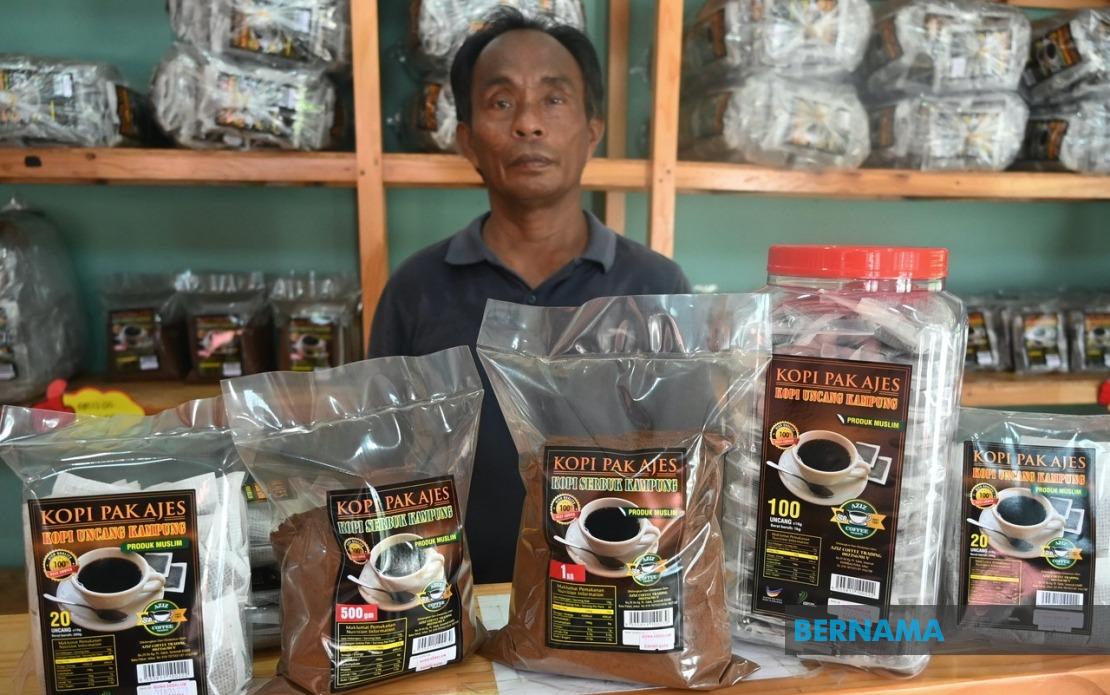
The electricity of political campaigning across Johor has sparked an unexpected economic surge for one of the state's most unlikely beneficiaries. In Kampung Parit Sidek, Semerah, coffee entrepreneur Aziz Mohd—better known locally as Pak Ajes—has witnessed his three-decade-old enterprise transform from a modest community supplier into a production powerhouse, buoyed by the relentless appetite of election machinery now crisscrossing the state. As 172 candidates vie for 56 state seats in the 16th Johor state election, the 65-year-old has become an essential cog in the campaign ecosystem, supplying the caffeine fix that powers political work across Semerah, Sungai Balang, and Bukit Naning constituencies.
Aziz Coffee Trading has essentially doubled its output to accommodate the explosive demand, a surge that underscores how electoral seasons reshape consumption patterns at the grassroots level. Campaign machinery requires constant provisions—temporary workers, volunteers, and organisers all sustaining long hours on the campaign trail need reliable refreshment, and local coffee suppliers naturally become critical support infrastructure. For Pak Ajes, the timing could not have been better. He described the election windfall as a rare opportunity that materialises infrequently enough to justify special preparation and planning. Recognising the opportunity weeks in advance after receiving inquiries from various political camps, he and his son Muhammad Fitri coordinated early to scale up production capacity, even sourcing additional raw materials from as far as Rengit and Kluang to maintain supply continuity.
The genesis of Aziz's coffee enterprise reveals a classic story of Malaysian entrepreneurial adaptation. Back in 1991, observing surplus coffee bean supplies accumulating in a neighbouring village, he began modest processing for personal consumption and gradually expanded to supply nearby beverage stalls. His entrepreneurial journey had commenced earlier through more diversified agricultural ventures—he operated quail farms for egg production and cultivated mushrooms for sale to local suppliers and markets. These activities, though modest, generated sufficient capital to fund his coffee venture. Beginning with just around RM200 raised from selling quail eggs and mushrooms, Aziz started producing coffee powder in 100-gram packets according to customer orders. What began as a side enterprise evolved steadily into a substantial operation.
Today, the business has achieved scale that would have seemed improbable from its humble origins. Monthly production now exceeds five tonnes of coffee powder, with daily output reaching approximately 1,500 packets. His client base spans multiple towns, with regular supply agreements with numerous coffee establishments throughout Muar and Batu Pahat. This expansion reflects not merely luck but sustained operational excellence and the development of specialised expertise in coffee processing. Aziz has invested considerable effort in mastering each production stage, demonstrating that small-scale Malaysian enterprises can achieve substantial sophistication when operators commit to quality and efficiency.
The coffee processing methodology employed by Aziz demonstrates the technical rigour underlying what might appear to outsiders as a simple commodity business. Each batch demands patience and meticulous execution across multiple phases. Initial processing involves separating beans from their stems and outer husks, followed by sun-drying lasting approximately 15 days—a critical stage demanding careful weather monitoring and pest management. Subsequent roasting must achieve precise colour and aroma profiles without burning the beans. Grinding operations require calibrated equipment to achieve consistent particle sizes that influence final beverage quality. Packaging represents a surprisingly complex final stage; the powder must be sealed promptly to prevent air exposure, which causes the product to harden and clump, degrading quality. These technical considerations explain why smaller coffee producers operate within geographic limitations—transport time and storage conditions directly impact product quality.
Recognising opportunities for vertical integration and brand differentiation, Aziz and his son expanded into retail through Kupi Nang Ajes Cafe, opened in 2022 directly in front of their home. The establishment offers a menu of specialty beverages including Americano and latte, positioned at highly competitive price points that reflect the modest operating costs of a family-run neighbourhood cafe. This move exemplifies a strategic business approach common among successful Malaysian small entrepreneurs—controlling the supply chain from production through retail delivery allows better margin management and direct consumer engagement. The cafe creates multiple revenue streams from the core coffee powder production operation while building brand awareness within the local market.
Ambition extends well beyond the current single outlet. Pak Ajes has articulated expansion plans targeting secondary locations in Batu Pahat town or Muar, representing the next logical growth phase. Beyond this, he harbours aspirations of establishing branches throughout Malaysia—a projection that, while optimistic, reflects confidence built through demonstrated operational capability and established supply relationships. Achieving such ambitions would require capital investment, workforce development, and operational systems that can replicate current quality standards across multiple locations. These remain significant challenges for small family businesses seeking to transition into regional brands.
The government sector has played a supportive role in this entrepreneurial journey. The Department of Agriculture has contributed materially through equipment provision, including coffee grinding machinery and bagging equipment, alongside training courses addressing packaging standards and product labelling requirements. Such assistance programmes demonstrate how public sector support mechanisms can catalyse small business development when aligned with motivated entrepreneurs. For Aziz, this government partnership has enhanced operational efficiency and helped professionalise his business practices.
The election season itself represents a microcosm of broader economic dynamics affecting regional businesses. Political campaigns generate immediate, concentrated demand for logistical support services—transportation, accommodation, catering, communications, and yes, coffee supply. Local suppliers closest to campaign operations typically capture this demand, creating temporary prosperity in rural areas. Yet this windfall carries inherent instability; once polling concludes on Saturday, campaign activities cease abruptly, and the surge evaporates as suddenly as it arrived. Savvy operators like Aziz prepare strategically, front-loading production and stockpiling inventory to extend revenue benefits beyond the immediate election window.
For Malaysian policymakers and economic development specialists, the Pak Ajes example illustrates several important principles. Rural and semi-rural entrepreneurs possess genuine capability to build substantial enterprises from minimal initial capital when personal initiative combines with market opportunity recognition. Geographic proximity to demand—in this case, serving local constituency campaigns—confers competitive advantages that larger, urban-based competitors cannot easily replicate. Government support for agricultural value-addition and small business development yields tangible results when administered without excessive bureaucratic friction. Furthermore, the coffee sector specifically represents an underexploited opportunity within Malaysian agriculture; while the nation produces premium coffee in certain regions, domestic consumption largely depends on imports, suggesting potential for expanded local production.
The 16th Johor state election's impact extends far beyond political calculations and constitutional procedures. For enterprising individuals like Aziz Mohd, electoral processes represent economic opportunities to be seized strategically. His transformation of a modest coffee producer into a significant regional supplier demonstrates how political events, while temporary, can accelerate business development trajectories when entrepreneurs respond dynamically. As Malaysia increasingly emphasises small and medium enterprise development as engines of inclusive growth, narratives like Pak Ajes's underscore the remarkable potential residing within communities when opportunity, capability, and support mechanisms align.

