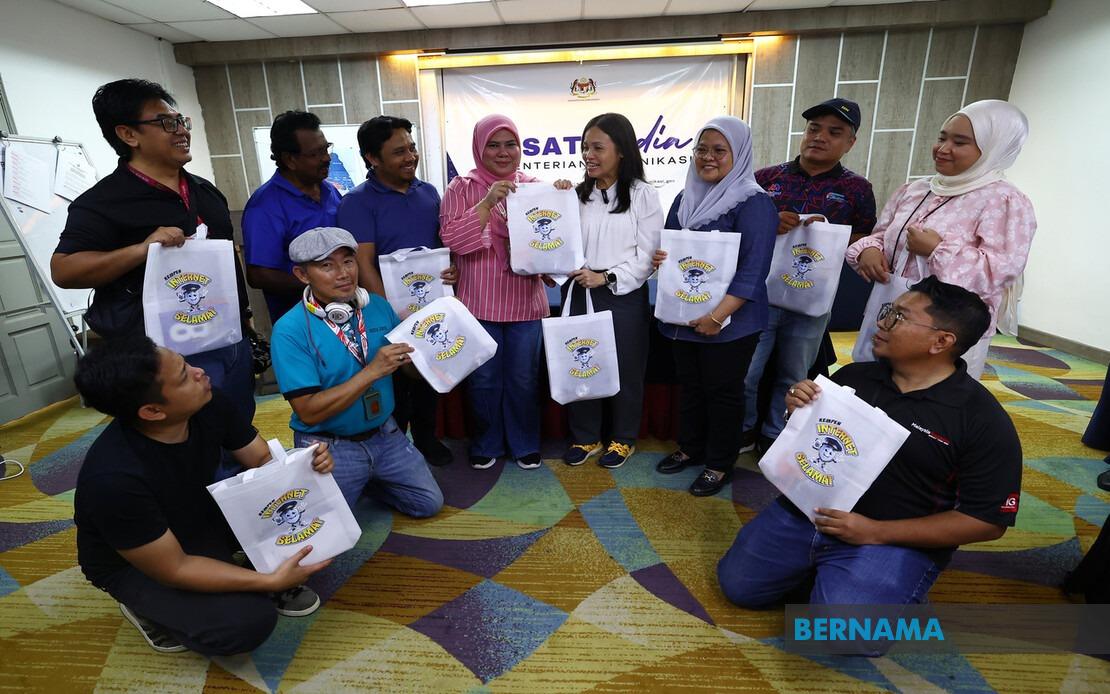
Ahead of Johor's 16th state election scheduled for July 11, the Communications Ministry has mobilised substantial infrastructure to support media operations, deploying two flagship media centres and a network of 100 National Information Dissemination Centres (NADI) across the state. Deputy Communications Minister Teo Nie Ching announced the arrangement on June 28 during a visit to the primary media hub at Hotel Seri Malaysia in Johor Bahru, signalling the government's commitment to facilitating comprehensive election coverage during the crucial campaign period.
The dual-hub approach reflects a deliberate geographical strategy to serve the state effectively. The main centres, positioned at Hotel Seri Malaysia in Johor Bahru and NADI Kampung Sawah Awok in Muar, will remain operational from 9 am to 9 pm daily beginning June 26 through polling day, providing journalists with consistent access to facilities and reliable connectivity. This extended operating window accommodates the unpredictable nature of campaign activity and allows media teams to process and transmit stories throughout the day and evening.
Connectivity standards have been prioritised as a cornerstone of the infrastructure. The ministry has committed to maintaining minimum internet speeds of 100 Mbps across all facilities, a specification designed to eliminate technical bottlenecks when journalists transmit video content and high-resolution photographs to newsrooms. In an era where election coverage increasingly demands real-time multimedia capability, this guarantee addresses a persistent frustration in previous campaigns where bandwidth limitations hindered timely reporting from remote constituencies.
Beyond internet access, the media centres function as comprehensive newsrooms, equipped with laptops, desktop computers, photocopiers, and printers. This provision acknowledges that not all journalists operate with personal devices in excellent working condition, and that backup facilities reduce dependency on individual equipment. The arrangement also democratises access to technology, benefiting freelancers and smaller publications that may lack capital-intensive infrastructure at their home offices.
The Malaysian Communications and Multimedia Commission (MCMC) will assume an oversight role, monitoring telecommunications providers to ensure service quality remains consistent throughout the campaign. This regulatory vigilance extends beyond media centres; the commission is tasking network operators to maintain optimum speeds state-wide, reflecting awareness that election reporting occurs in newsrooms, on campaign trails, and across residential areas where citizens access information. Teo encouraged the public to download the MCMC Nexus application, which enables crowdsourced signal monitoring and provides real-time data on internet quality at specific locations, transforming citizens into de facto telecommunications auditors.
Privacy concerns have been explicitly addressed in the application's design. The MCMC has clarified that only technical data—location coordinates and signal strength measurements—will be shared with telecommunications providers, while personal information remains confidential. This distinction matters significantly in Malaysia's digital context, where privacy scepticism among tech-literate populations could undermine voluntary participation in monitoring initiatives. By restricting corporate access to anonymised technical metrics, the commission has attempted to balance service improvement with data protection expectations.
Election communication standards formed another dimension of Teo's announcement. She reminded political parties and campaign supporters that the campaign period demands responsibility in messaging and urged avoidance of provocative content touching on race, religion, and royalty—categories historically sensitive in Malaysian politics and protected under constitutional provisions. The MCMC, working alongside police authorities, has committed to identifying and removing social media content exhibiting extreme provocation, creating a reactive safety net below a primary expectation of voluntary restraint.
Fact-checking emerged as a complementary pillar of information integrity. Teo commended the Malaysian Media Council for establishing a dedicated fact-checking platform and encouraged citizens to adopt verification habits before sharing information. This appeal reflects recognition that misinformation spreads with particular velocity during election campaigns, when emotional stakes heighten and partisan motivations intensify. By promoting institutional fact-checking and cultivating public scepticism, authorities are pursuing a multi-layered approach to combat false narratives that could distort electoral discourse.
The institutional preparations underscore the logistical complexity of modern election administration in Malaysia. The state-level campaign for Johor, a wealthy and populous state whose politics influences national dynamics, requires sophisticated coordination among multiple agencies—the Communications Ministry, Information Department, MCMC, police, and private telecommunications firms. This coordination reflects lessons learned from previous electoral cycles and demonstrates administrative sophistication in resource allocation.
For regional context, Johor's election carries implications beyond state boundaries. As Malaysia's largest state by population in peninsular Malaysia and a vital economic zone bordering Singapore, outcomes will ripple through national political calculations and investor confidence. The infrastructure deployed for media coverage simultaneously facilitates information access among the state's 3.8 million residents, influencing how voters encounter competing political narratives during the critical weeks preceding July 7's early voting and July 11's general polling.
The initiative also reflects evolving standards for electoral administration in Southeast Asia. Compared to peers in the region, Malaysia's approach of actively enabling media infrastructure and establishing public data-sharing tools for telecommunications monitoring positions the country as relatively advanced in transparency mechanisms. However, the emphasis on controlling social media content and monitoring "extreme provocation" also highlights enduring tensions between enabling free communication and managing sensitive social divisions—a dynamic present across the region but particularly acute in multiethnic democracies like Malaysia.
Looking forward, the success of these preparations will be evaluated not merely through logistical metrics but through the quality and diversity of reporting that emerges. Whether the infrastructure translates into genuinely independent media coverage or primarily facilitates government-aligned messaging depends on journalistic independence and editorial decisions beyond the ministry's control. The physical capacity to transmit information swiftly does not guarantee the integrity of content that moves across those high-speed connections.

