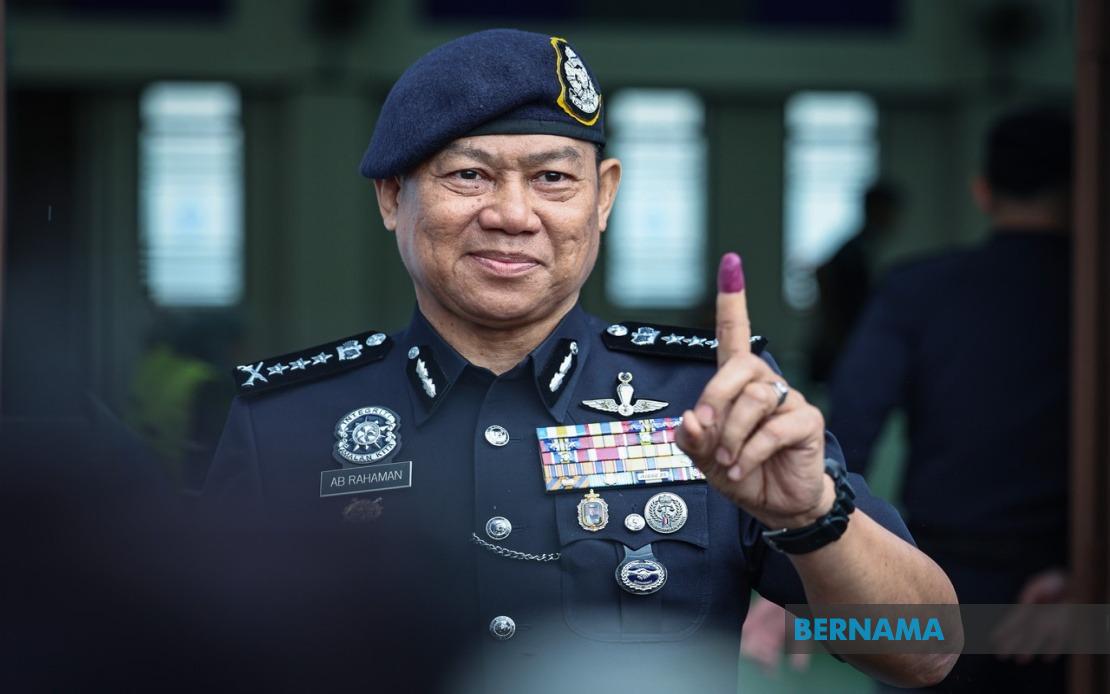
The early voting phase for Johor's 16th state election proceeded without major disruption on July 7, as police and armed forces personnel exercised their franchise ahead of the general poll. By 10.30 am, approximately 4,257 uniformed personnel out of an eligible 11,736 had voted across the state, representing a 36.3% participation rate during the morning hours. This staggered approach to balloting, which prioritises security and military personnel, has become standard practice in Malaysian elections, allowing these essential workers to fulfil their civic duty without compromising operational readiness on election day itself.
Johor Police Chief Datuk Ab Rahaman Arsad reported that voting proceeded smoothly without incident or irregularity at any of the 53 early polling stations distributed throughout the state. The administration of this preliminary phase involved coordinated efforts between election officials and law enforcement to ensure voter verification, security protocols, and proper handling of ballot papers. Despite the compressed timeframe and the volume of personnel processed, officials indicated that the machinery operated without friction, suggesting competent planning and execution at the operational level.
The scale of early voting participation reflected broader patterns seen in recent Malaysian elections, where advance polling by security forces typically achieves turnout rates in the range of 30% to 40% during morning sessions. The fact that over one-third of eligible police voters had cast ballots by mid-morning indicated steady foot traffic at polling stations and efficient processing times. However, Ab Rahaman cautioned that final participation figures would only emerge once all 64 polling centres—spread across multiple time zones and geographic locations—completed their operations between noon and 6 pm, suggesting continued gradual accumulation of votes throughout the afternoon.
The broader electoral contest looming on Saturday encompasses 172 candidates competing for 56 state assembly seats, with approximately 2.7 million registered voters eligible to participate. This three-to-one ratio of candidates to seats reflects intense competition across the state, particularly given that Johor remains a politically significant state in Malaysian politics. The primary polling day would determine the composition of the next Johor state government, making the campaign period particularly contentious and drawing heightened scrutiny from all stakeholders.
Campaign-related incidents reported to police during the pre-election period predominantly involved property damage rather than violence or intimidation. Datuk Ab Rahaman identified vandalism targeting campaign materials—specifically flags and political billboards—as the primary category of offences under investigation. These incidents, while not directly threatening electoral integrity, underscored underlying political tensions and the passionate engagement of supporters across competing parties and candidates. The focus on material vandalism rather than voter intimidation or fraud suggested that election officials had largely succeeded in maintaining basic order and preventing more serious electoral malpractice.
A more contentious issue emerged from allegations made by Datuk Dr Mohd Puad Zarkashi, the former Johor State Assembly Speaker, who lodged claims regarding Palace involvement in the dissolution of the state legislative assembly. Police nationwide received 153 reports as of the reporting date related to Mohd Puad's statements, indicating significant public interest and concern about the constitutional and political dimensions of the assembly's dissolution. While investigations into the initial police report against Mohd Puad remained ongoing, the volume of related reports highlighted how electoral contests in Malaysia frequently intersect with institutional and constitutional questions that extend beyond simple candidate competition.
The timing of Johor's election reflected broader electoral rhythms in Malaysia, where state polls occur on staggered schedules determined by state constitutions and political circumstances. Johor's electoral cycle, like those of other states, carried implications for national politics and coalition dynamics, particularly given the state's size and political influence. The outcome would shape the configuration of state-level governance and potentially send signals about voter sentiment regarding national coalitions and policies, making the stakes substantial for both state and federal political actors.
Logistical coordination between election authorities, police, military representatives, and civil administration demonstrated the institutional capacity required for conducting democratic elections at scale in a diverse, geographically dispersed state. The fact that 64 polling centres opened simultaneously at 8 am and operated according to staggered closing schedules depending on location and voter numbers reflected sophisticated organisational planning. Such coordination, often taken for granted, required weeks of advance preparation including training of polling staff, security briefings, and voter education initiatives.
For Malaysian voters and observers, the Johor election represented another opportunity to assess the state of electoral administration and democratic participation in the country. The smooth execution of early voting suggested that despite periodic concerns about electoral processes, Malaysia's election machinery continued to function with reasonable competence. The low incident rate during advance polling and the orderly voter flow indicated public acceptance of electoral procedures and willingness to participate through official channels rather than extraconstitutional means, reinforcing democratic norms.
The subsequent Saturday polling day would ultimately determine whether the morning's steady participation rate translated into strong overall turnout and whether voter choices reflected satisfaction with incumbent administrations or desire for political change. The convergence of 2.7 million voters at polling stations represented a significant civic engagement exercise, and the results would shape policy directions across education, infrastructure, commerce, and social services for millions of Johor residents over the ensuing years. Early voting figures thus provided preliminary indicators but remained only partial reflections of the democratic verdict still to come.

