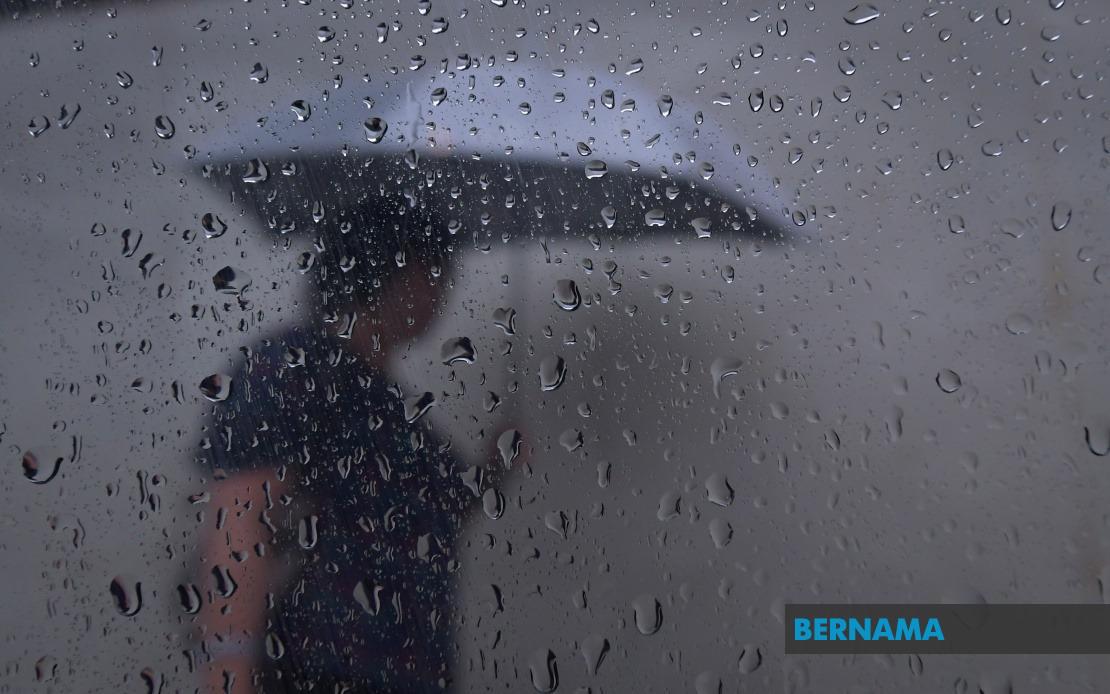
Voters heading to early polling stations across Johor should brace for changeable weather conditions during the casting of ballots tomorrow, according to forecasts issued by the state's meteorological authority. The Johor Meteorological Department has cautioned that four districts—Batu Pahat, Muar, Pontian, and Tangkak—will experience morning precipitation, potentially affecting foot traffic at voting venues. Director Azlai Ta'at warned that conditions will deteriorate markedly by afternoon, with thunderstorms expected to sweep across the entire state, creating challenging circumstances for voters attempting to fulfil their electoral responsibilities.
The timing of these weather warnings coincides with a significant early voting exercise scheduled to unfold across 64 polling stations statewide. Approximately 24,751 early voters are anticipated to participate, comprising military personnel and their spouses alongside members of the Royal Malaysia Police and General Operations Force along with their respective families. This segment represents 12,041 Armed Forces voters and 12,710 security force voters, reflecting the constitutional provisions that allow uniformed personnel special voting arrangements due to operational requirements that may prevent their attendance on regular polling day.
Azlai's advisory to voters to complete their balloting during morning hours carries practical significance given the meteorological outlook. With early voting centres commencing operations at 8 am and staggered closing times between noon and 6 pm depending on location and voter registration numbers, the window for dry-weather voting appears limited. The recommendation essentially prioritises the morning period as the optimal timeframe for casting votes before atmospheric conditions deteriorate, a consideration that could influence the distribution of voters across the day and potentially ease congestion at polling stations during peak afternoon hours.
The weather forecasting authority presented a more favourable outlook for six districts during morning hours, identifying Johor Bahru, Segamat, Kluang, Kota Tinggi, Mersing, and Kulai as areas likely to remain fine and sunny. However, this respite applies only to the pre-noon period, after which the entire state faces the prospect of thunderstorm activity. This geographic variation in morning conditions reflects the typical pattern of monsoon-influenced weather systems affecting Peninsular Malaysia during this period, where localised convective rainfall can occur in specific areas whilst neighbouring regions remain unaffected until afternoon heating intensifies atmospheric instability.
The broader electoral context encompasses the Johor state's 16th election, a significant political event involving 2.7 million eligible voters across 1,140 polling centres. A total of 172 candidates are contesting 56 state seats, representing the diverse political landscape and competing visions for the state's governance and development priorities. The early voting process serves a crucial administrative function in accommodating voters whose occupational duties prevent ordinary voting on the scheduled Saturday polling day, ensuring that security force personnel and military staff can participate meaningfully in democratic processes despite operational commitments.
For Malaysian observers tracking state-level electoral dynamics, the Johor election carries particular weight given the state's economic significance, substantial population, and historical importance within the federation's political structure. The weather-related challenges facing early voters underscore the logistical complexities that electoral commissions must navigate in delivering democratic participation across diverse circumstances. Heavy afternoon thunderstorms, whilst relatively predictable during this monsoon season, can nevertheless create accessibility challenges for voters negotiating wet conditions and potential flooding in certain areas.
The staggered closing times across different early voting centres reflect operational flexibility designed to accommodate varying voter registration densities and geographical considerations. Centres in densely populated urban areas may sustain voting activity until 6 pm, whilst those in smaller constituencies might close earlier once registered early voters have cast their ballots. This adaptive approach recognises that not all polling stations will experience equivalent demand, particularly given that early voting serves a specialised voter demographic with specific occupational constraints rather than the general electorate.
Metropolitan areas including Johor Bahru present particular interest given their concentration of population and administrative infrastructure. The state capital and surrounding districts will experience the morning fine conditions before the afternoon transition to stormy weather, potentially creating a surge of early voters concentrated in the comfortable morning period. The meteorological authority's specific identification of Johor Bahru's morning conditions separate from the four districts facing showers suggests confidence in the precision of their forecasting models for this particular region.
For political observers and electoral administrators, the convergence of weather forecasting and election administration represents a practical intersection of governance domains often treated as separate. The early availability of accurate meteorological predictions allows electoral officials and voters themselves to make informed decisions about timing and logistics. Voters aware of the weather outlook can plan accordingly, potentially reducing congestion during the critical morning hours and distributing polling station utilisation more evenly across the available timeframe.
The preparation of voters and polling station staff for afternoon thunderstorms reflects institutional learning from previous electoral exercises. Protecting ballot papers from water damage, ensuring electrical systems can withstand potential flooding, and maintaining accessibility despite wet conditions all become operational considerations when severe weather is confidently forecast. The state's electoral machinery must balance the imperative to provide voting opportunities with practical recognition of the environmental constraints that monsoon-season weather imposes on outdoor and semi-outdoor polling activities.
Security force participation in early voting represents a distinctive feature of Malaysian electoral practice, acknowledging the specific circumstances of personnel engaged in duties that preclude regular polling day participation. The 24,751 early voters participating tomorrow constitute a meaningful proportion of the broader 2.7 million-strong electorate, their voices amplified through concentrated voting periods that generate significant polling activity within compressed timeframes. The weather conditions affecting their participation thus carry implications beyond simple voter convenience, potentially influencing overall turnout dynamics and the representativeness of electoral outcomes.
Looking beyond the immediate weather considerations, the Johor 16th state election represents a substantial democratic exercise scheduled for Saturday, when the principal 2.7 million voters across 1,140 polling centres will determine the state's representation across 56 contested seats. The early voting process tomorrow serves as a precursor, a technical rehearsal of sorts that tests electoral infrastructure and processes before the main polling day mobilisation. Any operational lessons from tomorrow's conditions and voter behaviour can inform Saturday's larger-scale execution, potentially identifying refinements needed to accommodate weather-related challenges or accommodate procedural improvements discovered during the early voting phase.

