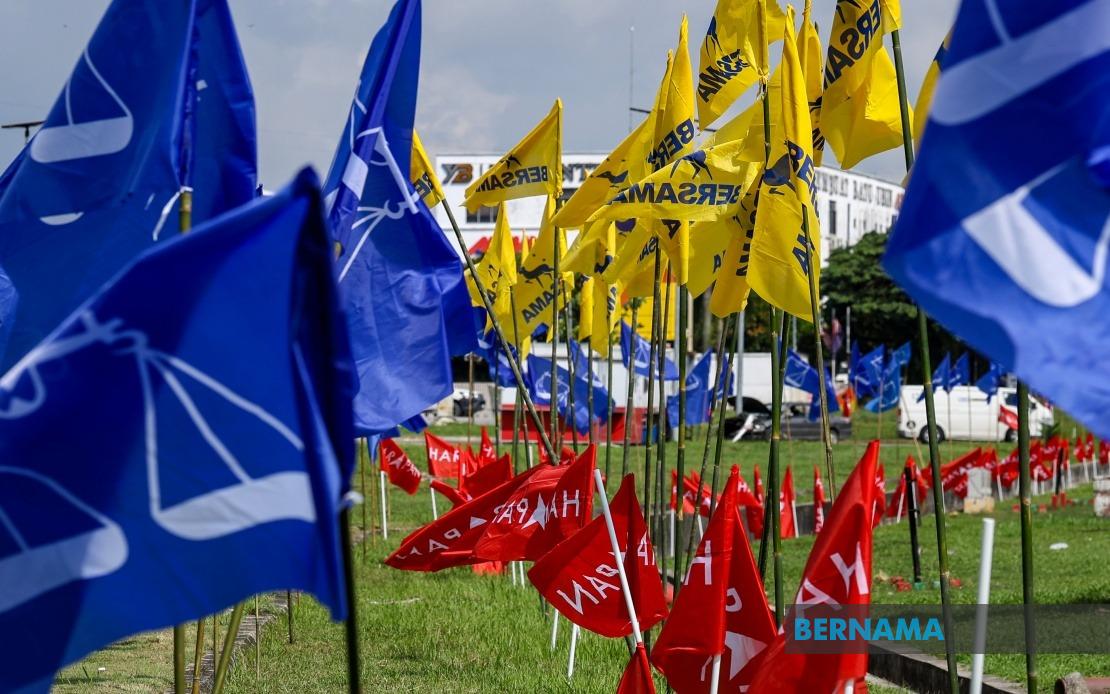
The opening week of Johor's 16th state assembly election has unfolded with noticeably restrained campaigning intensity, as competing parties have fundamentally restructured their voter engagement tactics away from the traditional mass rally format. Instead of seeking to mobilise broad crowds in public spaces, virtually all contesting parties are investing their campaign machinery into direct, personalised interactions with individual voters and small community gatherings. This strategic shift represents a significant departure from conventional electioneering and signals how Malaysian political campaigns are evolving in response to contemporary voter behaviour and resource constraints.
According to Universiti Sains Malaysia political sociologist Prof Datuk Dr Sivamurugan Pandian, this recalibration reflects parties' deliberate adaptation to the current political landscape. The transition towards house visits, intimate group discussions, and neighbourhood engagement programmes creates multiple advantages for individual candidates competing in their respective constituencies. Beyond the obvious benefit of allowing candidates to listen directly to constituent concerns and grievances, this approach enables parties to strengthen their grassroots organisational capacity while distributing campaign resources more efficiently. Sivamurugan characterised the first week primarily as a foundation-building exercise, where candidates establish their presence and credibility at the local level before intensifying efforts in subsequent phases of the campaign.
The strategic calculus underlying this measured opening reveals important insights about how modern Malaysian election campaigns operate. Senior Fellow at the Nusantara Academy for Strategic Research Dr Azmi Hassan explained that contemporary campaigning has shifted decisively towards data analytics and hybrid methodologies that integrate both traditional door-to-door engagement with sophisticated digital targeting. Rather than relying solely on public rallies to broadcast party messages, campaign teams now employ categorisation systems to classify voters as supporters, undecided swing voters, and opposition sympathisers—and tailor messaging accordingly. This segmentation allows parties to concentrate persuasion efforts where they are most likely to yield electoral dividends, particularly among the crucial middle group whose votes remain genuinely contested.
Experts anticipate that the current calm opening phase will give way to substantially more vigorous campaigning from the second week onwards. Sivamurugan predicted that senior party leaders and national figures will increasingly join local candidates on the campaign trail, supplemented by larger public events and amplified digital media campaigns explicitly targeting persuadable voters. The first week's restraint should therefore be understood as strategic patience rather than lack of party commitment; each organisation is essentially waiting to fully reveal its campaign machinery's true capacity until all competitors are similarly mobilised.
The substantive messaging employed by competing parties has thus far coalesced around three principal themes, according to Ilham Centre researcher and Universiti Teknologi MARA political science lecturer Mujibu Abd Muis. All parties emphasise their respective track records of governance, articulate their future policy commitments, and attempt to convince voters that their political formation represents the most reliable custodian of stability. However, these broad narrative frameworks have not yet crystallised into particularly distinctive campaign identities capable of fundamentally reshaping the broader electoral conversation. Mujibu stressed that the ultimate resonance of any party narrative depends critically on whether it can be translated into concrete issues that directly affect voters' material circumstances—including employment stability, wage levels, local infrastructure development, and accessibility of public services.
Geographical concentration of campaigning efforts reveals telling details about parties' strategic assessments of electoral viability. During the opening week, most party campaign machinery concentrated its operations in northern Johor, particularly across the districts of Muar, Tangkak, and Segamat, with spillover activity in portions of Batu Pahat and Kluang. This strategic prioritisation reflects calculated decisions about which constituencies represent genuinely competitive battlegrounds where campaign expenditure can meaningfully influence outcomes. Northern Johor contains multiple assembly seats widely regarded as closely contested and potentially decisive for overall state election results. Mujibu observed that when national party leaders are deployed to these areas, their presence simultaneously serves as a signal to local party members and volunteers regarding which constituencies the party hierarchy considers strategically crucial for achieving victory.
The broader electoral landscape can be understood as fundamentally structured around competition between two main coalitions, according to Universiti Teknologi Malaysia Associate Professor Dr Mazlan Ali. Pakatan Harapan is assessed as holding particular electoral advantages in southern and western Johor districts, where its organisational presence and voter sympathies are strongest. Conversely, Barisan Nasional is positioned to perform robustly in eastern coastal constituencies, particularly Mersing and Kota Tinggi, where its traditional support base remains concentrated. This regional polarisation directly explains the deployment patterns of respective coalition campaign machines; parties strategically allocate resources to areas where they judge themselves competitive, rather than dispersing efforts uniformly across all constituencies.
All three political analysts converged on the critical importance of voter participation rates for determining final electoral outcomes in Johor. Rather than focusing exclusively on persuading voters to support their respective parties, campaign organisations must simultaneously invest substantial effort in mobilising supporters to actually travel to polling stations and cast ballots. In Malaysian elections, turnout variations across different constituencies and demographic groups can meaningfully alter seat distributions, particularly in closely contested races. The second phase of campaigning will likely witness intensified attempts by all parties to activate their voter mobilisation networks and ensure supporter participation on polling day.
Logistically, the Johor state election involves 172 candidates contesting 56 assembly seats across the state. Early voting is scheduled for July 7, with the main polling day occurring on July 11. This relatively compressed timeline means campaigns must achieve maximum impact and voter penetration during a narrow window of opportunity. The structured calendar creates pressure on all parties to escalate campaigning intensity as polling day approaches, particularly in constituencies where victory margins are expected to be narrow. Strategic decisions made during the current foundation-building phase regarding resource allocation and voter targeting will substantially influence how effectively parties can mobilise supporters once campaigning fully intensifies.
The evolution of Malaysian election campaigning evident in Johor reflects broader global trends towards personalised, data-informed political engagement rather than mass spectacle. Parties increasingly view large public rallies as complementary to rather than central to electoral strategy. This transition acknowledges that many voters now consume political information through digital channels and social media rather than attending live events, while also recognising that direct personal contact remains an irreplaceable method for building voter trust and understanding local concerns. The Johor campaign's opening week demonstrates that modern Malaysian politics operates through sophisticated coordination of grassroots mobilisation, targeted digital messaging, and selective deployment of high-profile party figures—a considerably more complex endeavour than traditional election campaigns.
Regional implications of Johor's electoral methodology extend beyond the state itself. Successful innovations in voter targeting, campaign resource allocation, and coalition coordination developed during this campaign will likely influence how subsequent state and national elections are conducted across Malaysia and potentially across Southeast Asia. The 16th Johor state election represents a case study in contemporary Malaysian electioneering, offering insights into how parties adapt their strategies to constrained resources, fragmented media landscapes, and increasingly sophisticated voter preferences. As the campaign enters its more intensive phases, observers will be monitoring whether the measured opening approach enables more effective voter persuasion and mobilisation than traditional large-scale rallies would have achieved.

