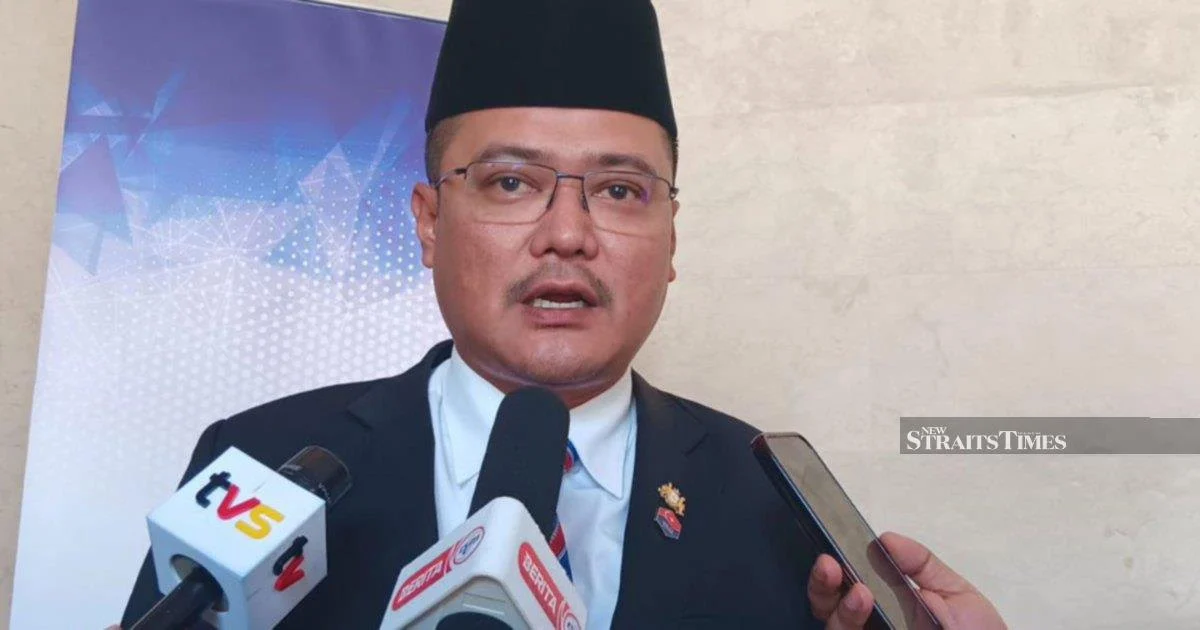
The Johor chapter of Barisan Nasional has launched a forceful counteroffensive against former state legislative assembly speaker Datuk Dr Mohd Puad Zarkashi, characterizing his recent assertions as lacking any factual foundation. Officials within the coalition have described the allegations—particularly those suggesting a connection between palace institutions and high-level political decisions—as not only unsubstantiated but also sufficiently grave and unethical to warrant formal denunciation. This public rebuke represents an escalation in tensions between the coalition leadership and Puad, whose criticisms appear to have touched sensitive institutional nerves within Johor's political establishment.
Puad's allegations have thrust royal prerogatives into the centre of a growing political controversy. By suggesting that palace authorities wielded influence over key political appointments and policy directions, the former speaker has ventured into territory that senior Umno figures and their Barisan allies regard as deeply problematic. The coalition's swift and uncompromising response underscores how protective the state's political establishment remains toward matters involving the sultanate, a sensitivity rooted in the constitutional framework governing Malaysia's nine kingdoms and their respective jurisdictions over state affairs.
The spiraling conflict has now acquired a new dimension through police intervention mechanisms. Youth leaders aligned with Umno have reportedly mobilized supporters to lodge police reports against Puad, a tactic that transforms what might have remained a matter of political debate into a potential criminal inquiry. These officials claim that several hundred individuals have already submitted formal complaints, though independent verification of these figures remains elusive. Such mass police filings represent a coordinated response strategy, suggesting organizational coordination among party cadres at district and divisional levels throughout Johor.
This development reflects deeper fractures within Johor's political landscape. Puad, despite holding the position of former speaker, appears to occupy a precarious position within the broader coalition framework. His willingness to publicly challenge narratives around palace involvement in state governance marks him as an outlier within a party culture that traditionally emphasizes deference toward royal institutions. The backlash he faces suggests that crossing this particular threshold carries substantial political consequences, particularly when articulated through public forums rather than confined to internal party discussions.
The invocation of police machinery in what remains fundamentally a political disagreement raises questions about the boundaries between legitimate political criticism and allegations that authorities consider defamatory or seditious. The distinction between criticizing political decisions and criticizing institutional influence has long proven contentious in Malaysian public discourse. Umno Youth's strategy of encouraging mass police complaints effectively shifts the burden onto investigative authorities to determine whether Puad's statements cross legal thresholds, a process that could consume considerable time and resources while simultaneously maintaining political pressure on the former speaker.
For Malaysian observers tracking intra-coalition dynamics, this episode illuminates the constraints operating within Barisan's organizational culture. Despite Umno's commanding influence over coalition affairs in Johor, individual members retain limited latitude to publicly question institutional relationships, particularly those involving the monarchy. Puad's experience demonstrates that seniority and past contributions to the party offer insufficient protection when one challenges fundamental premises regarding power distribution and decision-making processes. The coalition's response has accordingly been calibrated to discourage similar public dissent from other quarters.
The broader Southeast Asian context adds further significance to these developments. Malaysia's constitutional monarchy remains distinctive within the region, with sultanates retaining genuine governmental powers rather than purely ceremonial roles. The way Johor's political establishment defends royal prerogatives against scrutiny therefore carries implications beyond state boundaries, potentially signaling broader expectations regarding discourse around monarchical institutions throughout the federation. The intensity of the coalition's response may accordingly reflect anxieties about precedent and the normalization of critical public examination of palace-politics intersections.
Timeline and evidentiary questions surrounding these police reports warrant scrutiny. If indeed hundreds of complaints have been submitted, the sheer administrative volume would necessarily occupy police investigation divisions for extended periods. Moreover, the substantive legal basis for such complaints remains unclear, particularly if Puad was articulating political opinions rather than making demonstrably false factual assertions. The police's response to these filings will therefore become a matter of significant interest, potentially signaling whether authorities regard Puad's statements as falling within protected political discourse or as crossing into legally actionable territory.
Looking forward, this confrontation may influence how other Barisan figures calibrate their public commentary regarding palace relationships and political decision-making. The visible costs imposed on Puad through coordinated party mobilization and police complaints create deterrent effects, potentially chilling broader conversations that sections of the coalition might otherwise wish to pursue. Conversely, Puad's willingness to persist in articulating his position despite institutional pressure may embolden other dissenters or at least demonstrate that challenging consensus carries real political consequences worth debating publicly.

