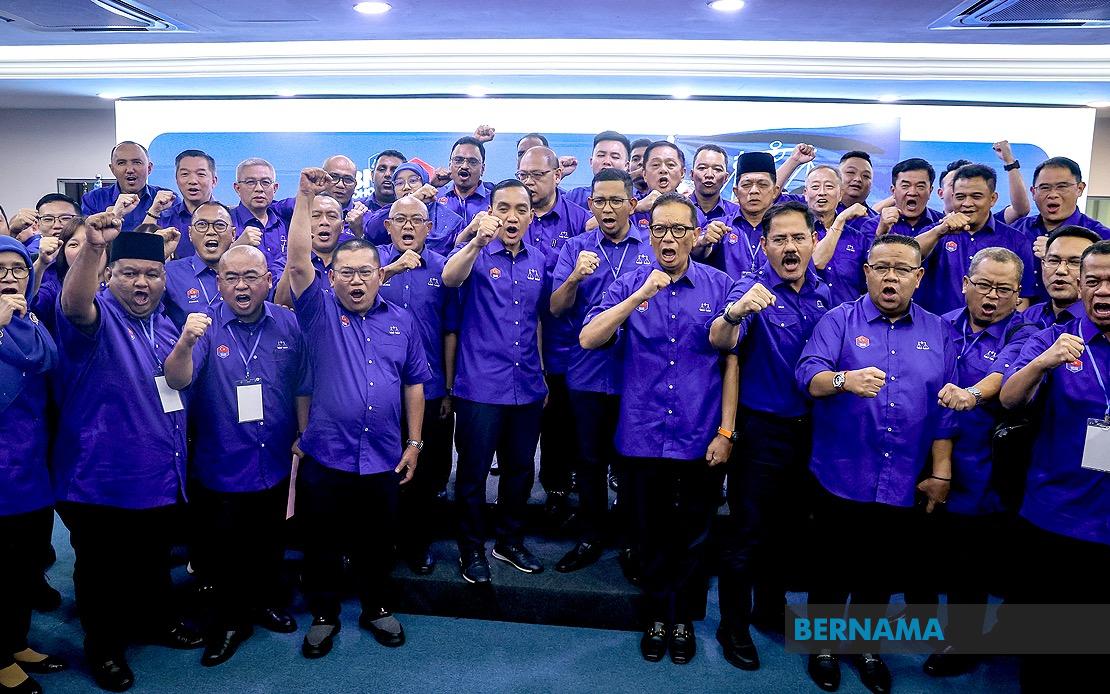
Johor's Barisan Nasional coalition has released its complete roster of 56 candidates for the upcoming state election, balancing the return of seasoned politicians with the introduction of new contenders across all constituencies. The announcement, made by Johor BN chairman Datuk Onn Hafiz Ghazi at a ceremony in Johor Bahru on June 24, reveals a ticket drawn from the three constituent parties: 37 candidates from UMNO, 15 from the Malaysian Chinese Association, and four from the Malaysian Indian Congress. The selection process carried the approval of BN chairman Datuk Seri Dr Ahmad Zahid Hamidi, underlining the coalition's structured approach to these critical state polls.
Perhaps the most striking element of the lineup is the political resurgence of former health minister Datuk Seri Dr Adham Baba, who will contest the Pasir Raja seat and attempt to reclaim the constituency he previously held for two consecutive terms between 2008 and 2018. Before his tenure as a state assemblyman, Adham served his community as Tenggara MP, a position he occupied in two separate periods spanning 2004 to 2008 and again from 2018 to 2022. His nomination signals BN's confidence in veteran politicians who bring ministerial experience and established voter networks, despite the passage of several years since his previous election contest. As Tenggara UMNO division chief, Adham maintains an organisational footprint in the region that could prove decisive in mobilising grassroots support.
Meanwhile, Johor Menteri Besar Onn Hafiz Ghazi himself will defend the Machap seat, which he secured during the 2022 state election and has held throughout his tenure as chief minister. His participation underscores the leadership's personal stake in maintaining BN control over the state government. The decision to field an incumbent Menteri Besar in a direct electoral contest rather than in a nominated position reflects the traditional structure of Malaysian state politics, where chief ministers must retain an assembly seat to remain in office. Onn Hafiz's candidacy carries significance beyond his individual constituency, as his performance could influence overall voter sentiment toward the BN coalition in Johor.
One notable change reflects the coalition's strategic recalibration in certain constituencies. In Benut, former Menteri Besar Datuk Seri Hasni Mohammad, despite being the sitting assemblyman, has not been renominated to contest the state election. BN has instead selected UMNO working secretary Datuk Mohd Sumali Reduan to contest the seat. This decision, while potentially surprising given Hasni's incumbency and experience, may reflect internal party considerations regarding candidate suitability, demographic shifts in the constituency, or broader coalition strategy. The move suggests that experience and past achievements do not guarantee automatic renomination, even at senior levels within the party hierarchy.
The coalition has demonstrated strong continuity in its approach to executive-level representation. Of the ten former Johor executive councillors who stood for election in 2022, nine have been retained as candidates for this election cycle. This retention rate indicates BN's assessment that these individuals have performed adequately in their previous terms and merit another opportunity to serve. However, Khairin-Nisa Ismail @ Md On, the former State Women, Family and Community Development Committee chairwoman, represents the sole exception to this pattern. She will not be renominated to defend the Serom seat, marking a notable instance where previous executive experience did not translate into a second candidature.
The candidate selection process itself carries deeper implications for Johor's political landscape. Onn Hafiz's public statements during the announcement ceremony emphasised that nomination represents neither reward nor privilege, but rather a profound trust and responsibility demanding integrity from all candidates. This framing reflects BN's recognition that internal party perceptions of fairness in candidate selection can significantly impact cohesion and campaign vigour. When party members perceive the selection process as arbitrary or nepotistic, their motivation to actively campaign for lesser-favoured candidates diminishes. By emphasising the gravity of the responsibility, BN leadership seeks to instil a sense of obligation and shared purpose across its diverse roster.
Onn Hafiz further instructed all BN candidates to conduct their campaigns with courtesy, respect, and prudence, explicitly tying their conduct to the values traditionally embraced by Johor's electorate. This messaging suggests BN's awareness that campaign behaviour and tone have become increasingly salient to voters, particularly in an era of heightened political polarisation and widespread social media scrutiny. The emphasis on conducting campaigns that reflect Johor's values may be interpreted as an attempt to differentiate BN's approach from potentially more aggressive or divisive tactics employed by opposition parties. For Malaysian voters and observers, this injunction offers a window into how established coalitions are recalibrating their messaging and behavioural expectations in response to evolving electoral dynamics.
The composition of the candidate list itself reflects careful calibration across demographic and geographical lines. The overwhelming majority of UMNO candidates, coupled with meaningful but smaller contingents from MCA and MIC, maintains the traditional power structure within BN while preserving the facade of genuine coalition governance. For MCA and MIC members, their reduced representation relative to UMNO has long been a source of tension, as these minority-based parties struggle to maintain relevance within a coalition increasingly dominated by Malay-majority UMNO. The allocation of 15 seats to MCA and four to MIC, while numerically stable, does not necessarily guarantee electoral success for these partners, potentially creating post-election recriminations if performance underwhelms.
From a Southeast Asian perspective, Johor's state elections carry significance beyond Johor itself. As Malaysia's largest and economically most dynamic state, with deep cross-border ties to Singapore and regional economic importance, the composition of Johor's government influences broader regional stability and investment climate. A successful BN campaign would reinforce the coalition's control over Malaysia's most developed state and generate momentum for potential federal-level political shifts. Conversely, if BN were to lose ground significantly, it would signal substantial erosion in the coalition's traditional strongholds and potentially embolden opposition forces across the country. The Johor election thus functions as a bellwether for national political trajectories and regional economic governance.
The deliberate mix of seasoned politicians returning to contest and fresh candidates entering the fray suggests BN's attempt to balance institutional memory with generational renewal. By reintroducing figures like Adham Baba while also fielding new faces in other constituencies, the coalition seeks to project simultaneous continuity and dynamism. This strategy acknowledges that voters increasingly expect evidence of fresh thinking and new leadership, yet simultaneously value the stability and proven competence of experienced hands. Whether this balance proves electorally effective will depend on whether new candidates can overcome the inherent disadvantage of lacking an incumbent's voter recognition and organisational apparatus.
As the election campaign period approaches, the significance of this candidate announcement extends beyond the immediate political theatre. Each selected candidate carries particular strengths, vulnerabilities, and local networks that will determine their individual electoral prospects. The aggregation of 56 individual contests will ultimately determine whether BN maintains its grip on Johor's state government or whether opposition forces succeed in dislodging the coalition from a state it has dominated for decades. For Malaysian and regional observers, the Johor election represents a crucial test of the BN coalition's enduring electoral viability and its capacity to adapt to changing political circumstances while maintaining internal cohesion across its diverse component parties.