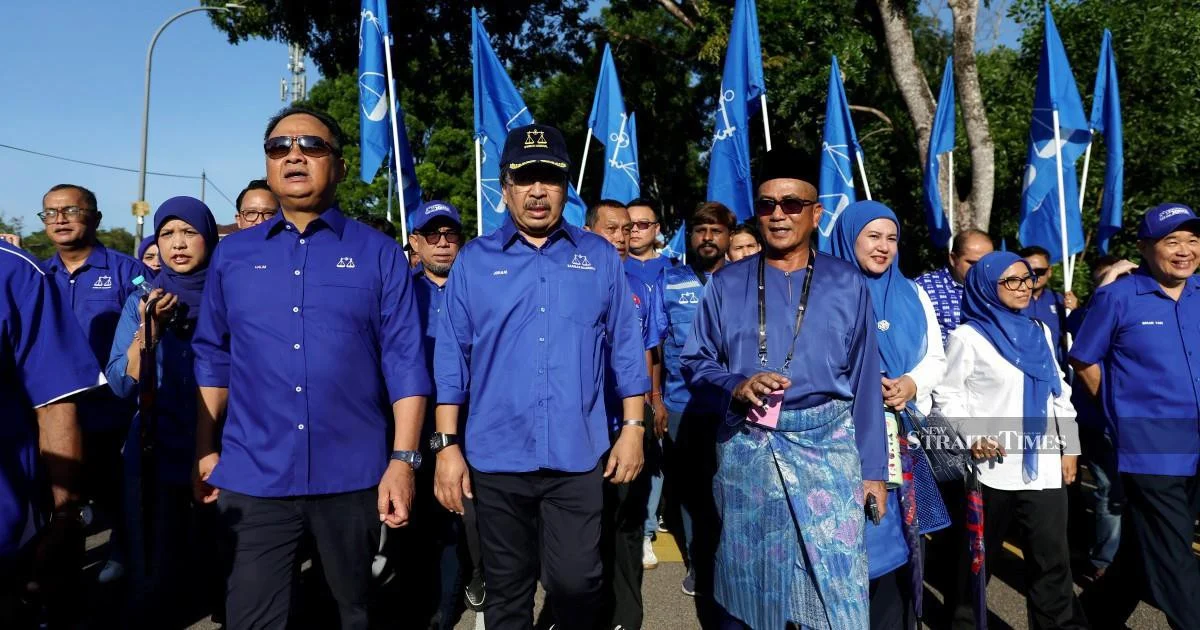
Umno vice-president Datuk Seri Johari Abdul Ghani descended on the Taman Pelangi Indah community hall in Johor Baru to galvanise support for the Barisan Nasional campaign in the Tiram state constituency, a move that reflects the ruling coalition's sustained focus on retaining ground in one of Peninsular Malaysia's most competitive electoral arenas. The high-profile visit demonstrates the party machinery's commitment to mobilising senior leadership at the grassroots level during what is increasingly being framed as a critical period for Umno's political standing in the state.
The Tiram seat represents one of the persistent flashpoints in Johor's political landscape, a constituency where narrow margins have historically defined electoral outcomes and where each campaign season brings intense contestation between rival blocs. Johari's personal appearance underscores Umno's understanding that incumbent seats, particularly those with historically tight vote shares, demand sustained senior-level engagement rather than routine candidate visits alone. The presence of the deputy party president signals an internal assessment that additional firepower is warranted to secure the constituency.
Barisan Nasional's presence in Johor has been tested repeatedly over recent electoral cycles, with the coalition experiencing fluctuations in performance that have prompted recalibrations in strategy and resource allocation. The party's decision to deploy a figure of Johari's stature suggests an appreciation for the political dynamics at play in communities like those served by the Taman Pelangi Indah gathering. Such strategic visits typically aim to energise volunteer networks, restore confidence among fence-sitters, and consolidate support among core voters who respond to direct appeals from party hierarchy.
Johari's role as Umno vice-president places him among the party's senior decision-makers and gives his campaign activities considerable symbolic weight. His engagement in state-level contests reflects the growing recognition within Umno that national-level politics and state assembly dynamics remain inextricably linked. The party has observed how shifts in state-level fortunes can cascade into broader electoral consequences, making each seat a potential bellwether for wider sentiment shifts.
The Taman Pelangi Indah neighbourhood itself typifies the urban and semi-urban areas that have become increasingly unpredictable in their voting patterns. These communities often comprise younger voters, recent arrivals to the constituency, and households grappling with cost-of-living pressures and service delivery expectations that transcend conventional party loyalties. Barisan's outreach to such demographics through senior party figures attempts to bridge perceived gaps between party messaging and ground-level concerns that shape electoral choices.
For Barisan Nasional more broadly, maintaining strength in Johor is strategically essential given the state's historical significance as a power base and its influence on national political equilibrium. A loss or significant reduction in the coalition's seat count in Johor would reverberate through Malaysian politics, potentially emboldening opposition forces and complicating governance narratives at both state and federal levels. Conversely, holding or expanding the coalition's presence in key seats like Tiram contributes to the appearance of continued electoral viability.
The timing of such campaign visits also carries implications for how Umno manages internal party dynamics. The deployment of senior figures to specific constituencies can signal to party members which seats leadership considers non-negotiable and which campaigns merit the greatest resource commitment. This internal signalling effect shapes candidate morale, volunteer mobilisation, and the relative priority assigned to different contests within an electoral period.
Johor's electoral trajectory has been marked by growing complexity, with voters increasingly fragmented across multiple political options and less responsive to traditional party appeals. The decision to commit Johari's time and profile to the Tiram campaign reflects an attempt to reassert conventional party-based mobilisation mechanisms in an environment where such approaches face mounting challenges from social media-driven grassroots movements and shifting demographic preferences.
Barisan's Tiram strategy also intersects with broader questions about the coalition's viability in urban and semi-urban constituencies where living costs, employment opportunities, and quality-of-life considerations often dominate voter thinking. Johari's message, whatever its specific formulation during the Taman Pelangi Indah engagement, would necessarily address how Barisan candidates intend to address such material concerns while maintaining coherence with national policy directions that the coalition has championed at the federal level.
The constituency remains watchable territory for political observers seeking to understand voter behaviour patterns in modern Malaysia. Elections in seats like Tiram often provide early indicators of whether established coalitions retain sufficient appeal to demographic groups that previously provided reliable electoral foundations. Johari's presence thus extends beyond the immediate campaign objective, functioning also as a data-gathering exercise through which party leadership gauges grassroots sentiment and identifies emerging concerns within the electorate.

