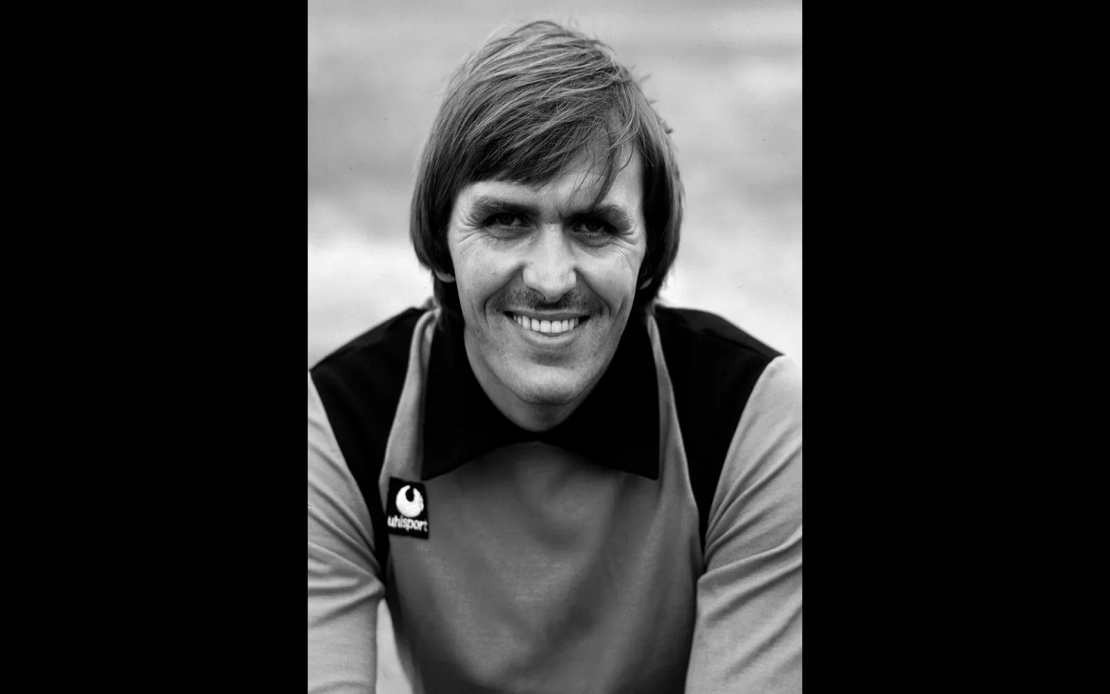
Jimmy Rimmer, the goalkeeper whose assured hands helped Aston Villa capture the 1981 First Division championship, has passed away at the age of 78. The storied English footballer, who also claimed a European Cup winners' medal during one of the most glorious periods in the Birmingham club's history, leaves behind a legacy marked by remarkable achievement tempered by cruel circumstance.
Rimmer's finest hour came during Villa's 1980-81 season, when he played every minute as the club claimed the English top-flight title. That triumph positioned Villa among Europe's elite, setting the stage for their continental assault. Yet what should have been the crowning moment of his career turned to disappointment in the most heartbreaking fashion when Villa faced Bayern Munich in the 1982 European Cup final at Rotterdam's Feijenoord Stadium.
Just nine minutes into the match in the Netherlands, Rimmer suffered a serious neck injury that forced him to leave the field. He watched from the sidelines as his replacement, understudy Nigel Spink, produced a commanding performance between the posts to preserve a clean sheet. The outcome proved a triumph for Villa, with midfielder Peter Withe scoring the decisive goal in the second half to secure a 1-0 victory and the European crown. Yet for Rimmer, the achievement carried an asterisk—he had earned his medal without contributing to the final itself.
This was not the first time misfortune had struck at the most significant moment. Fourteen years earlier, Rimmer had travelled with Manchester United as they challenged for the European Cup, only to remain on the bench when the Red Devils faced Benfica at Wembley. United emerged victorious that day too, but again Rimmer was reduced to an observer rather than a participant in football's highest theatre. The pattern of reaching the summit only to be denied his place would define much of how he was remembered by supporters and peers alike.
Aston Villa released a formal statement honouring their departed legend, describing Rimmer as one of the finest goalkeepers of his generation whilst acknowledging the peculiar tragedy of his career trajectory. The club's official words captured what many observers had noted throughout his playing days—that Rimmer possessed the quality and temperament to rank among England's elite custodians, yet fate conspired to write him into the margins of the two greatest nights in his team's history.
Rimmer earned a solitary cap for England, a recognition that underscores his quality though perhaps fewer than his abilities might have warranted. His international recognition, though limited, reflected the high regard in which he was held by those who witnessed his performances week after week in the English league. That a goalkeeper of such evident capability managed only one appearance at the senior level speaks to the extraordinary depth of talent available to England's selectors during the 1970s and early 1980s.
The career path that brought Rimmer to Villa Park had begun at Manchester United's Old Trafford, where he competed for the number-one jersey against the formidable Alex Stepney. Unable to dislodge the established stopper, Rimmer pursued his ambitions elsewhere, moving to Arsenal in 1974 before subsequently joining Villa three years later. This progression through multiple elite clubs demonstrates how highly rated he was within the sport, even if each move represented a search for guaranteed first-team football.
At Villa Park, Rimmer finally established himself as a consistent, commanding presence. He accumulated more than 200 appearances in claret and blue, numbers that reflect both his quality and the club's reliance upon his steady performances. His mastery during the 1980-81 title-winning campaign established him as a cornerstone of that successful side, and his ability to anchor Villa's defensive structure contributed significantly to their achievement. That consistency and dependability were the hallmarks of his play throughout his career.
Following the 1982 European Cup triumph, Rimmer's tenure at Villa gradually wound down. Competition for the goalkeeping position intensified, and the club's management opted to move him on. In 1983, a year after his extra-time exit from the Rotterdam final, Rimmer was sold to Swansea City, ending his association with the club where he had achieved the greatest success. The move marked the beginning of the twilight phase of a career that had yielded considerable accomplishment despite the frustrations of major-match injury and circumstance.
Rimmer's story resonates beyond the confines of English football, offering a poignant reminder of how unpredictable sport can be. Despite winning European and domestic honours, he remains remembered as much for the matches he missed as for those he played. His situation serves as a cautionary tale about the thin line between glory and anonymity in sport, and how factors entirely beyond an athlete's control can shape their historical legacy. For Malaysian football enthusiasts and those across Southeast Asia who appreciate the narrative complexities of sport, Rimmer's journey exemplifies the sometimes tragic nature of competition at the highest level.

