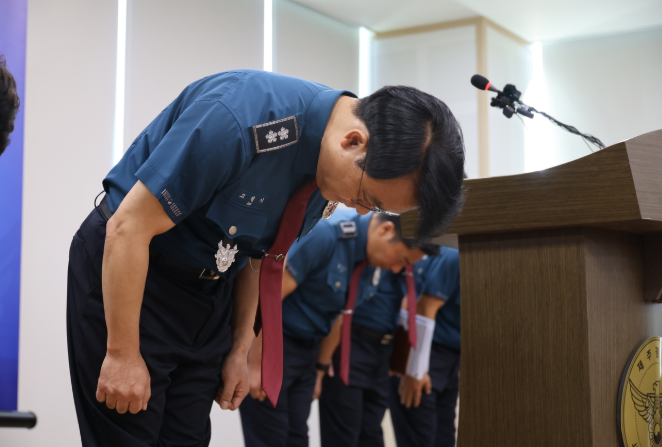
Jeju Police Commissioner Ko Pyeong-gi made a public apology on Thursday at the Jeju Provincial Police Agency after serious lapses in procedure resulted in the deaths of two individuals whose missing person cases had been prematurely and improperly closed. The announcement came after a police officer surnamed Bu was found to have deliberately falsified information to close the cases, actions that have raised troubling questions about accountability within South Korea's provincial police forces and the vulnerability of missing person investigations to individual misconduct.
The first victim, Jang Mi-ran, was a 37-year-old woman who vanished in May and whose body was discovered on Monday. Officer Bu allegedly claimed to have spoken directly with Jang to justify closing her file, despite having no legitimate basis for such a claim. This false documentation effectively halted active investigation efforts and removed the case from public attention at a critical time when her whereabouts remained unknown. The second victim, a man in his 60s, had his case similarly closed through identical deceptive practices, with his remains discovered on Saturday.
In his formal statement, Commissioner Ko expressed profound remorse not only for the two deceased individuals but also for the anguish endured by their families. His words acknowledged that both victims were deprived of the opportunity to return home and receive proper care, while their relatives have now been left to cope with irreversible loss compounded by the knowledge that police procedures failed them when intervention might still have been possible. The commissioner's apology extended beyond the immediate bereaved families to the broader Jeju community, recognising the erosion of public trust that inevitably follows such institutional failures.
The implications of this case extend beyond the individuals involved, highlighting systemic vulnerabilities within missing person investigations across South Korean police agencies. Missing person cases depend critically on meticulous documentation, timely follow-up, and transparent communication between officers. When individual officers can unilaterally close cases based on fabricated evidence without sufficient oversight or verification procedures, the entire protective framework designed to safeguard vulnerable citizens collapses. The fact that Bu employed the same fraudulent method twice suggests these practices may have persisted undetected for some period.
Commissioner Ko has committed the Jeju Provincial Police Agency to a comprehensive and transparent investigation into the circumstances surrounding both cases, promising full accountability for the officer involved. This commitment addresses not only the immediate misconduct but also the question of how such deception evaded internal quality control mechanisms. The investigation will necessarily examine whether supervisory protocols were inadequate, whether case review procedures lacked sufficient rigour, and whether officers had insufficient training in the gravity of their responsibilities.
Beyond the individual investigation, Ko announced that Jeju police will undertake a thorough review of all missing person cases handled on the island to identify whether similar errors or misconduct have occurred elsewhere. This systematic audit represents an essential step toward restoring confidence in the agency's operations. Such reviews can uncover patterns of negligence, training gaps, or institutional pressures that might incentivise officers to close cases prematurely rather than pursue investigations to their logical conclusion. For Malaysian readers accustomed to discussions about police accountability, this review process offers both cautionary lessons and a model for institutional self-examination.
The case underscores the critical importance of missing person investigations, which in many jurisdictions remain among the most challenging police responsibilities. Unlike cases with clear witnesses or evidence, missing persons investigations often depend on meticulous follow-up, community engagement, and sustained attention over weeks or months. When officers close such cases based on insufficient evidence or outright deception, they essentially abandon vulnerable individuals who may be facing dangers ranging from accidents to crime. The human cost of institutional failure in this context is particularly severe because the window for successful intervention often narrows rapidly.
In the South Korean context, this incident arrives amid broader national conversations about police reform and institutional accountability. The Jeju Police Agency now faces the challenge of not merely punishing the officer involved but also implementing systemic changes that prevent similar misconduct. This might include enhanced documentation requirements, mandatory supervisor sign-offs on case closures, periodic independent audits, and clearer performance evaluation metrics that do not inadvertently incentivise closing cases without thorough investigation.
For regional observers, the Jeju case demonstrates that police accountability issues transcend national boundaries and occur even in developed democracies with sophisticated institutional frameworks. The willingness of Commissioner Ko to issue a public apology and commit to systemic review may reflect different institutional cultures compared to some other jurisdictions, but the underlying vulnerability remains universal. Any police force where individual officers can unilaterally close cases without robust oversight faces similar risks of negligence or misconduct.
The resolution of this matter and the implementation of promised reforms will significantly influence public confidence in Jeju's police agency. Families of missing persons across South Korea will be observing whether the announced changes produce genuine improvement in investigative practices and accountability mechanisms. For police forces throughout Asia, including those in Malaysia and the wider region, the Jeju case offers a stark reminder of the irreplaceable importance of institutional integrity in investigations where lives depend on professional diligence and honest adherence to procedures.

