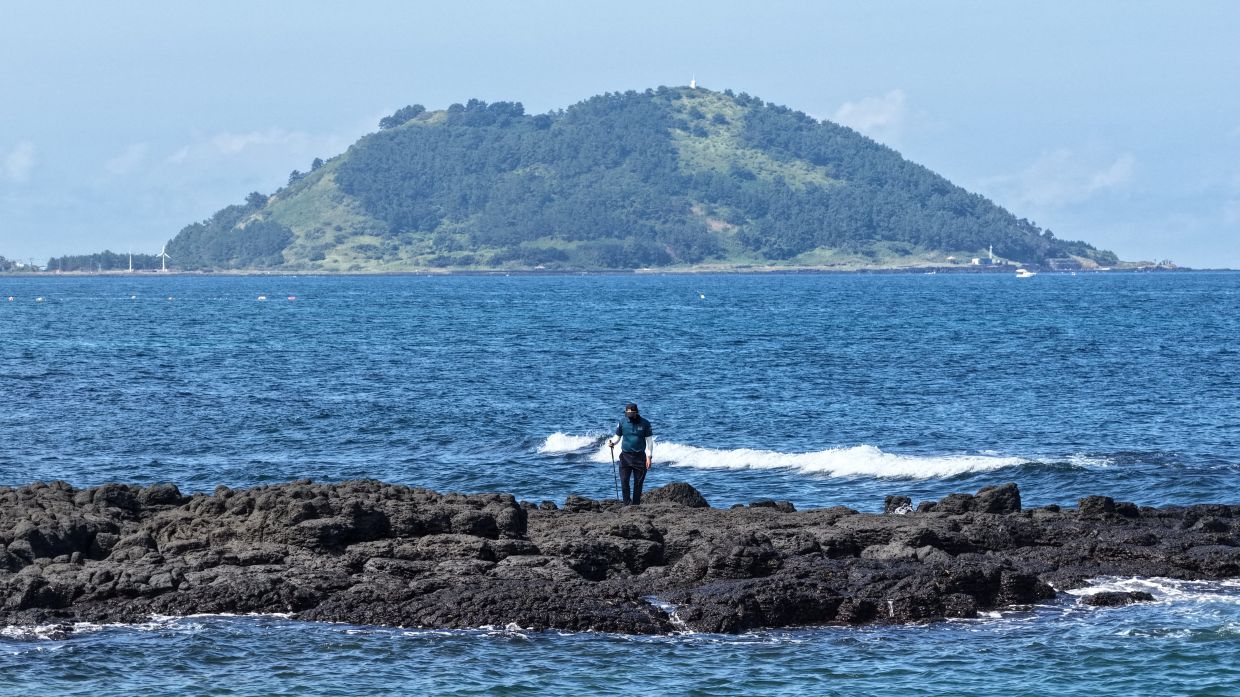
Jeju Island, long celebrated as South Korea's premier destination for newlyweds and holiday-makers, is grappling with an unprecedented crisis of confidence after a major police scandal has raised alarm bells about public safety on the cherished resort destination. The trouble erupted when investigations revealed that a police officer had allegedly shut multiple missing-person cases through false documentation, a discovery that coincided with the finding of four deceased individuals within a single three-day window through Monday, August 24. The convergence of these troubling events has fundamentally altered how both domestic and international visitors perceive this once-idyllic island, prompting cancellations and spawning widespread anxiety across social media platforms.
At the heart of this unfolding tragedy stands the case of Jang Mi-ran, a 37-year-old woman who vanished sometime between late evening on May 12 and early morning on May 13 after leaving her residence in Hallim-eup, Jeju City. For nearly three months, her disappearance remained officially unresolved until police finally resumed active search operations, prompted by the emerging scandal. When investigators intensified their efforts, they discovered what is believed to be her remains on Monday lying among palm trees—devastatingly, just a short ten-minute walk from where she had been staying. The officer handling her case had allegedly falsified records in May, falsely documenting that he had made direct contact with her, effectively closing the investigation file and removing her from any active search list.
The Jang Mi-ran case exposed systematic failures within Jeju's local police force. Authorities subsequently discovered that the same officer responsible for mishandling her case had similarly falsified the closure of at least one additional missing-person investigation. A man in his 60s, reported missing and assigned to the same problematic officer, was found dead in Gujwa-eup on Saturday only after police eventually launched a comprehensive re-examination of previously closed cases. This pattern of negligence has raised serious questions about departmental oversight and accountability mechanisms within Jeju's police infrastructure, with critics questioning how such procedural breaches could have gone undetected for months.
The timing of the four discoveries intensified the sense of crisis. On the same day Jang's remains were recovered, authorities discovered another previously missing individual deceased near a valley in Aewol-eup. The following day, a fisherman encountered the body of a man in his 70s in the waters off Sinheung-ri in Jocheon-eup and immediately notified emergency services. While authorities have not publicly established definitive links between these deaths or uncovered evidence of coordinated criminal activity, the sheer concentration of discoveries within such a brief timeframe has profoundly unsettled both residents and the island's substantial transient visitor population.
Jeju's tourism-dependent economy is already feeling the reverberations of these incidents. Local business owners, particularly those operating short-term rental accommodations, report that guests are actively cancelling reservations and declining to book stays on the island. One Jeju resident operating a rental business, surnamed Cho, shared on Instagram that multiple tenants have terminated their leases in response to recent events, describing a palpable shift in tenant confidence. The vulnerability of this tourism-reliant economy has become starkly apparent, with established business operators suddenly confronting the prospect of significantly reduced revenues during what would normally be peak season.
Pubic anxiety has crystallized particularly around safety for women and solo travellers. Hong Hye-geol, a physician specialising in preventive medicine and established television personality who has resided on Jeju for seven years, posted a candid warning on Instagram describing the island's numerous secluded rural areas where isolated travellers could find themselves cut off from help. She cautioned against venturing even along ostensibly safe paved roads in daylight hours without companions, highlighting how quickly the island's pastoral character can transform into something isolating and potentially dangerous. Her comments—delivered by someone with deep familiarity with the island—carried particular weight and resonance among potential visitors concerned about security.
Cancellations have begun materialising across various tourism categories. One prospective couple abandoned plans for a destination wedding photography session in Gujwa-eup, a picturesque area traditionally prized for its quiet countryside aesthetics and natural beauty. Another social media user called for an island-wide tourism boycott until authorities conclusively investigate the police officer's conduct and accept formal responsibility for the broader missing-person case failures. Though hard data on visitor declines remains preliminary, these expressions of hesitation and anger signal a fundamental erosion in consumer confidence that could translate into measurable economic damage.
Guesthouse operators are witnessing this anxiety firsthand through direct guest communications. Bang, a 52-year-old who has managed a women-only guesthouse in Jocheon-eup for eight years, has fielded multiple enquiries specifically addressing safety concerns. Within just two days before speaking with media, a group of three guests cancelled their reservation, with uncertainty remaining about whether recent events directly prompted their decision. Notably, Bang's business model—deliberately catering exclusively to female guests—paradoxically appears to be intensifying rather than alleviating visitor concerns, as women specifically cite heightened anxiety about personal security. She emphasised that despite the neighbourhood's infrastructure of streetlights positioned every 20 to 30 metres, creating a well-illuminated environment where staff traditionally leave front gates unlocked, the psychological climate has shifted dramatically.
Jeju's tourism sector was already navigating considerable headwinds before this crisis erupted. The Jeju Tourism Organization reported that domestic visitor numbers fell to 963,401 in July, representing a sharp 12.4 per cent decline compared to 1,100,021 visitors during the same month in 2023. This marked the first instance since the Covid-19 pandemic began in 2020 that monthly domestic visitor counts dipped below the one million threshold—a significant psychological and economic marker for the island's tourism industry. The downward trajectory persisted into August, with daily average domestic visitor counts reaching approximately 35,295 between August 1 and 23, trailing the previous year's identical period by about 300 visitors daily on average.
The broader context reveals that Jeju Island already carries statistical baggage that makes the current crisis particularly damaging. According to data released by the Korean National Police Agency, Jeju recorded South Korea's highest crime rate in 2024, registering 4,539.6 offences per 100,000 population. This statistic warrants careful interpretation: the calculation uses Jeju's permanent resident population of approximately 663,000 as its denominator, yet the island receives millions of visitors annually. This mathematical reality means transient visitors dramatically outnumber residents during peak seasons, potentially skewing crime statistics in ways that misrepresent actual danger levels. Nevertheless, the negative perception has crystallised.
Local authorities and police leadership face mounting pressure to restore public confidence through transparent investigation and demonstrable reform. The false closure of missing-person cases represents not merely administrative incompetence but a fundamental breach of the protective duty that law enforcement owes to vulnerable individuals and their families. The island's economy, heavily dependent on visitor spending and reputation, now hinges on rapid institutional accountability and visible changes to police procedures and oversight mechanisms. Without decisive action, Jeju risks transitioning from a symbol of romantic escape to a cautionary tale, with lasting implications for its tourism revenue and residents' livelihoods throughout this economically critical sector.

