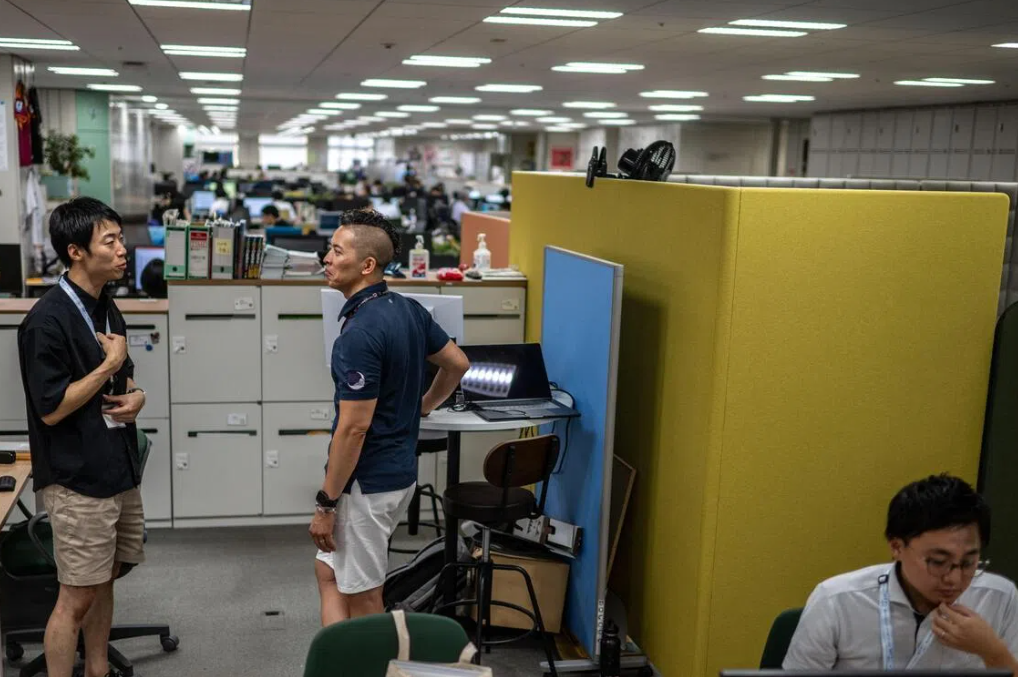
Japan's efforts to help office workers endure sweltering summer temperatures through relaxed workplace dress codes have collided with an unexpected cultural flashpoint: the visibility of male colleagues' leg hair. Tokyo's metropolitan government expanded its 'Cool Biz' initiative in April to permit casual attire such as T-shirts, trainers, and shorts alongside the traditional business formal wear, aiming to reduce both employee discomfort and energy consumption during Japan's oppressive heat season. The campaign, however, has revealed deeper tensions about workplace norms, body image standards, and evolving social conventions in Japanese corporate culture.
The backlash centres on a newly coined social media term, "sunehara," or "leg hair harassment," which captures the reported discomfort some women experience viewing exposed shin hair on male colleagues. This phrase may seem frivolous to Western sensibilities, but it reflects genuine friction emerging from the push toward greater workplace flexibility. Tokyo environmental official Noboru Watanabe acknowledged the nuance, telling the BBC that the metropolitan government seeks to "give people more options in the severe heat, not tell them what to wear," while insisting that offensive attire should remain off-limits. The challenge, however, lies in defining what constitutes genuinely offensive workplace presentation in a society where formality has long been paramount.
A June survey conducted by Gorilla Clinic, a men's cosmetic treatment chain, provides quantifiable insight into this cultural divide. The poll found 53.5 percent of respondents opposed wearing shorts to work, while 46.5 percent supported the practice. These figures reveal a population almost evenly split on the propriety of shortened hemlines in professional settings. Significantly, concerns about body shape and visible body hair emerged as primary objections among opponents. The demographic breakdown proved particularly revealing: women substantially outnumbered men among survey respondents who expressed resistance, suggesting a gender gap in enthusiasm for this particular aspect of workplace casualisation. The implication is striking—women appear considerably less eager to encounter colleagues displaying their leg hair in what remains fundamentally a formal work environment.
The controversy has generated unexpected psychological consequences for Japanese men. Some have become self-conscious about their appearance in ways previously unconsidered within workplace contexts. Akifumi Funatsu, a director at Gorilla Clinic, reports that the clinic has seen increased demand for laser hair removal treatments among male clients, who now view such procedures not merely as cosmetic enhancement but as an obligation of "social etiquette when wearing shorts." This represents a striking shift in masculine grooming expectations within Japan, where such treatments were traditionally considered primarily female concerns. The anxiety reveals how workplace dress-code evolution can trigger broader anxieties about conformity and acceptability, particularly when social consensus remains unclear.
Tokyo's current initiative builds upon nearly two decades of gradual workplace casualisation. The original Cool Biz campaign launched in 2005 when Yuriko Koike, then serving as environment minister, introduced short-sleeved shirts and encouraged workers to abandon jackets and ties as a energy-conservation measure. The campaign gained significant traction when then Prime Minister Junichiro Koizumi made a public appearance without formal neckwear or jacket, lending political credibility to the initiative. This top-down legitimisation proved influential in normalising casual summer workplace dress across Japan's rigid corporate hierarchy. Following the devastating 2011 earthquake and tsunami, which severely strained Japan's electrical infrastructure, the government launched an even more relaxed "Super Cool Biz" program, further dismantling traditional dress codes.
The underlying motivation for this latest expansion remains rooted in genuine public health concerns. Japan experiences extreme summer temperatures and humidity levels that significantly compromise the body's natural cooling mechanisms. Between July 6 and July 12 alone, seven people died from heatstroke and 4,580 individuals required hospitalisation, according to the Fire and Disaster Management Agency. These figures underscore the severity of Japan's summer heat crisis and the government's responsibility to mitigate preventable deaths. Officials have accordingly urged residents to maintain proper hydration, utilise air-conditioning, and gradually acclimate themselves to elevated temperatures. Alongside regulatory approaches, Japanese consumers have embraced technological solutions, with markets expanding for clothing embedded with cooling fans, specialised cooling wipes, heat-reflective umbrellas, and portable personal fans.
The shorts controversy, while superficially amusing to international observers, illuminates deeper questions about how rapidly workplace cultures can and should transform. Japanese employment culture has historically emphasised conformity, hierarchy, and visible demonstration of commitment through formal appearance. The Cool Biz campaigns represent a deliberate effort to destabilise these assumptions, driven by practical considerations of worker wellbeing and energy efficiency. Yet this generational shift encounters resistance from those who view formal dress as intrinsically connected to professional competence and respect. The "leg hair harassment" debate therefore functions as a proxy for broader anxieties about pace of change and the loss of familiar social signalling mechanisms.
For Southeast Asian readers observing Japan's experience, the debate carries particular relevance. Many countries across the region similarly struggle with extreme heat and humidity while maintaining relatively formal workplace dress norms inherited from colonial-era conventions or Japanese corporate influence. The tensions Japan experiences between formal workplace tradition and practical accommodation of climate realities mirror challenges emerging throughout Southeast Asia, particularly as corporations increasingly adopt flexible work policies and multinational companies implement global dress codes. Japan's experience demonstrates that even in a wealthy, technologically advanced society with strong institutional capacity, shifting deeply embedded workplace norms proves complicated and occasionally contentious.
The ultimate resolution of Tokyo's shorts controversy remains uncertain. Whether Japanese workplaces ultimately normalise visible leg hair exposure, whether male workers increasingly pursue hair removal treatments, or whether a compromise emerges remains to be determined. What seems evident, however, is that Japan's Cool Biz campaigns have inadvertently sparked a cultural conversation extending far beyond energy consumption and worker comfort. The debate reflects fundamental questions about how much workplace traditions should yield to practical necessity, how quickly social conventions can adapt, and whether efforts to increase individual choice inevitably generate new social friction. As Japan's summers grow hotter and more dangerous, the pressure to find equilibrium between formal tradition and practical necessity will likely intensify, potentially pushing previously unspoken anxieties about appearance and acceptability into increasingly open discussion.

