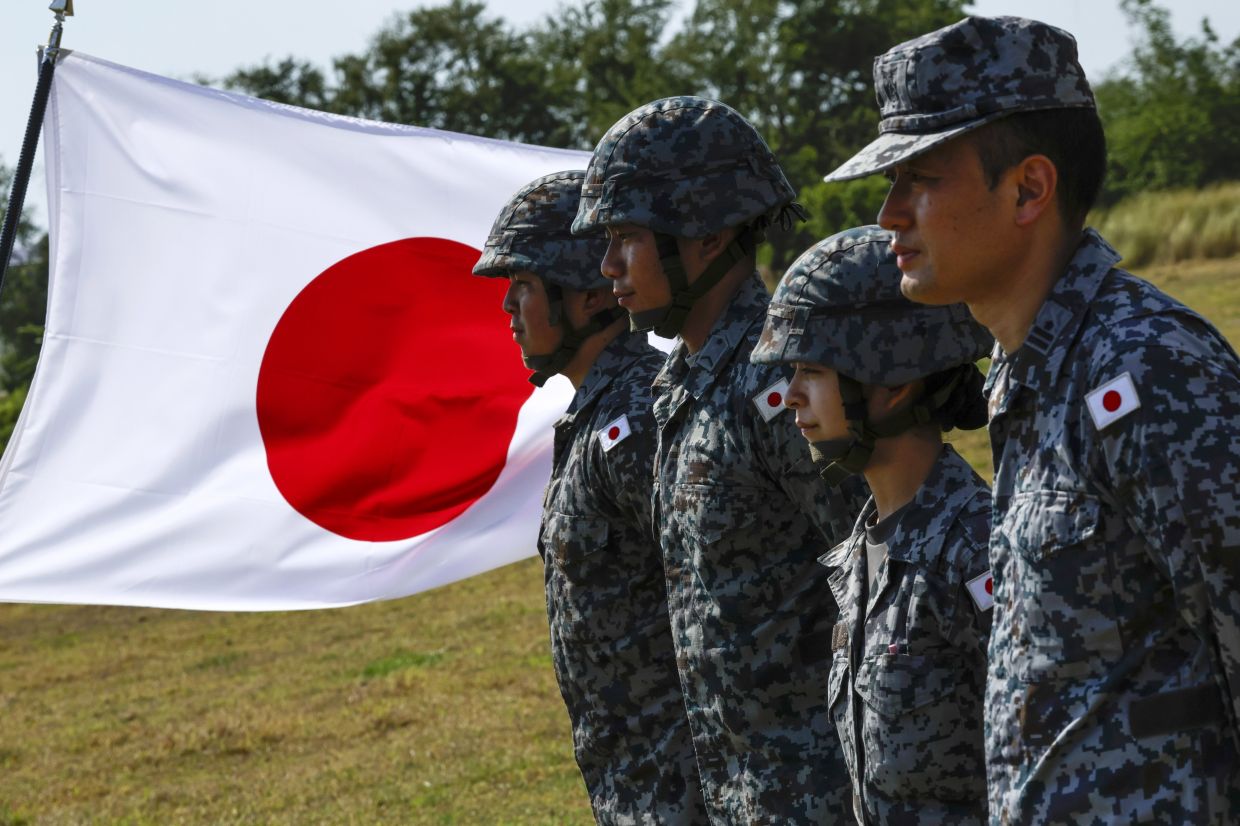
Japan's Defence Minister Koizumi commanded attention at last month's security forum in Singapore, orchestrating what appeared to be a carefully choreographed display of regional influence and coordinated defence positioning. The timing was strategic—on May 31, the forum's final day, Japan demonstrated its capacity to shape the regional security agenda in ways that reflected Tokyo's growing ambitions. Most tellingly, Beijing's scheduled session on cooperative partnerships in the Asia-Pacific region was abruptly cancelled, denying China a platform to articulate its vision for regional security architecture. The cancellation underscored how Japan has learned to leverage multilateral forums not merely to present its own views but to constrain the diplomatic space available to its rivals.
Yet the very prominence Japan sought to project revealed underlying anxieties. Koizumi's high-profile meeting with US Defence Secretary Pete Hegseth was designed to reassure domestic and regional audiences of Washington's unwavering commitment to Asia. However, the very need for such visible reaffirmation exposed Japan's deep-seated dependence on the American security umbrella and growing doubts about its durability. This vulnerability stems from broader shifts in Washington's strategic posture, where questions about US reliability have intensified following Donald Trump's demands that allies substantially increase defence spending while simultaneously imposing steep tariffs on key partners including India. Such contradictions have forced Tokyo to reconsider how much faith it can place in traditional alliance structures.
Japan's response extends far beyond diplomatic gestures. Last year, Tokyo floated the controversial idea of constructing nuclear-powered attack submarines, a proposal that challenges the nation's post-war nuclear taboo and reflects the seriousness with which defence planners view the strategic challenge posed by China's military modernisation. This willingness to reexamine longstanding constraints on military capabilities signals how profoundly Japan's security calculus has shifted. Simultaneously, Tokyo has embarked on a systematic expansion of bilateral and minilateral security partnerships designed to create a resilient network of aligned nations throughout the Indo-Pacific region.
Wellington's announcement regarding an upgraded Mogami-class frigate deployment to the region exemplifies this approach, creating visible evidence of deepening security integration among like-minded democracies. Analysts increasingly view these interconnected partnerships as critical components of a broader military architecture emerging precisely because American commitment appears to be wavering. This multilayered framework combines traditional security assistance with economic partnerships and flexible diplomatic arrangements, offering regional nations an alternative pathway that does not force binary choices between Washington and Beijing.
However, Tokyo faces a fundamental constraint that no amount of diplomatic skill can entirely overcome: financial limitations. Japan simply lacks the economic muscle to compete directly with China's defence spending and infrastructure investments across the Indo-Pacific. This reality has prompted experts to advocate for a more collaborative approach in which Japan works alongside allies to achieve quantitative parity while carefully avoiding the explicitly anti-China framing that would alienate fence-sitting regional partners. The key challenge lies in building coalitions that maintain strategic cohesion without appearing as formal containment blocs, a delicate balance requiring sophisticated messaging and genuine commitment to partners' development priorities.
Tokyo's response has evolved considerably since Shinzo Abe's 2016 Free and Open Indo-Pacific framework, which emphasised principles such as rule of law and transparent governance. Prime Minister Sanae Takaichi's updated FOIP framework announced in May represents a significant recalibration toward practical economic and security instruments. This shift reflects a crucial insight: many Southeast Asian and Pacific Island nations prioritise economic resilience and development infrastructure over abstract security principles. Consequently, Japan has begun integrating security assistance with infrastructure financing and energy transition support, recognising that sustainable partnerships must address multiple dimensions of national welfare simultaneously.
A particularly innovative mechanism has been the creation of the Official Security Assistance programme, which enables Tokyo to channel defence aid directly to military entities of strategic partners. This programme proved necessary because traditional Official Development Assistance policies explicitly prohibit military applications. By creating a dedicated channel, Japan solved a practical problem while simultaneously filling a gap left by development aid schemes that had become overextended attempting to address maritime security concerns. The distinction matters significantly: recipient nations often find infrastructure financing and port development more politically acceptable than direct military purchases, yet these very projects can simultaneously support coastguard operations and defence logistics.
The security assistance framework has expanded dramatically since its inception. Within just three years, the programme has grown from supporting four countries with 2 billion yen in funding to encompassing twelve nations and 18.1 billion yen in commitments. This rapid scaling reflects Tokyo's determination to build capacity among regional partners, providing advanced radar systems and unmanned aircraft that enhance maritime awareness and operational capabilities. The expansion demonstrates that despite financial constraints relative to China, Japan can achieve meaningful regional impact through targeted, strategically focused investments that deliver concrete capabilities to partners facing genuine security challenges.
Beyond hedging against strategic uncertainty, Japan's defence assistance programme serves additional purposes that strengthen Tokyo's own position. The initiative provides Japanese military manufacturers with proving grounds for equipment testing and development, creating opportunities to demonstrate capabilities to potential international buyers. This industrial dimension connects directly to Tokyo's broader strategic pivot initiated in April when Japan lifted its longstanding ban on lethal weapons exports, immediately permitting defence sales to seventeen countries including six ASEAN members: the Philippines, Malaysia, Indonesia, Vietnam, Thailand and Singapore. The practical expression of this policy shift came on June 5 when Tokyo and Jakarta entered discussions regarding potential export of Asagiri-class destroyers to Indonesia.
Beyond weaponry, Japan launched the Power Asia initiative in April with a $10 billion commitment to help regional partners secure emergency energy supplies and build long-term resilience amid ongoing Strait of Hormuz vulnerabilities. This initiative exemplifies the holistic approach that experts identify as essential to Japan's success: integrating defence capabilities with economic security and development priorities creates partnerships that address multiple legitimate concerns simultaneously rather than forcing nations into narrow security-versus-development tradeoffs. The strategy acknowledges that regional stability depends upon economic prosperity and energy security as much as military balance.
Analysts including Stephen Nagy at Tokyo's International Christian University emphasise that Japan's fundamental driver is pragmatic hedging against regional instability combined with concerns about American reliability and determination to preserve open sea lanes from coercive Chinese pressure. Pratnashree Basu from India's Observer Research Foundation notes that Tokyo pursues a more holistic engagement model extending beyond traditional security frameworks. This comprehensive approach recognises that durable partnerships require addressing development priorities, economic resilience, and infrastructure needs alongside conventional military cooperation. The challenge ahead involves maintaining strategic focus while building inclusive coalitions that prove resilient across changing administrations in Washington and shifting geopolitical circumstances throughout the region.

