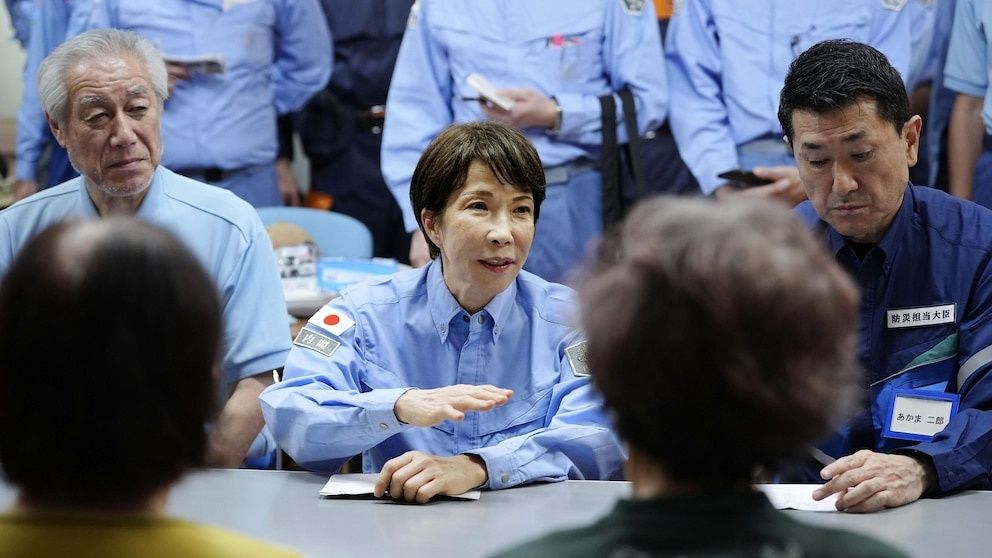
Prime Minister Sanae Takaichi visited Japan's southwestern Kumamoto Prefecture on Monday for the first time since a magnitude 7.1 earthquake struck the region on Tuesday, August 4, triggering a full-scale disaster response amid deteriorating conditions. The quake, which struck the southern main island of Kyushu, has claimed 38 lives and caused extensive infrastructure damage, yet the recovery operation is being severely hampered by scorching temperatures and widespread service disruptions that threaten the well-being of already traumatised residents.
The human toll of the disaster extends beyond immediate casualties, with officials confirming that one fatality resulted from heat stroke as the victim sheltered in a vehicle during the hot weather that has gripped the region since the tremor. Authorities are still investigating the cause of death for another victim, highlighting the secondary dangers posed by Japan's summer heat in the aftermath of natural disasters. The prefecture has recorded 114 injured individuals across the affected areas, with many sustained injuries limiting their mobility during evacuation processes.
Material destruction remains extensive across Kumamoto, with approximately 700 homes completely destroyed and over 11,300 buildings damaged to varying degrees. In the towns of Uki and Hikawa, construction crews have begun assembling temporary housing units to accommodate those whose dwellings are no longer habitable. This infrastructure challenge is compounded by the fact that many residents have been forced into emergency shelters or improvised accommodation, straining the region's already-stretched resources and creating public health concerns that officials have flagged as potentially critical.
The most pressing immediate crisis facing residents is the loss of essential services. More than 46,000 households remain without water supply, while fuel shortages have simultaneously emerged across the region. These dual deficiencies occur precisely when temperatures are forecast to reach nearly 40 degrees Celsius (104 Fahrenheit), creating dangerous conditions for vulnerable populations including the elderly, young children, and those with pre-existing health conditions. The Japanese Meteorological Agency's warnings about intensifying heat have prompted officials to mobilise additional resources to prevent cascading medical emergencies related to dehydration and heat exhaustion.
Evacuation centres across the affected areas are operating far beyond comfortable capacity. More than 8,500 people remain crowded into emergency shelters established in converted community centres, school gymnasiums, and repurposed classrooms, many of which lack basic air-conditioning systems essential for surviving the extreme heat. Beyond these formal shelters, thousands more are sleeping rough in vehicles parked at town hall facilities and public parks, or attempting to remain in the open air near their destroyed homes. This situation mirrors disaster management challenges that have affected other regions across Asia, where inadequate shelter infrastructure creates cascading public health problems beyond the immediate quake trauma.
During her visit, Takaichi conducted an aerial survey of the worst-affected areas by military helicopter before visiting one of the region's better-equipped emergency shelters, which featured cardboard beds, privacy partitions, and air-conditioning systems. However, this carefully curated facility tour subsequently drew criticism on Japanese social media, with observers noting that the selected shelter represented conditions far superior to those experienced by the vast majority of displaced residents. The disparity highlighted potential perception gaps between government assessments and ground-level reality in disaster-affected communities.
Kumamoto Governor Takashi Kimura used his meeting with the Prime Minister to emphasise the extraordinary pressure that abnormal heat has placed on residents already struggling with displacement and loss. He specifically requested enhanced government intervention to upgrade living standards at evacuation centres, emphasising widespread shortages of clean drinking water and inadequate medical services. Many shelters lack proper sanitation facilities, adding disease transmission risks to the catalogue of immediate threats confronting the displaced population.
In response, Takaichi committed to expedited government assessment of potential interventions, pledging that officials would "quickly examine what the government can do for the disaster-hit region and affected people and move proactively." This commitment suggests that central authorities recognise the urgency of supplementary resource deployment beyond standard emergency protocols. The statement reflects growing official acknowledgment that conventional disaster response frameworks may prove insufficient given the compounding challenges of extreme heat, service disruptions, and unprecedented shelter demand.
Beyond the immediate rescue and shelter crisis, accountability questions have emerged regarding decisions made during the initial emergency period. A company operating a general store within the collapsed Aeon Mall shopping centre in Kashima acknowledged instructing two employees to return to the building following the quake to secure sales proceeds in a safe. Both workers perished in a subsequent explosion that authorities believe resulted from a gas leak. Two company executives attended the wake of one victim, 22-year-old Kurumi Otake, and apologised to her grieving parents, with Otake's mother expressing anguish that "someone had stopped her." The incident has raised questions about emergency protocols and the pressures placed on workers during crisis situations.
The mall operator reported that the explosion occurred after approximately 3,000 shoppers had been successfully evacuated to a parking lot following the initial quake, though some employees had remained inside the structure. Rescue operations at the mall ultimately recovered five survivors but also extracted seven bodies. These secondary disaster incidents—particularly those involving occupational decisions made under duress—may prompt broader policy discussions in Japan regarding workplace safety protocols during natural disasters and the balancing of commercial interests against human life preservation.
For Southeast Asian policymakers and disaster management professionals, the Kumamoto earthquake presents instructive lessons regarding vulnerability to cascade failures in post-disaster periods. The intersection of severe weather, service disruptions, and inadequate shelter capacity has created conditions where secondary casualties and health emergencies may eventually exceed immediate quake-related deaths if response coordination does not rapidly intensify. Malaysia and neighbouring countries with comparable seismic risks or tropical climates should examine whether their emergency shelter systems, water supply redundancy, and heat-response protocols can withstand similar compound challenges.

