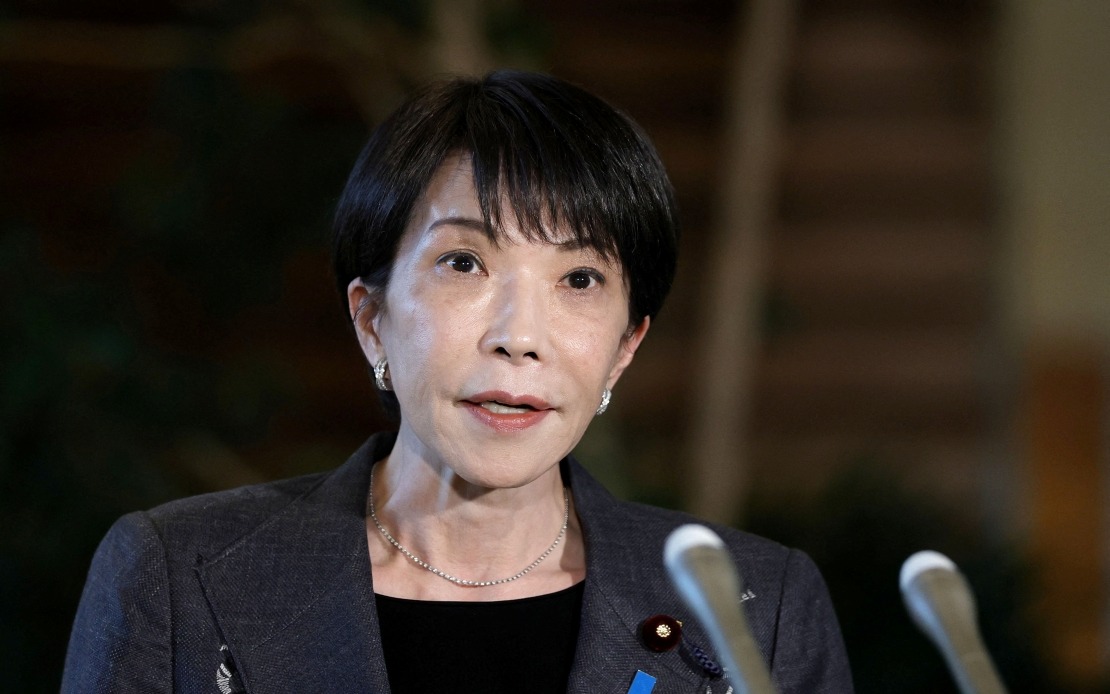
Japanese Prime Minister Sanae Takaichi marked the 81st anniversary of the end of World War II by dispatching a ritual offering to the Yasukuni shrine in Tokyo on Saturday, a gesture that underscores the ongoing sensitivity surrounding Japan's wartime legacy across East Asia. The conservative leader, who personally funded the offering in her capacity as president of the ruling Liberal Democratic Party, refrained from making a direct visit to the controversial shrine despite historical precedent. The decision reflects a delicate political balance that has characterised her approach since taking office last October, when she shifted away from the pattern of shrine visits she had maintained prior to becoming premier.
Defence Minister Shinjiro Koizumi visited Yasukuni in person on the anniversary, becoming the first sitting defence chief confirmed to have done so since Minoru Kihara in August 2024. Kihara, now serving as chief Cabinet secretary in Takaichi's administration, had broken a longstanding pattern of restraint by senior officials. The shrine visits by multiple government figures—including Cabinet member Hitoshi Kikawada and several ranking Liberal Democratic Party executives such as Secretary General Shunichi Suzuki and General Council head Haruko Arimura—demonstrate that conservative elements within Japan's political establishment remain committed to honouring Japan's wartime record, regardless of diplomatic ramifications.
The Yasukuni shrine occupies an extraordinarily complex position in contemporary Japanese politics and international relations. Enshrined within its precincts are 14 wartime leaders designated as deities in 1978, among them General Hideki Tojo, who was executed in 1948 after conviction for crimes against peace. The enshrinement of Class-A war criminals—those convicted by the International Military Tribunal for the Far East—transforms what might otherwise be a site of historical remembrance into a flashpoint for regional grievance. For China and South Korea, which both endured Japanese military aggression and occupation during the twentieth century, visits by sitting Japanese prime ministers and cabinet officials to Yasukuni represent a troubling lack of contrition and a potential rehabilitation of wartime militarism.
The historical context remains visceral across the region. Japan's occupation of vast territories in China persisted until the war's end, while the Korean Peninsula suffered under Japanese colonial rule from 1910 until 1945. Generations in both neighbouring nations were shaped by this experience, and the memory remains embedded in national consciousness and education curricula. When Japanese political leaders visit Yasukuni, they risk being perceived as honouring not merely fallen soldiers but the imperial ideology and military leadership that perpetrated documented atrocities. The distinction between honouring the war dead and legitimising those convicted of war crimes has proven impossible to maintain diplomatically, no matter how carefully Japanese officials frame their intentions.
Takaichi's approach since assuming the premiership suggests an attempt to navigate this minefield with greater circumspection than some of her predecessors. Her decision to dispatch an offering rather than visit personally may represent a calculated effort to signal respect for Japan's wartime history without triggering the full force of international criticism that typically accompanies a prime ministerial visit to the shrine. This compromise position reflects the tension within the Liberal Democratic Party itself, where conservative elements remain deeply invested in particular narratives about Japan's wartime role, while party leaders recognise the diplomatic costs of such symbolic gestures. The fact that multiple Cabinet members and party executives proceeded to visit suggests, however, that restraint at the very top does not necessarily translate into broader institutional caution.
Japan's strategic environment has shifted dramatically in recent years, adding another dimension to these symbolic acts. The country has embarked upon a significant military modernisation programme and substantially increased defence spending, explicitly citing an increasingly severe security landscape. Regional tensions involving China, Russian activities near Japanese territory, and ongoing concerns about North Korea have elevated Japan's defence posture to levels not seen since the immediate postwar period. In this context, some conservative Japanese politicians view embracing rather than distancing themselves from their country's martial tradition as psychologically necessary for building national resolve and martial spirit. The shrine visits can thus be understood not merely as historical gestures but as components of a broader strategic repositioning.
Yasutoshi Nishimura, head of the Liberal Democratic Party's Election Strategy Committee, joined other senior party figures at the shrine, indicating that leadership across the party organisation has chosen to maintain this traditional practice. The participation of multiple high-ranking officials suggests that what might appear as a fringe position represents instead a persistent current within Japan's mainstream conservative establishment. The question for Malaysia and other Southeast Asian nations observing these developments is whether Japan's postwar commitment to peace, enshrined in its war-renouncing Constitution, remains the animating force in Japanese politics or whether it increasingly competes with more assertive, nationalist impulses.
The shrine's significance extends beyond symbolism into the realm of practical geopolitics. Regional stability depends substantially on mutual trust and reconciliation narratives that acknowledge historical wrongs. When Japanese officials visit Yasukuni, they reactivate historical grievances that most regional stakeholders have sought to move beyond through trade, cultural exchange, and diplomatic engagement. For Malaysia, which has built productive relationships with both Japan and other Northeast Asian powers, these recurring controversies introduce friction into the regional architecture that Southeast Asian nations have worked to construct. The Annual Trilateral Summit mechanism and other cooperative frameworks depend upon an underlying foundation of stable relationships that these symbolic acts periodically undermine.
Looking forward, the trajectory of Japanese shrine visits during significant anniversaries will likely continue reflecting internal debates within Tokyo about national identity, military tradition, and international responsibility. Takaichi's middle-ground approach—honouring through proxy rather than presence—may represent a sustainable compromise that allows conservative forces within the Liberal Democratic Party to maintain their ritual observances while minimising diplomatic blowback. Alternatively, pressure from within the party's right wing may eventually push even a prime minister inclined toward caution toward more direct engagement with the shrine. Either way, these August anniversaries will continue serving as barometers of shifting currents within Japanese politics and indicators of how the country's leadership balances historical memory, national identity, and regional stability.

