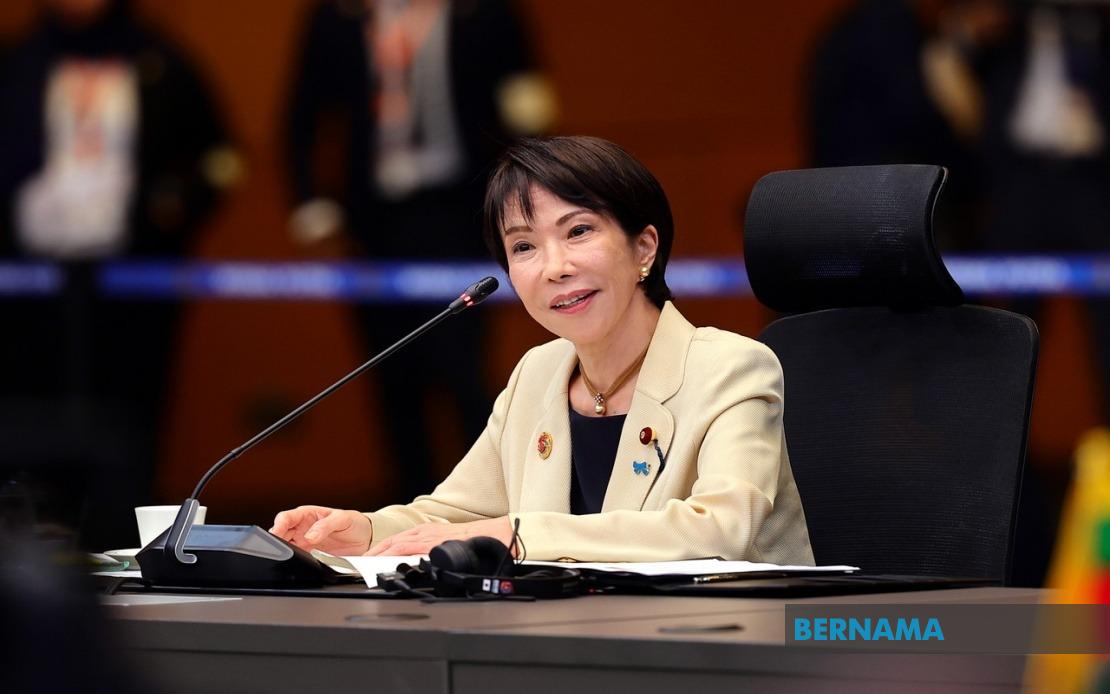
Japanese Prime Minister Sanae Takaichi has intensified Tokyo's diplomatic engagement on one of the world's most strategically vital waterways, calling for the restoration of unfettered maritime movement through the Strait of Hormuz during a telephone conversation with Oman's Sultan Haitham bin Tariq al-Said on Monday. The exchange reflects Japan's acute concern over potential disruptions to global shipping lanes, particularly given Tokyo's heavy dependence on Middle Eastern crude oil imports and its substantial container trade traversing this narrow passage daily.
The timing of Takaichi's intervention underscores the deteriorating diplomatic landscape between the United States and Iran, where negotiations aimed at defusing regional tensions have reached an impasse. With direct US-Iranian talks effectively stalled, secondary players like Oman have assumed outsized diplomatic importance as potential mediators and guarantors of maritime stability. Japan, as the world's third-largest economy and a nation whose energy security hinges significantly on uninterrupted Gulf access, cannot afford to remain passive while geopolitical brinkmanship threatens critical trade arteries.
Oman's role in these developing discussions carries particular weight. According to reporting by Kyodo News, the sultanate is currently engaged in substantive talks with Iran, specifically concerning shipping arrangements through the Strait of Hormuz. This positions Muscat as a potential broker in the equation, capable of influencing Tehran's behaviour regarding maritime commerce. Takaichi's outreach to Sultan Haitham appears calibrated to reinforce Japan's interest in preserving the status quo while subtly encouraging Oman to leverage its diplomatic channels toward ensuring stability rather than pursuing strategies that might further complicate the regional security picture.
The sultan's response, as relayed by Takaichi to reporters at her Tokyo office, suggests diplomatic flexibility rather than commitment. Haitham indicated that Oman would seek consultation with and give weight to the perspectives of nations that depend on the waterway's unimpeded functioning. This measured response reflects Oman's traditional balancing act between its powerful neighbours—Saudi Arabia to the west and Iran to the north—and its obligations to the international maritime community. For Malaysia and other Southeast Asian nations whose merchant vessels regularly transit the Hormuz Strait, Oman's consultative approach represents a modest reassurance that concerns from distant trading partners will receive consideration.
The Strait of Hormuz represents one of the planet's most congested and economically consequential chokepoints, with roughly one-third of seaborne traded oil passing through its narrow waters annually. For Malaysia, a nation with substantial petrochemical industries and significant shipping interests, any disruption to Hormuz passage carries immediate economic ramifications. Prolonged instability could redirect shipping routes, increase insurance premiums, elevate transportation costs, and ultimately feed into domestic fuel and chemical prices. Japanese interest in preserving free passage thus aligns closely with Malaysian interests, even though Tokyo's crude oil dependency exceeds Kuala Lumpur's proportionally.
Takaichi's telephone diplomacy represents a broader Japanese strategy to maintain influence in Middle Eastern affairs despite Tokyo's historical reluctance to take prominent roles in regional security matters. Japan has traditionally relied on close alignment with the United States regarding Iran policy, yet the ineffectiveness of current US-Iran negotiations has evidently prompted Tokyo to pursue independent diplomatic channels. This represents a subtle but significant shift, suggesting that established great power frameworks are proving insufficient to manage contemporary regional complexities, and that middle powers like Japan must engage directly to protect their interests.
The ongoing stalemate in US-Iranian negotiations creates a vacuum that regional actors are attempting to fill through various channels. Oman's geographic proximity to Iran, combined with its reputation for pragmatic neutrality, makes it an obvious venue for exploratory discussions about shipping, sanctions compliance, and maritime boundaries. Takaichi's intervention seeks to ensure that Japan's voice enters these conversations early, before any arrangements crystallise that might disadvantage Tokyo's interests or establish precedents favouring Iranian positions on maritime access.
For Malaysia specifically, developments in the Hormuz Strait hold implications extending beyond immediate maritime commerce. Any arrangement that strengthens Iran's ability to influence shipping patterns could alter regional geopolitical dynamics and shift economic leverage in ways that affect competition for Gulf resources and markets. Malaysian companies involved in shipping, petrochemicals, and international trade monitor these developments closely, as do government planners concerned with maintaining stable access to crucial energy suppliers. The sultanate's consultative approach, at least as Tokyo characterises it, suggests that major trading nations retain some influence over outcomes, though such influence remains contingent on diplomatic skill and persistent engagement.
The mechanics of how Oman implements its consultative pledge remain unclear. The sultanate has not specified whether it will formally solicit written positions from all nations using the Hormuz Strait, or whether consultation will occur through informal diplomatic channels. This ambiguity creates both opportunity and risk. It permits Oman flexibility in weighing competing interests without appearing to favour any single party, yet it also leaves room for selective interpretation of consultation results. Takaichi's public reiteration of Japan's position in Tokyo ensures that Tokyo's concerns are formally documented, establishing a baseline against which future Omani conduct can be measured.
As regional tensions persist and traditional diplomatic frameworks prove inadequate, the importance of patient multilateral engagement through capable intermediaries cannot be overstated. Oman's willingness to serve as a discussion venue reflects both its strategic interests and international expectations that responsible regional actors will work toward deescalation. Takaichi's intervention demonstrates that even economically powerful nations with extensive security partnerships remain vulnerable to supply disruptions and thus must invest in direct diplomatic relationships that transcend alliance structures. For Malaysia and other nations dependent on Hormuz passage, the Japanese prime minister's telephone call serves as a reminder that protecting maritime interests requires constant vigilance and proactive engagement with potential mediators.

