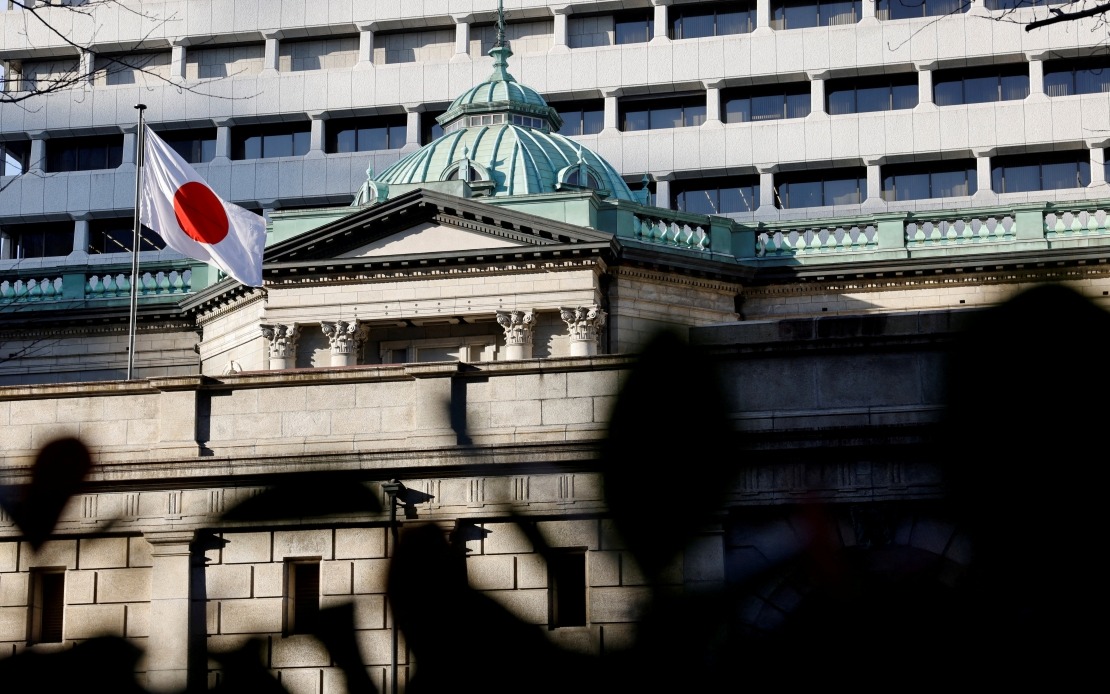
Japan's recent enactment of a law prohibiting the desecration of its national flag has triggered renewed discussion about where governments should draw the line between safeguarding patriotic symbols and preserving citizens' fundamental rights to express themselves freely. The legislation has become particularly contentious domestically, with critics warning that it could embolden nationalist sentiment at the expense of democratic pluralism. Social media discourse has intensified concerns about potential authoritarian implications, with observers questioning whether Prime Minister Sanae Takaichi's administration is deliberately cultivating an environment conducive to Japanese supremacism and extreme nationalism—anxieties that reflect deeper anxieties about the direction of Japanese public discourse.
Japan is far from alone in criminalising attacks on national flags, though international practice reveals starkly different approaches shaped by unique historical trajectories and political philosophies. Germany, for instance, maintains penalties that extend beyond flag desecration to encompass disrespect toward the national anthem and other state symbols, with offenders facing imprisonment of up to three years or substantial fines. These sentences can be aggravated to five years if prosecutors establish that the perpetrator's intent was to undermine Germany's constitutional order. This stringent framework reflects Germany's post-war determination to defend its democratic institutions against ideological threats, yet it also illustrates how historical trauma can influence contemporary legal doctrine in ways that may restrict expressive freedoms.
Germany's relationship with its own flag exemplifies this complexity. Following World War II and the subsequent division of the country, flag symbolism was employed with considerable caution, especially in West Germany, where authorities remained sensitive to nationalist imagery. Only after the nation hosted the FIFA World Cup in 2006 did flag displays become more normalised in public spaces. Yet even this liberalisation has proven contentious; according to reporting from German media outlets, many citizens now perceive the flag as increasingly appropriated by anti-immigration movements that employ it as a marker of exclusionary, far-right ideology rather than inclusive national identity.
France similarly protects its tricolour through legislation criminalising public destruction or degradation of the flag. The French approach explicitly intertwines the flag with the revolutionary ideals of liberty, equality, and fraternity, treating violations as assaults on the nation's foundational values rather than mere symbolic infractions. This legal stance reflects France's understanding of the flag as representing something transcendent—a commitment to universal principles rather than ethnic or parochial nationalism. Nonetheless, such protections remain controversial among civil libertarians who argue that even symbols deserve exposure to critique and challenge in democratic societies.
The contrast becomes more pronounced in contexts where religious dimensions intersect with nationalism. Iran presents a particularly instructive case, as the national flag bears the Arabic word for God, rendering flag desecration arguably inseparable from blasphemy against Islam itself. Although no explicit statute specifically criminalises flag damage, the government has contemplated enhanced penalties following anti-government demonstrations in recent years. Intriguingly, despite these punitive inclinations, Iran's leadership has generally refrained from implementing draconian enforcement, partly because authorities recognise that appearing to defend national cohesion during an externally imposed conflict takes precedence over aggressively pursuing symbolic crimes.
China enforces exceptionally strict regulations, with penalties reaching three years' imprisonment for flag-related offences. The government institutionalises patriotic education through daily flag-raising ceremonies at Beijing's Tiananmen Square coinciding with dawn, embedding nationalist sentiment into civic routine. Enforcement is not theoretical; in 2017, a Tianjin resident received a two-year sentence for slashing 66 flags at a residential complex, while another individual in Qinghai Province faced administrative detention merely for repurposing a national flag as window covering. These cases illustrate how authoritarian systems weaponise patriotic symbolism to enforce conformity and discourage any deviation from state-sanctioned patriotism.
The United States occupies an entirely different jurisprudential position, one that flows from its distinctive constitutional tradition and immigrant foundation. As a heterogeneous society assembled from diverse populations, America has historically relied on flag imagery to facilitate national integration rather than enforce ideological uniformity. During the Vietnam War, flag burning emerged as a prominent protest tactic, and this provoked a constitutional clash that fundamentally shaped American free speech doctrine. In 1989, the Supreme Court ruled definitively that flag burning constitutes protected expression under the First Amendment, establishing the principle that the government cannot suppress speech merely because it considers the message offensive or contemptuous of patriotic symbols.
Donald Trump's August executive order directing the Justice Department to prosecute flag desecration and related acts represents a direct challenge to this established constitutional precedent. His attempt to resurrect prosecutions that the Supreme Court explicitly foreclosed demonstrates how contemporary American politics remains contested over the proper relationship between national symbols and individual liberty. This struggle parallels Japan's current dilemma and suggests that even established democracies continue grappling with the tension between dignifying national emblems and protecting dissenting voices.
South Korea presents another instructive example, with legislators recently exploring establishment of a designated "flag day." The existing penal code prescribes up to five years' imprisonment for intentionally damaging the flag with purpose to insult the state. Civil rights advocates have mounted sustained criticism, contending that such legislation impermissibly restricts freedom of expression and treats symbolic acts as proxies for prosecuting political dissent. The South Korean experience demonstrates how even economically developed democracies struggle to calibrate legal protections for national symbols without inadvertently creating tools for suppressing legitimate opposition voices.
For Southeast Asian observers, Japan's legislative step warrants close monitoring, as the region's own nations navigate similar tensions. Malaysia, with its constitutional emphasis on both national symbols and democratic rights, faces analogous questions about how firmly to protect patriotic emblems without crossing into authoritarian restriction of expression. The Japanese precedent may influence how regional policymakers contemplate comparable measures, particularly as nationalist sentiment intensifies across parts of Asia. Understanding how different democracies have resolved—or failed to resolve—these questions becomes essential for societies seeking to preserve both symbolic reverence and genuine pluralism.

