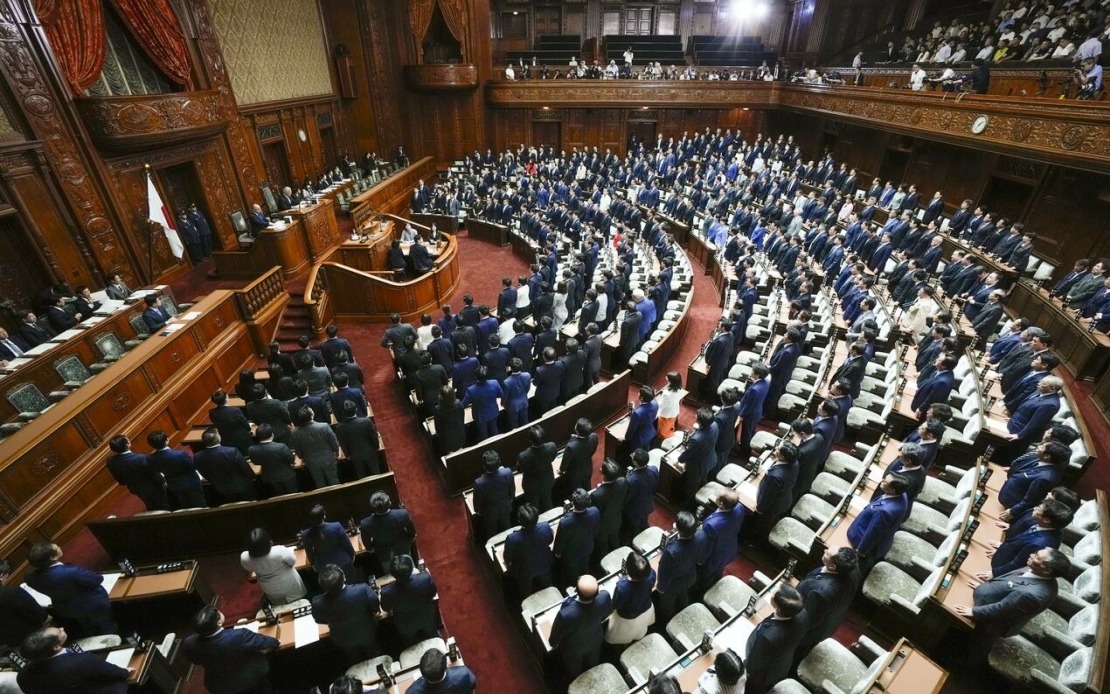
Japan's lower house has cleared a substantial revision to the Imperial House Law after just one day of parliamentary debate, representing the first meaningful update to the imperial succession framework in over seven decades. Prime Minister Sanae Takaichi's administration, backed by its commanding supermajority coalition, steered the bill through Friday's vote with relative ease. The rapid legislative movement marks a significant moment for Japan's centuries-old monarchy, which faces mounting demographic pressures that threaten the institution's continuity.
The legislative path to this point proved contentious, with parliament having effectively ground to a halt for nearly two weeks as opposition parties blocked proceedings. The political standoff centred not directly on the imperial reform itself, but rather on what opposition figures characterised as authoritarian tactics by the ruling bloc on unrelated matters. Tensions escalated following media revelations that Takaichi's political camp had orchestrated disparaging online content targeting rival politicians, allegations that sparked demands for direct accountability. This parliamentary gridlock only resolved after the ruling coalition agreed to strategic concessions, including abandoning plans to force through separate controversial legislation concerning lower house seat redistribution during the current session.
The centrepiece of this reform addresses a demographic crisis threatening the imperial line's viability. Under Japan's current legal framework, only males descended patrilineally from emperors can occupy the throne, while women automatically forfeit their imperial status upon marrying outside the imperial family. This restrictive system has produced a alarming compression in the pool of eligible successors. The new legislation tackles these interconnected problems through two primary mechanisms: first, permitting the imperial household to absorb adopted males aged fifteen and upwards who come from eleven previously dissolved imperial branch families; second, enabling female imperial members to maintain their status even when marrying commoners. These provisions directly address the numerical scarcity threatening institutional stability.
However, the reform incorporates nuances that have drawn criticism from reform advocates. While male children born to adoptees would themselves become eligible for succession, the legislation explicitly prohibits adoptees themselves from ascending the throne. This compromise reflects conservative concerns about maintaining the imperial line's genetic continuity, though it remains a contentious middle ground. Notably, the bill conspicuously sidesteps the question of female emperors or succession through the maternal line, despite public opinion surveys consistently showing majority support for such measures. This omission suggests the ruling coalition calculated that broader reforms might prove politically unattainable within the current parliamentary constellation.
The legislative framework emerged from proposals compiled by senior parliamentary figures who consulted across the full spectrum of Japan's thirteen political parties and groupings. This ostensibly inclusive drafting process aimed to generate consensus on measures that would stabilise the imperial succession without triggering the most contentious constitutional questions. Yet tensions emerged when the government's final bill incorporated elements absent from the original multi-party proposal, including precisely the provision allowing adoptees' male descendants to assume the throne. These departures fuelled opposition accusations that the ruling coalition had manipulated the legislative process, straying beyond what was genuinely negotiated.
The imperial law revision represents a cornerstone agreement within the coalition arrangement binding Prime Minister Takaichi's Liberal Democratic Party and the Japan Innovation Party, formalised through a partnership accord signed in October. This coalition agreement specifically identified imperial house law modernisation as a priority objective, lending particular political weight to its successful passage. Takaichi herself became Japan's first female premier following her coalition partner's parliamentary support, creating reciprocal political obligations to deliver on shared commitments.
For Southeast Asian observers, this development carries particular relevance given the region's own complex histories navigating traditional monarchical institutions within contemporary democratic frameworks. Japan's approach demonstrates both the institutional durability of hereditary systems and the pressures modernisation exerts upon them. The measured, somewhat conservative nature of the Japanese reform—accepting adaptive measures while resisting fundamental restructuring—reflects a philosophy of institutional continuity that resonates across East Asian governance cultures. Japan's solution prioritises maintaining the imperial institution's essential character through targeted adjustments rather than comprehensive constitutional reimagining.
The legislative pathway forward requires upper house endorsement, with the ruling coalition targeting final enactment before parliament concludes its current session on July 17. The supermajority held by the government-supporting coalition in the lower chamber provides the mathematical foundation for overriding any upper house resistance, though parliamentary convention typically encourages genuine deliberation across both chambers. The accelerated timeline reflects governmental determination to accomplish this agenda component promptly, particularly given the political capital already expended navigating opposition obstructionism on other fronts.
The broader political context reveals deeper tensions within Japanese governance regarding procedural legitimacy and majoritarian power. Opposition parties have consistently articulated concerns that the ruling bloc increasingly applies its numerical advantage to bulldoze legislation with insufficient deliberation or cross-party accommodation. The imperial law debate unfolded amid these fractious circumstances, somewhat ironically given that imperial succession law might seem above partisan contestation. Yet the opposition's strategic blocking tactics on other legislation directly impeded parliamentary work on the imperial reform, demonstrating how contemporary Japanese politics treats even constitutionally central matters as leverage points within partisan conflict.
Parliamentary scheduling indicates that Wednesday will host the long-delayed direct confrontation between Prime Minister Takaichi and opposition party leaders, the first such intensive debate session since May. This accountability session carries particular significance given the online smear campaign allegations and broader accusations of heavy-handed governance. The imperial law's successful lower house passage provides the government demonstrable legislative achievement entering these heated exchanges, potentially shifting momentum in the broader political narrative.
The imperial succession question remains incompletely resolved despite this legislative milestone. Public opinion consistently favours permitting female succession and maternal-line inheritance, yet the government has deliberately deferred these possibilities. This strategic restraint suggests policymakers believe implementing the current more modest package represents the maximum achievable consensus at present, with future governments potentially revisiting more expansive reforms if demographic pressures intensify further. The compromise reflects pragmatic acknowledgment that even within Japan's parliamentary system, certain constitutional traditions command sufficient cultural weight that sudden transformation proves politically untenable, despite underlying institutional necessity driving evolutionary change.

