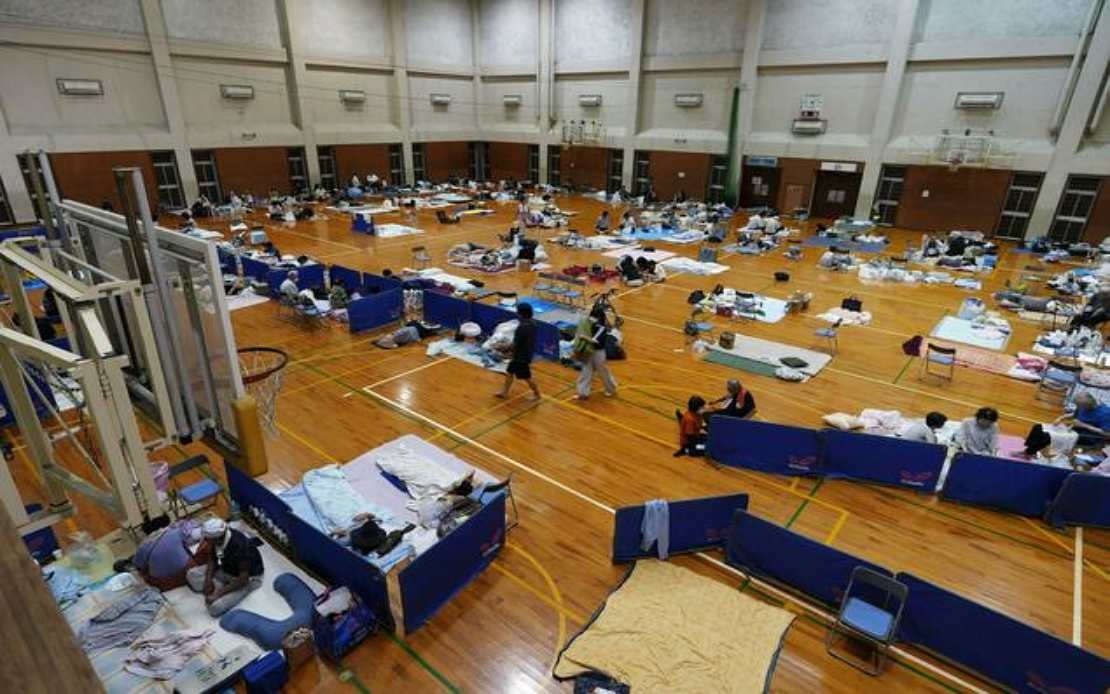
Seven days after a powerful magnitude 7.1 earthquake devastated Kumamoto Prefecture in southwestern Japan on July 28, the region continues to grapple with a multifaceted crisis affecting thousands. Over 8,000 residents remain housed in 150 evacuation shelters across the prefecture, where they face mounting hardships stemming from persistent water outages and dangerously elevated temperatures that have compounded the disaster's immediate aftermath.
The earthquake, which struck around 4:27 p.m. on July 28, has claimed 38 lives thus far. Among the tragic casualties were seven people who perished in an explosion at an Aeon shopping mall in Kashima, and nine workers who died at Nippon Paper Industries Co.'s facility in Yatsushiro when a chimney collapsed during the tremor. Beyond the confirmed death toll, authorities have documented one suspected disaster-related fatality from heatstroke among individuals sleeping in vehicles, underscoring the dangerous conditions facing displaced persons. The true number of people sheltering in cars remains unconfirmed and may substantially exceed current estimates.
Physical destruction across the prefecture has been extensive, with approximately 12,000 buildings sustaining damage from the quake. Kumamoto Prefecture's ongoing assessment indicates widespread structural compromise that will require lengthy reconstruction efforts. The scale of devastation prompted Prime Minister Sanae Takaichi to visit an evacuation shelter on Monday and subsequently announce that the government would designate this earthquake as a "disaster of extreme severity." This official classification carries significant implications for affected communities, as it unlocks access to higher government subsidies for reconstruction initiatives and enables the activation of special assistance programmes specifically designed to support disaster victims.
Weather conditions have emerged as a secondary but equally serious threat to evacuees. Parts of Kumamoto Prefecture recorded maximum temperatures of 35 degrees Celsius or higher on Monday alone, whilst some localities reached 40 degrees Celsius for the first time in recorded meteorological history. These extreme heat conditions have transformed evacuation shelters into potentially dangerous environments, particularly for vulnerable populations including elderly residents and young children. The combination of displacement stress, inadequate shelter conditions, and oppressive temperatures has created an urgent public health emergency requiring immediate intervention.
Water infrastructure damage has compounded residents' suffering significantly. Approximately 45,000 households across five municipalities continue to experience water outages, limiting access to drinking water, sanitation facilities, and basic hygiene necessities. To address this critical shortage, water delivery trucks dispatched from prefectures across Japan have been mobilised to supply affected areas. The national government and Kumamoto Prefecture are collaborating on comprehensive measures to mitigate heatstroke risks in shelters, including accelerating the distribution of drinking water supplies, expanding access to portable toilet facilities, and deploying spot cooling units to provide temporary climate relief.
Recognising the scale of the humanitarian challenge, authorities have initiated multiple initiatives to transition displaced persons from emergency shelter settings. Applications for secondary evacuation to hotels have commenced, offering residents a pathway to more comfortable temporary accommodation. Simultaneously, construction of permanent temporary housing units has begun in the hardest-hit municipalities of Uki and Hikawa, representing the longer-term recovery phase.
International solidarity has also emerged as a meaningful response to the crisis. The southern Taiwanese city of Kaohsiung learned of critical supply shortages affecting Miyabien, a nursing home in Yatsushiro, and subsequently provided essential care supplies to residents. Midori Tagata, the facility's director, publicly expressed gratitude for Taiwan's donation, noting that widespread water outages throughout Yatsushiro have severely compromised the nursing home's capacity to maintain adequate hygiene standards for vulnerable elderly residents. This cross-border humanitarian gesture reflects broader regional cooperation mechanisms activated during major disaster events.
Transportation infrastructure remains severely disrupted, hampering relief efforts and economic recovery. The Kyushu Shinkansen Line bullet train service between Kumamoto and Kagoshima-chuo stations has remained suspended since the earthquake struck, whilst the Kyushu Expressway has been closed to general traffic between the Matsubase and Ebino exits. These transportation disruptions limit the movement of relief supplies and personnel into affected areas, whilst simultaneously isolating the region economically from surrounding prefectures.
For Malaysian and Southeast Asian observers, the Kumamoto earthquake disaster illuminates several important dimensions of natural disaster management. Japan's sophisticated early warning systems and coordinated governmental response mechanisms have prevented even greater casualties, yet the incident demonstrates that even technologically advanced nations face immense challenges in managing large-scale displacement crises. The emergence of heat-related mortality among evacuees indicates that secondary hazards introduced by environmental conditions can prove as lethal as the primary disaster itself. Additionally, the international dimension of assistance, exemplified by Taiwan's provision of supplies, underscores how regional disaster response protocols increasingly transcend traditional political boundaries in prioritising humanitarian imperatives.

