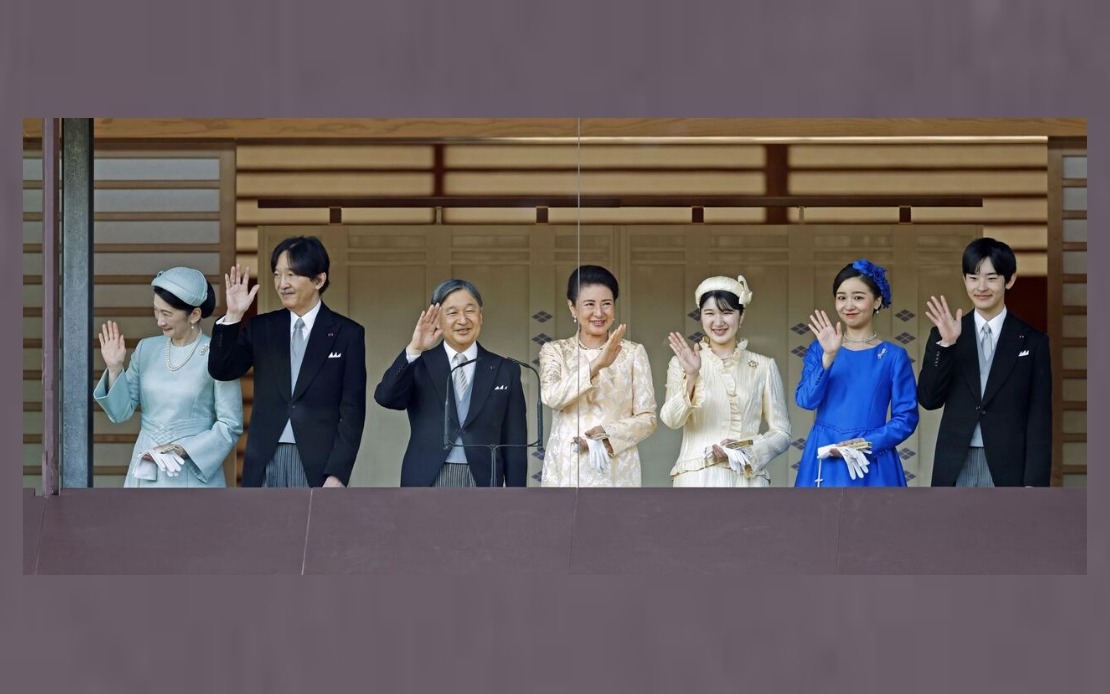
Japan has taken its most significant step in over seven decades to reshape the world's oldest hereditary monarchy, yet the landmark revision of the Imperial House Law has left both royal household administrators and citizens grappling with profound uncertainties about what comes next. The overhaul, which parliament formally enacted on Friday, represents an attempt to address a generational challenge: the imperial family has dwindled to just 16 members, creating succession anxieties that have preoccupied Japan's conservative leadership. Prime Minister Sanae Takaichi has made the sustainability of the imperial institution a priority for her administration, viewing the legal reforms as essential to preserving continuity in an institution that has endured for more than a millennium.
At the heart of the reform lies a seemingly pragmatic mechanism that would permit men aged 15 or older from 11 former imperial branch families—lineages that were stripped of their royal status in 1947—to be adopted back into the imperial fold. This provision marks a genuine departure from rigid tradition, offering a pathway to replenish the ranks of those bearing the imperial name and capable of fulfilling ceremonial and symbolic duties. Officials within the Imperial Household Agency acknowledge the reform's merit, recognising that it establishes what one agency representative described as "a path toward securing a stable number of imperial members." Yet beneath this cautious acceptance lies evident anxiety. Agency officials have articulated concerns about whether adoptees would genuinely comprehend the nature of Japan's constitutional system, wherein the emperor functions as a "symbol" of the state rather than a governing power, or whether they would possess the personal qualities necessary to earn public affection and respect.
The scepticism is not confined to bureaucratic circles. Asahiro Kuni, an 81-year-old member of the Kuninomiya branch family and a direct candidate for potential adoption, expressed considerable doubt about whether individuals from his lineage would willingly surrender ordinary life to assume imperial responsibilities. His candid assessment—that nobody would realistically volunteer for such a profound lifestyle transformation—underscores a practical reality that lawmakers may not have fully confronted. The question of adoption, therefore, remains theoretical rather than imminent, and considerable cultural and psychological barriers may prevent the mechanism from functioning as policymakers envisage.
What has proven more contentious is what the reform deliberately excludes: any pathway toward female succession or recognition of the imperial line through mothers. This omission reflects a determined conservative effort to maintain the all-male succession principle, a stance increasingly at odds with broader Japanese sentiment. Opinion polling consistently demonstrates that substantial portions of the Japanese public, particularly younger citizens, support the principle of a female emperor. The most visible beneficiary of such sentiment is Princess Aiko, the sole daughter of Emperor Naruhito and Empress Masako, whose intelligence and public presence have impressed observers. Yet under the revised law, Princess Aiko remains constitutionally barred from inheriting the throne merely because of her gender—a restriction that many Japanese citizens regard as archaic.
The reform does extend one significant concession to female imperial members: princesses may now retain their royal status if they choose to marry commoners, reversing the prior automatic loss of imperial rank upon such marriages. However, this provision introduces its own complications. Currently, five unmarried female members of the imperial family, including Princess Aiko and Princess Kako (daughter of Crown Prince Fumihito), may eventually confront this choice. Agency officials have characterised the decision as "quite difficult," acknowledging that the institutional and public expectations surrounding imperial duty effectively coerce princesses into maintaining their status rather than pursuing personal choices about marriage and family life. One aide to a female imperial member highlighted the awkward practical reality: spouses and children of female imperial members who elect to retain their status remain classified as commoners, potentially creating "strange" family hierarchies within individual households.
This structural contradiction reflects what critics perceive as the true purpose of the reform: preserving male dominance within the imperial system rather than genuinely modernising it to reflect contemporary values. Several aides and observers have detected in government messaging an implicit ruling-out of female emperors and matrilineal succession, suggesting that the reforms represent a calculated minimum necessary to address immediate succession anxieties while foreclosing more egalitarian alternatives. The government's approach thus appears designed to stabilise the institution through adoption rather than through constitutional recognition of female succession—a distinction that carries profound implications for how Japanese society conceptualises gender roles and institutional authority.
Public reactions have crystallised into distinct camps, revealing generational and ideological divides regarding the monarchy's future. Older Japanese who have encountered the imperial family directly, such as Shinichi Kokubun, who met Emperor Naruhito, Empress Masako, and Princess Aiko during their April visit to Fukushima Prefecture following the 2011 earthquake and tsunami, express pragmatic acceptance of the reforms provided adoptees demonstrate genuine commitment to serving the nation. Conversely, younger Japanese citizens have articulated frustration with both the substance and process of the reform. In Hiroshima, 22-year-old Miyu Nakao criticised the government for implementing such a consequential change regarding the imperial system without meaningful public engagement or transparent deliberation.
Lack of public awareness compounds these concerns. A 20-year-old college student interviewed in Osaka admitted unfamiliarity with the Imperial House Law and expressed disappointment at the absence of government-led public education efforts preceding the parliamentary vote. Such comments suggest that the reforms, despite their historical significance, have not sparked the national conversation that their constitutional importance might warrant. The government's decision to legislate through parliamentary action without orchestrating broader public dialogue has alienated younger citizens who feel excluded from debates affecting fundamental national institutions.
For Imperial Household Agency personnel tasked with implementing these reforms, uncertainty pervades daily work life. Officials must prepare for scenarios—such as the actual adoption of male imperial candidates or female imperial members choosing to retain status while marrying commoners—that remain largely hypothetical. The agency has tentatively accepted its mandate, with one official stating that should adoptees eventually join the family, "we'd have no choice but to support them so they steadily carry out their official duties." Yet this resigned acceptance masks genuine apprehension about whether such individuals could authentically embody the symbolic role that the constitution assigns to the imperial institution.
The implications of this reform extend beyond Japan's borders, particularly for Southeast Asian nations with their own monarchical traditions. Malaysia, Thailand, and Brunei maintain strong constitutional monarchies, and reform efforts affecting any hereditary throne generate regional interest. Japan's approach—attempting to preserve traditional succession principles while introducing marginal mechanisms for adaptation—may serve as a cautionary model or template for other nations confronting similar pressures to modernise royal institutions without fundamentally altering their constitutional character. The question of whether legal innovation can genuinely address cultural and social expectations, or whether such efforts merely defer deeper structural questions, will resonate across Asia's monarchical societies.
Ultimately, Japan's imperial succession reform represents an incomplete compromise between tradition and adaptation. By opening adoption pathways while foreclosing female succession, the government has attempted to stabilise the institution without resolving the deeper question of whether contemporary Japanese society's values align with constitutional structures designed for previous eras. The divisions in public opinion, the anxieties within the Imperial Household Agency, and the frustrations of younger citizens suggest that this reform, despite its parliamentary passage, may have resolved immediate political pressures rather than addressing fundamental questions about the imperial system's future legitimacy and social purpose.

