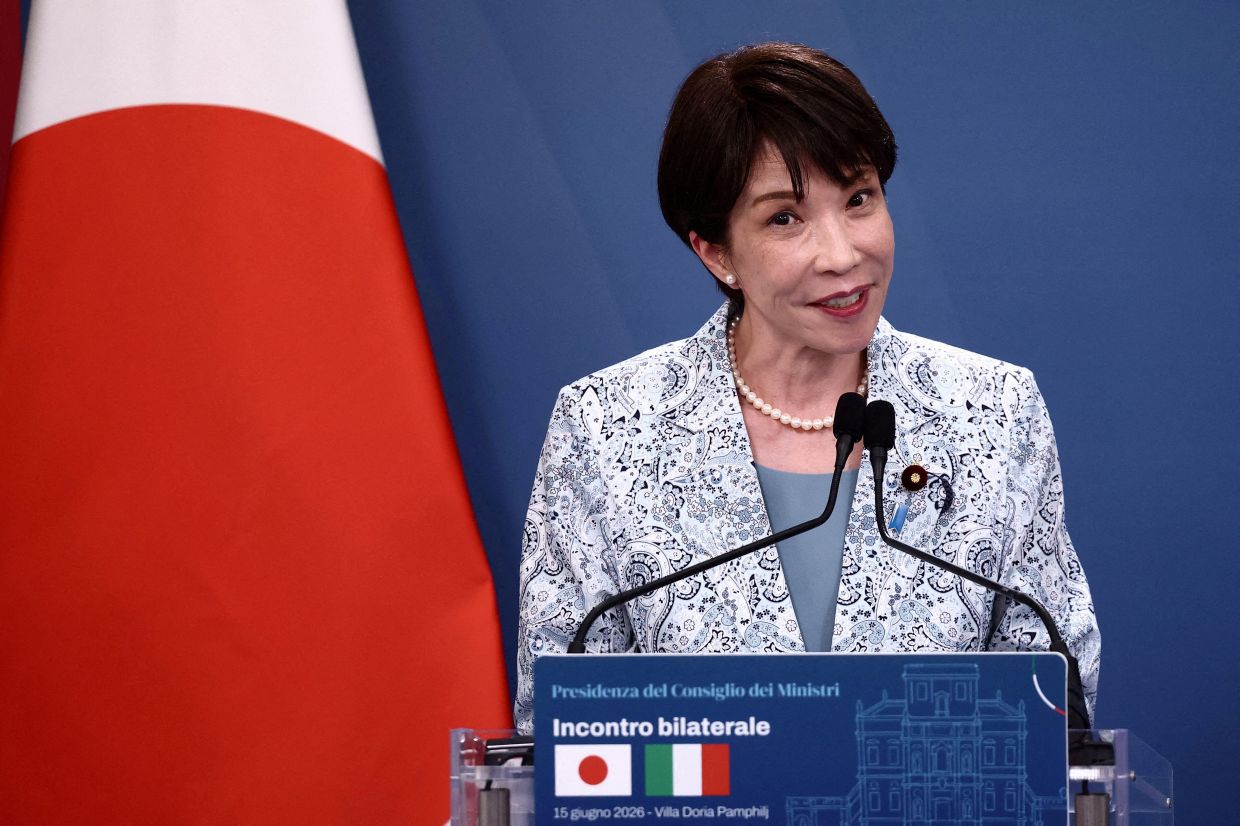
Sanae Takaichi's approval as Japan's first female prime minister has fallen below the 50 per cent threshold for the first time since her government took office last October, according to a Jiji Press survey released on Thursday. The latest poll showed her cabinet backing at 49 per cent, marking a significant erosion of public confidence that highlights the volatile nature of political support in Japan's contemporary landscape. The decline is particularly noteworthy given that Takaichi had enjoyed considerable momentum in the months following her appointment, suggesting that the initial honeymoon period of leadership has definitively ended.
The deterioration in support has not been uniform across demographic groups. Older voters have become notably disenchanted with the prime minister's government. Support among voters in their 60s collapsed sharply, plummeting from 63.7 per cent just last month to 39.9 per cent in the current survey—a stunning 23.8 percentage point drop that reveals deep cracks in what had been a reliable constituency. This generational shift in sentiment is particularly significant because elderly Japanese voters typically form a politically engaged demographic that has historically provided stable support for conservative governments.
When voters expressed reasons for backing Takaichi's administration, they pointed to her personal qualities as the decisive factor. Her leadership style, perceived trustworthiness, and the symbolic importance of being Japan's first woman to hold the top political office have resonated with supporters who see her as bringing a fresh perspective to governance. These qualities had particularly appealed to younger voters who were drawn to her diplomatic approach and what they viewed as a necessary change from the status quo. However, this personal appeal has proven insufficient to insulate her from broader policy and performance criticisms.
Those expressing disapproval of her government cited markedly different concerns. The most common complaint centered on a sense that "cannot hope for much" from her administration—a phrase reflecting deeper anxieties about economic prospects and Japan's domestic challenges. Beyond this generalized pessimism, voters criticized specific policy directions, with "poor policies" emerging as a recurring refrain among those withdrawing their support. These critiques suggest that whatever novelty or appeal Takaichi's leadership initially possessed has been overshadowed by substantive concerns about her government's direction and competence.
Takaichi's position appeared considerably stronger earlier this year. In February, she orchestrated a decisive victory in lower house snap elections, securing a commanding mandate that seemed to cement her political dominance. That electoral triumph had been substantially bolstered by her popularity among younger demographics who were enchanted by her diplomatic acumen, her accessibility as a political figure, and the generational change her leadership represented. The February elections appeared to validate her governance approach and suggested she had built a durable coalition capable of sustaining her in office for the foreseeable future.
Yet the intervening months have revealed serious complications in both foreign and domestic policy. Most notably, Takaichi's November remarks suggesting that Japan could militarily intervene to defend self-ruled Taiwan created significant diplomatic friction with Beijing. China regards Taiwan as its own territory and views any suggestion of Japanese military involvement as an unacceptable intrusion into what it considers an internal matter. These comments have strained Japan-China relations at a delicate moment and raised questions about whether Takaichi fully understands the sensitivities involved in regional geopolitical dynamics. The comments have become a lightning rod for criticism and may be contributing to the erosion of support across multiple voter groups.
Domestic civil liberties concerns have emerged as an additional source of friction. Earlier this month, a coalition of nearly 150 Japanese academics formally petitioned lawmakers to resist Takaichi's legislative initiative to criminalize the desecration of Japan's national flag. This proposal has generated significant opposition among intellectuals and defenders of free expression, who view it as an unnecessary restriction on fundamental freedoms. The academics' public intervention signals that Takaichi's government faces organized resistance from influential segments of Japanese civil society, particularly those concerned with protecting democratic institutions and constitutional rights.
One area where Takaichi's government has genuinely improved conditions for ordinary Japanese is the inflation situation. Recent months have seen a noticeable moderation in price increases, providing relief to consumers who had endured sharp and sustained inflation in the preceding period. This development is crucial context for understanding the political landscape: price pressures had directly contributed to the political demise of Takaichi's two immediate predecessors, who fell victim to public anger over deteriorating living standards. The fact that inflation has cooled represents a genuine accomplishment that should theoretically strengthen her position, yet the improvement has apparently been insufficient to arrest the decline in overall approval ratings.
The trajectory of Takaichi's approval ratings mirrors a broader pattern in contemporary Japanese politics where even initially popular leaders face rapid erosion of support as the realities of governance collide with voter expectations. The gap between 49 per cent current approval and the 50 per cent threshold may seem modest numerically, but psychologically it represents crossing an important symbolic barrier. Governments operating below 50 per cent approval typically find it increasingly difficult to implement ambitious legislative agendas and become vulnerable to opposition movements and political challengers. For Takaichi, the challenge will be demonstrating that her government can deliver tangible improvements in economic conditions and resolve the diplomatic complications she has created, particularly regarding Taiwan and China relations.

