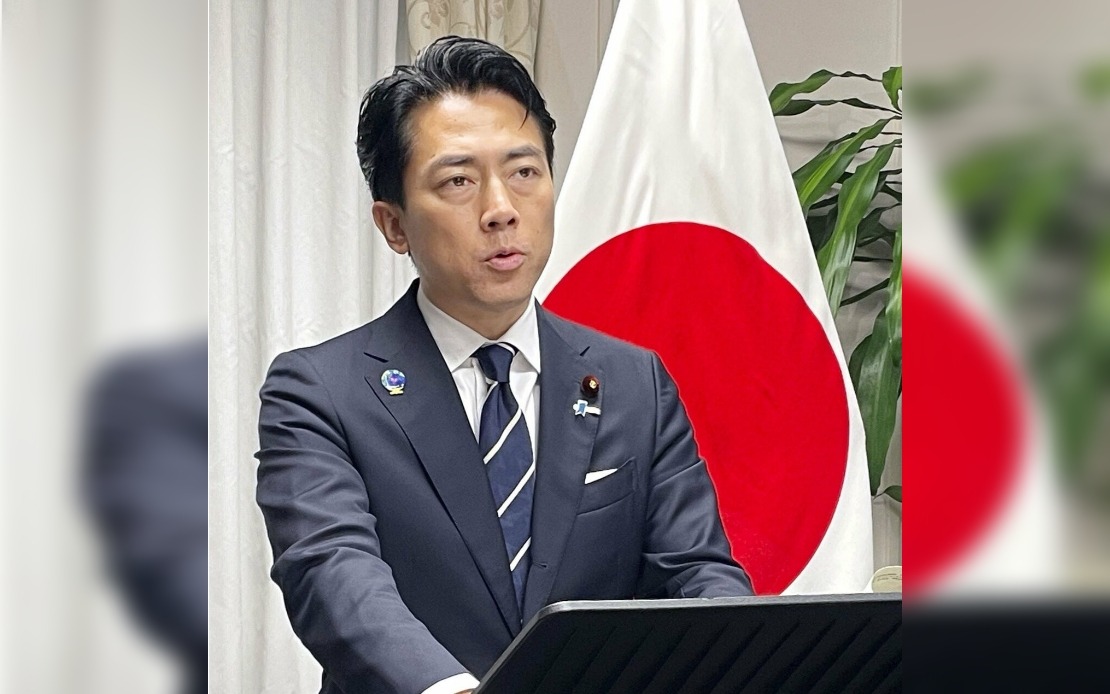
Defence Minister Shinjiro Koizumi has signalled that Japan cannot continue to avoid serious discussion about nuclear weapons, positioning the topic squarely within the bounds of legitimate national security discourse. Speaking on an online programme released Friday, Koizumi argued that Japan's deteriorating strategic environment demands a fundamental recalibration of long-held assumptions about defence policy, including the nation's traditional non-nuclear stance that has defined its security philosophy for decades.
The minister's remarks arrive as the government under Prime Minister Sanae Takaichi prepares to complete a comprehensive overhaul of three foundational national security documents before year's end. This policy revision represents Tokyo's most serious strategic reassessment since the Cold War, reflecting deepening anxieties about China's military expansion, North Korea's weapons programmes, and broader shifts in the regional balance of power. By explicitly opening the door to nuclear debate, Koizumi is signalling that even Japan's most sacrosanct defence principles will come under review.
Koizumi specifically cited France and Finland as examples of Western nations actively strengthening their nuclear deterrence postures. Finland's parliament passed legislation in June permitting nuclear weapons deployment on its territory—a landmark decision for a Nordic nation long defined by non-alignment—while French President Emmanuel Macron announced in March that Paris would expand its warhead arsenal. These European precedents carry particular weight in Tokyo's calculations, as they demonstrate that even traditionally cautious democracies are hardening their nuclear positions in response to Russian aggression and broader geopolitical uncertainty.
Japan's current framework rests on three fundamental non-nuclear principles adopted in 1967: the nation will not produce nuclear weapons, will not possess them, and will not allow their introduction onto Japanese territory. This policy has become deeply embedded in Japanese political culture and international identity, particularly given Japan's unique historical experience as the only nation to suffer atomic bombardment during wartime. The principles have remained largely inviolable across competing political factions, serving as a moral and strategic cornerstone of Japanese pacifism and its alliance with the United States.
Yet Japan's security architecture fundamentally depends on America's extended nuclear deterrent—the implicit promise that Washington would employ nuclear weapons to defend Tokyo. This dependency has created an underlying contradiction within Japanese policy: the nation benefits from nuclear protection while officially eschewing nuclear weapons. As long as the US security guarantee remained credible and America's military superiority unquestioned, this arrangement satisfied most stakeholders. However, mounting concerns about American commitment reliability and doubts about Washington's willingness to risk nuclear conflict with China over Taiwan have begun eroding consensus around this arrangement.
Koizumi's intervention reflects growing impatience within Japan's defence establishment with what officials increasingly view as self-imposed strategic constraints. The minister contended that Japan must escape a situation in which certain security topics are deemed beyond the pale for serious examination. This framing represents a subtle but significant rebranding of the nuclear question—transforming it from an ideological boundary into a pragmatic policy consideration worthy of rational debate. By destigmatising the topic, Koizumi opens space for military planners and security analysts to conduct serious assessments of Japan's nuclear options without fear of political taboo.
Precursors to Koizumi's statement had already troubled Japan's political consensus. In December last year, a government official involved in security planning suggested that Japan should acquire nuclear weapons, triggering sharp condemnation from opposition parties and diplomatic protests from several countries. Similarly, former Defence Minister Itsunori Onodera advanced the case for reconsidering Japan's non-nuclear principles late in 2023, indicating that heretical thinking about nuclear weapons has begun percolating through Tokyo's security bureaucracy at multiple levels.
For Malaysia and other Southeast Asian nations, Japan's potential pivot carries profound implications. A nuclear-armed Japan would fundamentally alter the regional strategic calculus, potentially triggering nuclear proliferation cascades as neighbouring countries reassess their own deterrence requirements. Malaysia, which has long depended on a rules-based order anchored by American power and Japanese stability, would confront a more militarised Northeast Asia where nuclear weapons feature prominently in strategic calculations. The Association of Southeast Asian Nations' collective interest in a stable balance of power would face serious challenge if Japan abandoned its non-nuclear identity.
Moreover, Koizumi's framing reveals how swiftly security narratives can shift when threat perceptions change dramatically. Five years ago, Japanese officials would have been politically toxic for broaching nuclear acquisition. Today, the Defence Minister can raise the question in mainstream discourse without triggering reflexive condemnation. This normalisation of previously forbidden topics suggests that Japan's non-nuclear principles, however historically significant, may represent a temporary strategic choice rather than an immutable civilisational commitment.
The government's broader security revision will likely produce recommendations short of explicit nuclear acquisition—perhaps calls for enhanced US nuclear extended deterrence guarantees, deeper nuclear coordination with Washington, or expanded civil nuclear capabilities with dual-use potential. However, Koizumi's comments indicate that the Takaichi administration is signalling flexibility on nuclear issues to its American ally and domestic constituencies. This signal-sending serves multiple purposes: it strengthens Japan's negotiating position with Washington, tests domestic political tolerance for nuclear policy evolution, and demonstrates Tokyo's determination to take security matters into its own hands rather than passively accept regional power transitions.
The approaching policy announcement will reveal whether Japan's leadership ultimately embraces incremental nuclear developments or maintains the non-nuclear framework while seeking compensatory conventional military enhancements. Either path represents a departure from recent decades, when Japan's security identity seemed immovable. Koizumi's intervention has transformed the question from whether Japan will debate nuclear weapons to what outcomes that debate might produce.

