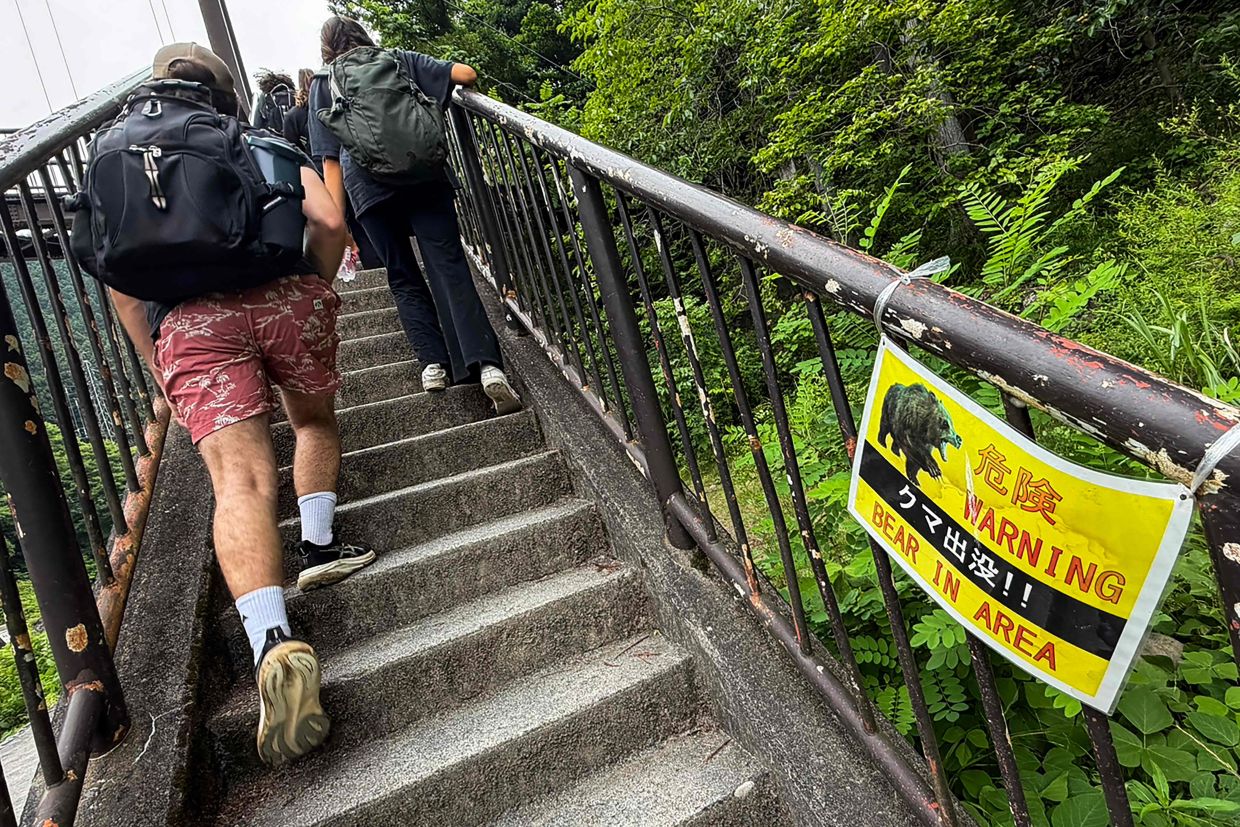
Japan's wildlife authorities are rolling out an unprecedented surveillance effort to tackle a growing human-bear conflict crisis that has claimed at least five lives in recent months across the northern Tohoku region. Officials announced the deployment of more than 800 cameras strategically positioned throughout mountain areas as part of a comprehensive national census of bear populations, reflecting the severity of a problem that has captured sustained media attention and public anxiety throughout the country.
The timing of this initiative comes against a backdrop of alarming figures released by the environment ministry. Across Japan's last fiscal year, bears were responsible for a record 13 fatal maulings, establishing a concerning trajectory. More immediately troubling is the cluster of five deaths occurring since April 1, all concentrated in Tohoku—signalling that the problem is intensifying and becoming geographically concentrated rather than dispersed. This concentration has transformed bear safety from an abstract rural concern into an urgent issue affecting a specific region's daily life and sense of security.
The spike in bear-related incidents has prompted intense media scrutiny and real fear among residents in affected areas. From shopping arcades to schools and public parks, sightings have become frequent enough to warrant daily news coverage. This saturation of bear-related stories in national media has amplified public concern, creating an atmosphere of genuine dread in communities where encounters are increasingly likely. The psychological impact extends beyond the immediate physical danger, influencing how families approach outdoor activities and children's mobility in their own neighbourhoods.
Environment ministry official Yu Takahashi explained that the surveillance project marks a significant shift in methodology. Previously, individual local governments conducted their own bear population surveys using varying techniques and schedules, resulting in fragmented and inconsistent data. The new coordinated approach uses sophisticated monitoring designed to capture precise population counts by focusing on distinct bear groups rather than aggregating numbers across larger regions. Initial efforts will concentrate on six major bear populations within Tohoku before scaling to a nationwide survey over four years.
The monitoring technology itself reveals both ingenuity and a deep understanding of bear behaviour. Authorities place jars containing honey mixed with wine at approximately human-head height, exploiting bears' attraction to such treats. As animals rear up on their hind legs to investigate and sniff the mixture, cameras positioned strategically capture images of each bear's unique white chest markings—essentially creating a photographic identity system for the population. This approach transforms a natural behavioural impulse into a reliable surveying mechanism without requiring physical capture or tranquilisation.
The underlying causes of Japan's bear surge reflect broader demographic and ecological shifts reshaping rural Japan. Scientists increasingly attribute population growth to declining human presence in mountainous areas, as rural depopulation has accelerated across decades. With fewer people living and working in traditional mountain communities, bears have expanded their territorial range and become habituated to proximity with human settlements. This demographic hollowing of rural Japan has created an ecological vacuum that apex predators are naturally filling, establishing patterns of behaviour that are now proving difficult to reverse.
Recent months have witnessed an escalation beyond traditional mountain territories into urban spaces. In June, a bear roaming through Utsunomiya, located north of Tokyo, required a four-day operation involving dozens of police, professional hunters, and city officials to capture. The incident forced widespread school closures, demonstrating how a single animal can paralyse normal urban functioning. An earlier incident in Fukushima showcased the unsettling intelligence of some bears—one individual allegedly opened a window and activated a water tap at factory facilities, injuring four people over several days before evading capture.
The phenomenon of bears entering urban environments represents a qualitative shift from occasional mountain encounters to a systematic reclaiming of human-dominated space. These incursions suggest that bears are not merely expanding their range within mountain territories but are actively investigating and exploiting urban opportunities. This behavioural adaptation poses challenges that traditional wildlife management approaches struggle to address, as preventive measures must now extend far beyond mountain warning systems into city planning and building security protocols.
Public safety responses have expanded accordingly, with authorities recommending that mountain visitors employ multiple precautions. Residents and outdoor enthusiasts are advised to avoid solitary journeys into mountains, which comprise approximately 80 percent of Japan's landmass. Attaching bells to bags creates auditory deterrents encouraging bears to avoid human contact, operating on the principle that surprise encounters provoke aggression. Commercial bear spray containing capsaicin—the active compound in chili peppers—provides a final defensive measure, though several incidents demonstrate that such sprays require proper handling and understanding.
The accidental discharge of bear spray at a Nagoya post office on Wednesday illustrates the dangers posed by increased reliance on chemical deterrents. A 22-year-old Vietnamese national, identified as Huynh Nhat Duy, unintentionally activated his repellent canister in the facility, requiring hospital treatment for five people and resulting in his arrest on obstruction of business charges. The incident underscores how expanded use of defensive equipment across a population creates secondary safety risks, particularly among individuals unfamiliar with proper deployment protocols.
For Malaysian and Southeast Asian readers, Japan's bear crisis illuminates the escalating tensions between human expansion, demographic decline, and wildlife conservation across developed nations. As urbanisation patterns shift and rural populations age and decline across the region, similar dynamics may emerge affecting indigenous wildlife populations throughout Southeast Asia. Japan's experience demonstrates that technological solutions and increased surveillance, while providing valuable data, address symptoms rather than underlying causes rooted in fundamental changes to human settlement patterns and land use.
The investigation into a possible sixth fatality—involving a body discovered in Tohoku bearing bite marks—suggests the actual toll may exceed official counts. This possibility reflects broader challenges in documenting and attributing deaths in remote mountain regions where bears congregate. As Japan continues its four-year survey, the data collected will reshape understanding of bear ecology and human-wildlife interaction patterns, potentially informing regional approaches to managing similar conflicts where wildlife and human populations increasingly overlap.

