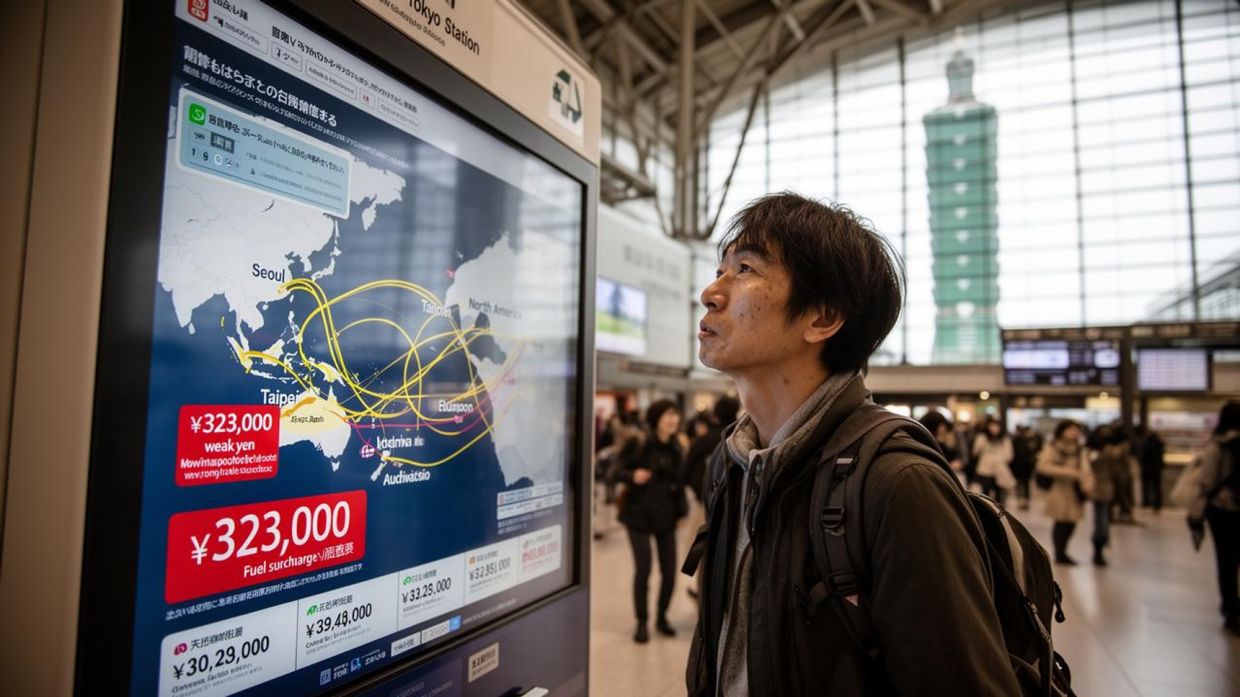
Japanese families planning summer getaways face a sobering reality: the combination of a weak yen and persistent inflation is forcing them to rethink both where they travel and how much they spend. Major travel agency JTB Corp forecasts that overseas trips from Japan will contract by 8.8 per cent to 2.17 million during the July 15 to August 31 summer holiday period, representing the first significant decline since international tourism resumed following the pandemic disruptions that characterised 2023 and early 2024.
The underlying economic pressures reshaping Japanese travel behaviour are multifaceted and reveal much about broader consumer sentiment across the world's third-largest economy. While the yen's prolonged weakness against the US dollar and other major currencies is the primary culprit, the impact is being amplified by a secondary factor: surging aviation fuel surcharges triggered by geopolitical tensions in West Asia. These twin pressures have fundamentally altered the calculus for Japanese families deciding whether to take their planned summer holidays and, if so, where to spend them.
The financial bite is becoming increasingly apparent in spending patterns. Despite the expected decline in the number of people travelling overseas, those who do venture abroad are anticipated to shell out more money per trip than last year. Average expenditure per person is projected to climb 6.3 per cent to 323,000 yen, equivalent to approximately US$2,000. This apparent paradox—fewer travellers but higher per-capita spending—reflects a deeper economic stratification occurring within Japanese society, where discretionary spending is becoming increasingly polarised between affluent households maintaining their travel ambitions and middle-income families paring back their vacation plans.
Geographically, the weak yen is creating pronounced winners and losers in Japan's outbound travel market. Long-haul destinations that typically appeal to Japanese travellers, including North America and Australia, are becoming significantly less attractive as currency headwinds render these journeys substantially more expensive. In their place, nearby regional destinations with lower airfares and favourable exchange rates are capturing an expanding share of Japanese holiday-makers. South Korea has emerged as the dominant choice among overseas destinations, attracting 26.2 per cent of Japanese travellers heading abroad, while Taiwan follows as a distant second at 16.2 per cent. These two economies are positioned geographically close to Japan and offer competitive pricing structures that align with the current realities of Japanese consumer budgets.
China's position in Japan's tourism market has deteriorated markedly, with visits expected to reach only half the previous year's level at 10.1 per cent. This dramatic contraction extends beyond mere economic considerations and reflects underlying diplomatic tensions between Tokyo and Beijing. The flashpoint originated with Prime Minister Sanae Takaichi's remarks concerning Taiwan made in November, remarks that strained already delicate relations between Asia's two largest economies. For Malaysian and Southeast Asian observers, this dynamic underscores how geopolitical friction can rapidly reshape tourism flows, a lesson with direct relevance given the region's own complex web of territorial and diplomatic relationships.
Domestic travel within Japan itself is not immune to the broader economic pressures affecting consumer behaviour. JTB projects that internal holiday trips will decline 4.4 per cent compared to the previous summer season, totalling 69 million journeys. However, like their internationally travelling counterparts, Japanese domestic tourists are expected to increase their spending per trip by 3.2 per cent to 48,500 yen. This pattern suggests that Japanese consumers are prioritising quality experiences over quantity, with families choosing to take fewer but more memorable trips.
Within Japan, regional destinations are absorbing this changing demand in uneven fashion. Tokyo and the surrounding Kanto region, encompassing Japan's densest population and most developed tourism infrastructure, remains the dominant destination at 19.0 per cent. The Kinki region in western Japan, home to cultural hubs like Kyoto and Osaka, holds second place at 14.9 per cent, while Hokkaido in the north attracts 11.2 per cent of domestic travellers. These patterns reflect how Japanese consumers are consolidating their travel around established tourism regions rather than venturing to lesser-known destinations, another indicator of cost-conscious holiday planning.
A JTB official's observation about emerging consumer polarisation captures the nuanced reality beneath the headline statistics. Japanese society appears to be splitting into two camps: one group actively shortening vacation lengths and selecting more budget-conscious options, whilst another segment remains determined to execute their desired travel plans irrespective of cost implications. This bifurcation has profound implications for tourism operators, who must now cater to increasingly divergent customer expectations and spending capacities during what has traditionally been Japan's busiest holiday season.
The methodology underpinning these projections provides important context for their reliability. JTB conducted an online survey during June among respondents who had already committed to taking trips of at least one night during the designated summer period. This means the figures capture actual holiday intentions rather than speculative interest, lending weight to the forecasts. However, the timing of the survey—conducted weeks before the summer travel period—also means external shocks such as economic announcements or further currency movements could alter these projections before families actually book and undertake their trips.
For regional analysts monitoring Japanese consumer behaviour, this summer's travel contraction carries broader significance. Japan's tourism patterns often serve as a leading indicator for broader trends in consumer confidence and economic health across developed Asia-Pacific economies. The retreat in Japanese outbound travel, particularly toward long-haul destinations, may presage similar retrenchment in other affluent Asian economies should currency pressures and inflation persist. Malaysian tourism operators and Southeast Asian destinations that have benefited from Japanese visitor spending should closely monitor whether this year's summer decline represents a temporary adjustment to currency levels or a more sustained shift in Japanese travel preferences and capabilities.
The divergence between outbound and domestic travel patterns also warrants attention from regional tourism strategists. If Japanese consumers increasingly substitute international travel with domestic alternatives, this could reshape competitive dynamics within Southeast Asia's tourism market, where Japanese visitors have historically represented a significant source of high-value tourism revenue. Conversely, if the preference for affordable regional destinations like South Korea and Taiwan solidifies, Southeast Asian nations may need to recalibrate their value propositions and marketing strategies to reassert their appeal to cost-conscious Japanese holiday-makers during periods of currency weakness.

