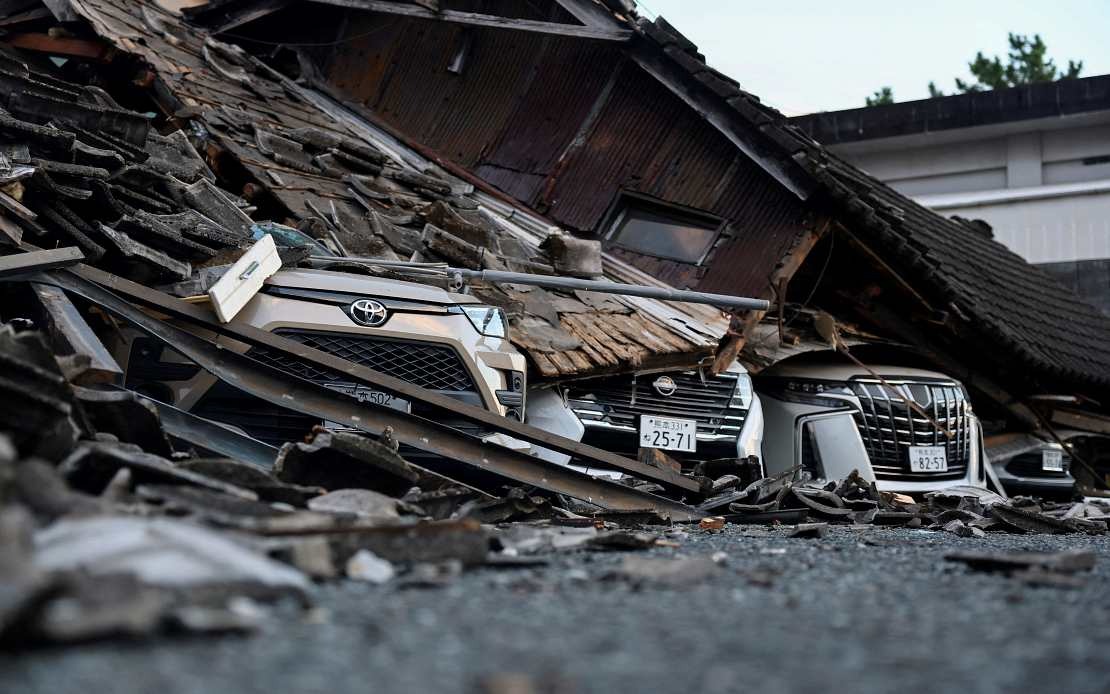
The operator of a variety store chain in southwestern Japan has admitted instructing employees to return inside an Aeon shopping mall moments before a devastating explosion claimed seven lives, raising urgent questions about workplace safety protocols during natural disasters. Habita, the company responsible for the store at Aeon Mall Kumamoto in Kashima Town, acknowledged on Monday that it had ordered two female staff members back into the building to secure the day's cash proceeds after they had already safely evacuated following a powerful 7.1 magnitude earthquake.
The disaster unfolded on Tuesday when the earthquake, which registered at level 7—the highest classification on Japan's seismic intensity scale—triggered a massive explosion inside the mall. Among the seven fatalities were the two Habita employees, including a 22-year-old woman, who had initially fled the structure as the ground shook but were subsequently instructed to re-enter the facility. The scale of the tragedy underscores how decisions made in the immediate aftermath of a major natural disaster can have life-or-death consequences, and how workplace hierarchies may override personal safety considerations during emergencies.
Koji Yuse, the 64-year-old sales manager of the Kumamoto-based Habita operation, publicly acknowledged his responsibility for the directive during a media briefing on Monday afternoon. Yuse explained that he had instructed the store manager to send the two employees back inside to relocate the day's sales revenue from the second-floor retail space to a secure safe located on the first floor. The straightforward nature of the transaction—moving cash from one location to another—makes the decision to expose staff to potential danger particularly difficult to justify in retrospect.
Yuse's statement to reporters carried an acknowledgment of the gravity of his decision. "I think the order was inappropriate. I deeply regret it," the manager said, providing a stark admission that he recognised the impropriety of directing employees to re-enter a building that had just experienced a catastrophic seismic event. The company has since formally apologized to the families of the deceased employees and provided a written account of the events and circumstances surrounding the orders.
The Kumamoto prefectural government's assessment of the broader disaster reveals the scale of destruction triggered by the earthquake. As of Tuesday morning, 36 people had been confirmed dead directly as a result of the seismic event, with two additional deaths still under investigation. The explosion at the Aeon mall represented one of the deadliest incidents associated with the earthquake sequence, highlighting how secondary disasters can compound the initial damage caused by natural disasters.
This incident resonates across East Asia and Southeast Asia, where both Japan and the region regularly face seismic threats and commercial establishments must balance operational continuity with worker safety. For Malaysian businesses with operations in Japan or those managing retail chains in earthquake-prone regions of Southeast Asia, the case illustrates the importance of establishing clear protocols that prioritize personnel safety over financial assets during natural disasters. The principle that no amount of cash justifies exposing staff to danger should form the foundation of corporate emergency response policies.
The decision to order employees back into the building reveals a troubling hierarchy of priorities that places asset protection above human life. In the seconds and minutes following a major earthquake, the primary concern should be accounting for all persons and ensuring they remain in safe locations, not retrieving monetary assets. The mall's second floor, where the cash was located, proved particularly vulnerable to the subsequent explosion, making the decision to send workers there even more indefensible from a safety perspective.
Japan's extensive experience with earthquakes and sophisticated building codes have made the country generally resilient to seismic events, yet this tragedy demonstrates that engineered resilience means little if human decision-making fails to prioritize life. Retailers and business operators throughout the region should carefully examine their emergency protocols to ensure that no operational or financial consideration could override the fundamental obligation to protect worker safety. The incident also raises questions about whether corporate training adequately addresses the specific challenges posed by natural disasters and whether employees feel empowered to question instructions that seem unsafe.
For Malaysian employers and those across Southeast Asia, the Kumamoto case serves as a cautionary tale about the intersection of corporate hierarchy, financial priorities, and disaster response. Building codes and structural engineering matter significantly, but they cannot protect workers whose management sends them into danger. The deaths of these two Habita employees represent not merely an earthquake tragedy but a preventable loss stemming from a command decision made under pressure. As regional economies continue to expand and more commercial establishments operate in earthquake-prone areas, establishing and enforcing safety-first protocols during natural disasters must become a non-negotiable standard across all industries and all companies, regardless of size or profit margins.

