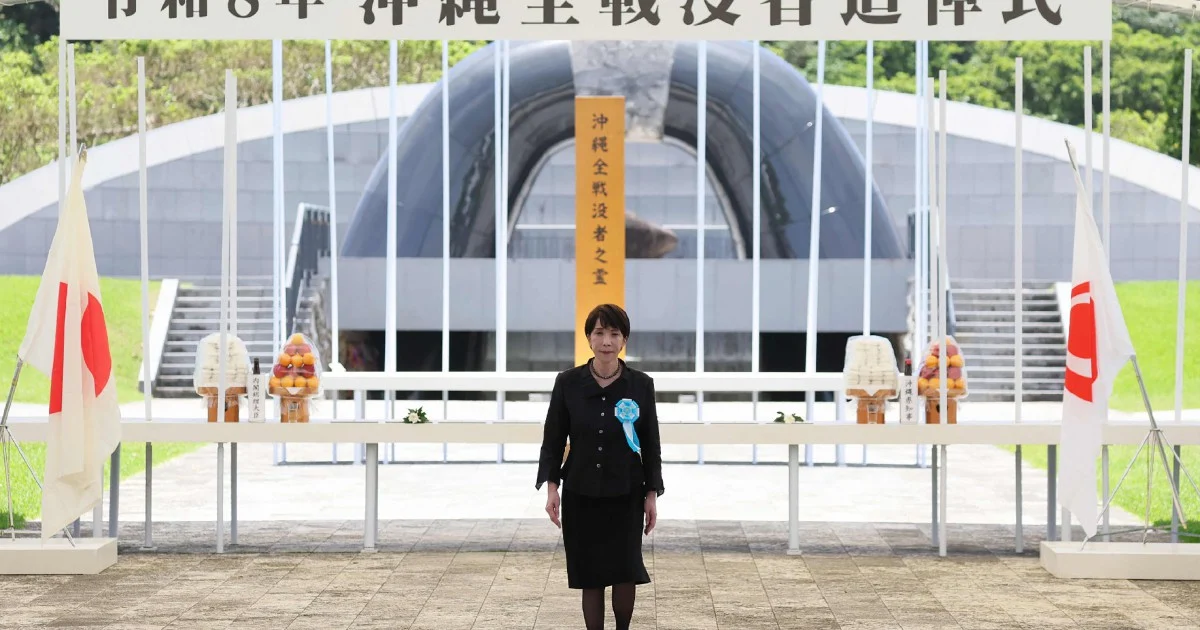
Prime Minister Sanae Takaichi encountered significant public protest during a ceremony at a World War II memorial in Tokyo, when demonstrators voiced their opposition to Japan's shifting defence posture. Television coverage captured the heckling incident, which underscores deepening tensions within Japanese society over the government's military expansion trajectory and departure from the nation's post-war pacifist foundations.
The confrontation reflects a fundamental divide in Japanese public opinion regarding national security policy. For nearly eight decades, Japan's 1947 Constitution has constrained military development and spending, positioning the nation as a beacon of pacifism in East Asia. However, successive administrations have gradually reinterpreted constitutional provisions to accommodate expanded Self-Defense Forces capabilities. The Takaichi government's acceleration of this trend has mobilised grassroots opposition among citizens who view military buildup as contrary to Japan's historical commitment to peace.
Takaichi's administration has signalled ambitious defence modernisation plans, including substantial increases to military budgets and procurement of advanced weaponry. These initiatives respond partly to China's military assertiveness in the region and North Korea's accelerating weapons programmes, creating genuine security concerns within Japan's policy establishment. Yet the government's approach bypasses broader public consultation, leaving many citizens feeling excluded from decisions with profound implications for national direction.
The memorial event served as a symbolic venue for this protest. War memorials in Japan carry profound weight, invoking both remembrance of sacrifice and reflection on the devastating consequences of military conflict. By choosing this location, demonstrators sought to anchor their opposition to military expansion within the historical consciousness of WWII's devastation, arguing that Japan should honour victims by maintaining commitment to pacifism rather than rearmament.
Japan's pacifist movement, though diminished since the Cold War's end, retains considerable organisational capacity and public sympathy, particularly among older generations who lived through wartime deprivation. Labour unions, religious organisations, and civil society groups have mobilised against defence spending increases, framing military expansion as a betrayal of the constitutional settlement that emerged from Japan's post-war reconstruction.
The heckling incident gains added significance in Japan's regional context. Tokyo's military shift occurs amid rising tensions across East Asia, including China's military expansion, Russia's influence activities, and Korea's division. Regional neighbours monitor Japanese security policy closely, with some countries viewing modest Japanese rearmament as potentially stabilising, whilst others express concern about historical militarism's resurrection. Public divisions within Japan itself can complicate diplomatic messaging.
Takaichi represents a more security-conscious faction within Japan's ruling Liberal Democratic Party, willing to challenge constitutional constraints that party moderates previously accepted. Her administration has leveraged geopolitical anxieties to justify military investment whilst portraying critics as naïve about contemporary threats. This framing marginalises legitimate pacifist perspectives as disconnected from strategic reality, even though cost-benefit analyses of military spending remain contested among experts.
The memorial protest highlights how security debates in democracies cannot be conducted purely at elite institutional levels. Public engagement with defence policy proves essential for legitimacy, yet the Takaichi government appears to have underestimated continuing attachment to pacifist principles among significant population segments. The heckling signals that military expansion carries political costs beyond budgetary allocations.
For Southeast Asian observers, Japan's internal military debate carries implications for regional stability. Enhanced Japanese military capabilities could strengthen security partnerships and potentially deter revisionist powers, yet rapid militarisation might trigger countervailing strategies or security dilemmas. Malaysia and neighbouring states have interests in managing great power competition without being drawn into escalating military competition that diverts regional resources from development priorities.
The incident also reveals generational dimensions within Japanese politics. Younger voters, lacking direct war experience, may prove more amenable to security-focused arguments, potentially shifting public opinion over time. Conversely, peace movement activists seek to transmit historical consciousness about war's costs to younger generations before pacifist sentiment erodes further. This intergenerational struggle will shape Japanese politics significantly.
Takaichi's government will likely face persistent pressure from civil society as military expansion accelerates. Whether the administration can build broader consensus for its security vision or whether opposition hardens remains uncertain. The memorial heckling suggests public sentiment on this issue remains volatile and contested, preventing the government from treating military expansion as settled policy.
Ultimately, the incident exemplifies tensions between security imperatives and pacifist commitments that democratic societies must navigate. Japan's particular challenge involves reconciling genuine security needs with constitutional principles and cultural identity rooted in rejecting militarism. The confrontation at the war memorial suggests this reconciliation remains incomplete and politically contentious.