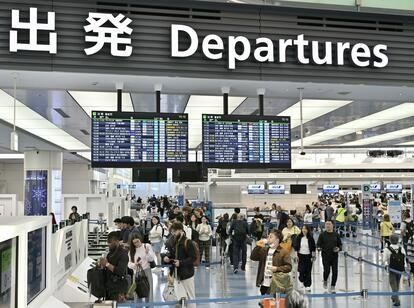
Japan's government has substantially reformed its tourism taxation framework, implementing a departure tax increase that represents a significant shift in how the nation finances its response to record visitor numbers. From July 1, travellers departing Japan now pay 3,000 yen instead of the previous 1,000 yen levy, marking a tripling of the international tourist tax that has become a key revenue source for managing the complexities of mass tourism. This increase demonstrates Tokyo's determination to address the mounting pressures that millions of annual visitors place on infrastructure, amenities, and local communities throughout the archipelago.
The visa fee adjustments underscore the government's multifaceted approach to tourism management. Single-entry visas for foreign nationals have risen from 3,000 yen to 15,000 yen, while multiple-entry visas have jumped to 30,000 yen, marking the first substantial increase since 1978. Foreign Minister Toshimitsu Motegi explained that these increases reflect both inflation and the effects of yen depreciation on the government's costs, while emphasising that the changes are not anticipated to deter visitors seeking to enter Japan. This calibration suggests Tokyo believes demand for Japanese experiences remains sufficiently strong to absorb higher entry costs without triggering a decline in tourist arrivals.
The revenue generated by these measures will be directed toward a comprehensive strategy to disperse tourism benefits beyond Japan's congested hotspots. The government intends to establish designated viewing areas at Instagram-famous photo locations that have become overwhelmed by international visitors seeking identical shots, a growing phenomenon that has created congestion and public frustration in premium destinations. Beyond congestion management, the administration plans to funnel substantial resources into regional development initiatives that leverage underutilised tourism assets, particularly in rural prefectures that have historically struggled to capture international visitor spending.
Regional railways are being repositioned as tourist attractions in their own right, representing a creative approach to encouraging visitors beyond Tokyo and Kyoto. Station renovations across secondary and tertiary cities aim to create welcoming gateway experiences that make venturing beyond major metropolitan areas more appealing. This spatial redistribution strategy reflects lessons learned from overtourism management in European destinations, where concentrating visitors in a handful of elite locations created both environmental strain and diminishing returns for residents and local economies.
To offset the additional financial burden imposed on Japanese travellers by the departure tax increase, the government has simultaneously reduced domestic passport application fees. The cost for a standard ten-year passport has been cut dramatically to 9,300 yen from 16,300 yen at passport centres and counters, with online applications available at an even lower 8,900 yen. Five-year passports for applicants under eighteen are now standardised at 4,800 yen through conventional channels or 4,400 yen online. This compensatory reduction acknowledges that the departure tax applies to all travellers regardless of nationality, meaning Japanese citizens departing for overseas trips would bear the same burden as international visitors arriving in Japan.
The broader rationale for passport fee reductions relates to Japan's relatively low passport ownership rate compared with other major developed nations. Despite being a wealthy, technologically advanced country with high living standards, Japan lags peer nations in the proportion of citizens holding valid passports, suggesting that cost barriers and administrative friction may be limiting factors in travel. By reducing these fees, particularly for online applications, the government hopes to encourage greater international mobility among Japanese citizens, which carries economic and soft power implications for the nation's global engagement.
The tax restructuring generates substantial revenue streams to support this comprehensive tourism strategy. In the fiscal year ending March, the departure tax raised approximately 49 billion yen, a figure that is projected to more than double to around 130 billion yen in the coming fiscal year as the increased rate takes effect. This dramatic expansion in available funding reflects both the volume of departing travellers and the government's confidence that the higher rate will not materially suppress travel demand. For Southeast Asian readers, the implications are significant: Japan's experience with tourism taxation and regional distribution strategies may inform discussions about managing visitor flows in countries like Thailand, Indonesia, and the Philippines, which face similar pressures in popular destinations.
The timing of the implementation, with passengers who booked tickets before July 1 grandfathered at the old 1,000 yen rate, provided a transition period that minimised disruption while ensuring the new regime could be clearly communicated. Certain categories of travellers remain exempt: those transiting through Japan with stays shorter than twenty-four hours can depart without paying the tax, recognising that hub passengers do not consume local tourism services, while children under two are exempted from the levy as a matter of policy principle.
Japan's visa fees had been internationally recognised as remarkably low compared with those imposed by other Group of Seven economies, presenting what some observers characterised as underpriced market entry. The substantial increase narrows this competitive advantage, though 15,000 yen for a single-entry visa remains competitive by global standards. The government's assertion that this adjustment will not materially impact inbound tourism reflects demographic and economic realities: wealthy Asian tourists from China, South Korea, and Southeast Asia, along with affluent travellers from Australia and Western nations, demonstrate strong demand for Japanese cultural, culinary, and shopping experiences that justifies travel costs that have increased significantly over the past decade.
These policy changes represent a calculated evolution in Japan's tourism approach. Rather than attempting to suppress visitor numbers through prohibitive taxation or restrictive visas, the government is channelling revenues into infrastructure and regional development while maintaining accessibility. This contrasts with some alternative approaches that simply raise barriers without reinvesting proceeds into managing tourism's impacts. For Malaysia and other regional nations managing tourism growth, Japan's integrated strategy of revenue generation, regional redistribution, and targeted infrastructure investment offers an instructive model for balancing economic benefits against quality-of-life considerations for residents in popular destinations.

