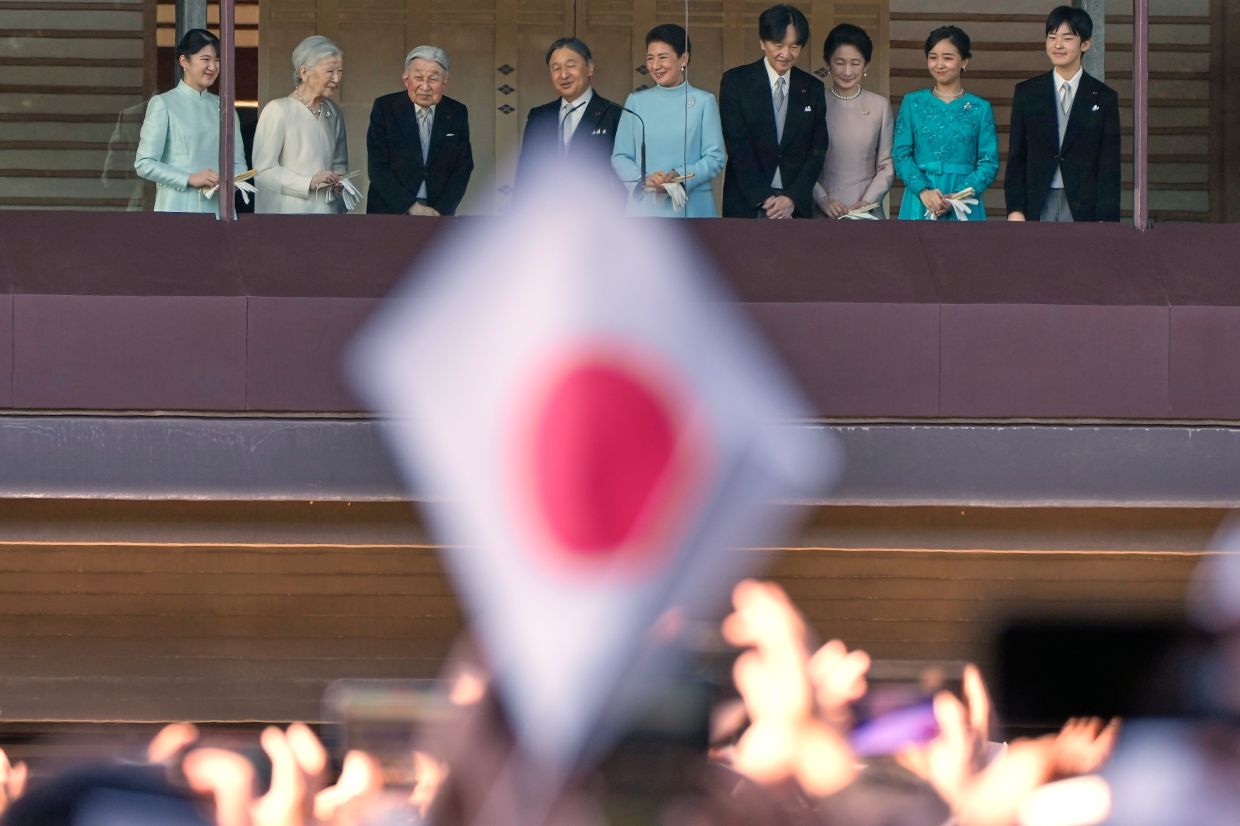
Japan's parliament on Friday enacted modifications to its imperial succession law, yet the nation's conservative political establishment has resisted public pressure to allow women to become emperor. The legislation passed the upper house with substantial backing, cementing the continued exclusion of women from the Chrysanthemum Throne despite widespread polling suggesting Japanese citizens favour reform. The decision underscores the tension between modern democratic values and centuries-old traditions governing one of the world's oldest monarchies.
The imperial succession framework has become increasingly precarious, forcing lawmakers to address succession concerns without fundamentally altering gender restrictions. Currently, the imperial lineage depends heavily on Prince Hisahito, the 19-year-old nephew of Emperor Naruhito, who remains unmarried and continues his university studies in biology and entomology. If Hisahito fails to produce a male heir, the male-only succession rules would create an unprecedented situation where the direct imperial line lacks a qualified successor. This demographic vulnerability prompted parliament to consider alternative measures, though these fall short of the comprehensive reform many citizens and commentators believe necessary.
The legislation permits the adoption of unmarried male relatives aged 15 and older from the imperial branch families back into the official imperial household register. This provision attempts to artificially expand the pool of eligible male heirs by bringing former imperial family members back into consideration for succession. However, such adoptions face significant practical obstacles, as members of the 11 branch families that withdrew from the imperial register after World War II have since lived as ordinary citizens. The bill also grants women the right to retain their imperial status following marriage to commoners, a privilege previously extended only to male imperial family members.
The continuing prohibition on female succession becomes particularly contentious when examining the imperial family's current composition and the capabilities of potential female inheritors. Princess Aiko, Emperor Naruhito's 24-year-old daughter, remains constitutionally barred from succession despite her position as the emperor's direct child. Her exclusion exemplifies the law's rigidity, as her lineage directly descends from the legendary Shinto sun goddess Amaterasu, the mythological foundation of imperial legitimacy. Additionally, Prince Hisahito's two elder sisters would be similarly excluded regardless of their qualifications or public approval, a restriction that contrasts sharply with modern governance principles.
Public opinion polling reveals substantial support for reform, suggesting a generational divide between citizens and political leadership. An Asahi Shimbun survey conducted in May found that 72 percent of respondents favour changing succession rules to permit women to become emperor. This overwhelming consensus indicates that the average Japanese person sees little logical or practical justification for excluding women from the highest imperial office. The disconnect between public sentiment and legislative outcomes reveals how deeply entrenched traditional views remain within Japan's conservative political apparatus, which prioritises institutional continuity over democratic representation.
The Liberal Democratic Party, which has governed Japan for most of the postwar period, remains dominated by traditionalist factions resistant to female succession. Prime Minister Sanae Takaichi, herself Japan's first woman to hold the premiership, has publicly opposed female succession despite her own historic political achievement. This apparent contradiction highlights how female political leaders can simultaneously advance in electoral politics while opposing institutional changes that would benefit women in other spheres. The party's internal deliberations reportedly involved considerable friction as reformist members confronted traditionalist resistance, eventually producing a compromise that satisfied neither camp completely.
Veteran Liberal Democratic Party legislator Seiichiro Murakami voiced strong dissent following the lower house passage on July 10, declaring the exclusion of Princess Aiko as emperor "utterly outrageous." His criticism represents a minority position within the ruling party, yet it articulates concerns shared by many observers who question why biological sex should determine imperial eligibility in the 21st century. The generational split extends beyond party lines, as younger lawmakers and urban voters increasingly view gender-based succession rules as outdated and inconsistent with Japan's status as a developed democracy.
The practical feasibility of adopting distant male relatives raises additional concerns among former and current imperial family members. Asahiro Kuni, 81, a former imperial family member from one of the 11 branch families, has cautioned that enlisting distant male relatives would prove unrealistic in execution. Kuni argued that by age 15, adopted individuals would have developed personalities and expectations shaped by ordinary civilian life, making the profound adjustment to imperial family constraints exceptionally difficult. His warnings underscore the human dimension often overlooked in succession debates, acknowledging that imperial status brings significant restrictions alongside ceremonial privileges.
Kuni elaborated his concerns to the Asahi Shimbun, suggesting that few individuals who truly understood imperial life's demands would voluntarily accept such a role. The comment reveals the paradox inherent in the adoption proposal: the families most likely to accept nomination might do so from incomplete understanding of the commitment involved, while those genuinely cognisant of imperial expectations would reasonably decline the opportunity. This tension indicates that legislative solutions relying on distant male relatives may prove unworkable when faced with practical recruitment challenges and individual reluctance.
Criticism of the government's approach extends beyond opposition politicians to mainstream media outlets traditionally sympathetic to conservative causes. The Yomiuri Shimbun, Japan's top-circulation daily newspaper and typically a staunch Liberal Democratic Party supporter, recently published an editorial criticising the government's handling of succession reform. This unusual rebuke from a normally friendly media source suggests that even institutionally conservative voices recognise the inadequacy of the adopted solution and harbour doubts about its long-term viability.
The imperial family currently comprises 16 members, including only five men: the retired Emperor Akihito, age 92; his 90-year-old brother; the serving Emperor Naruhito, 66; Naruhito's brother; and Prince Hisahito. This narrowing male membership underscores the demographic pressures driving the succession question. Without female succession or successful recruitment of branch family members, the imperial institution faces genuine continuity challenges within decades. The mathematics of demographic reality increasingly render the current system unsustainable, yet Japan's political leadership has chosen incremental adjustment over fundamental reform.
The succession question carries implications extending beyond ceremonial concerns, touching on Japan's relationship with modernity, gender equality, and institutional legitimacy. In Southeast Asia and broader Asian contexts, Japan's imperial institution commands considerable cultural resonance and symbolic significance. How Japan resolves its succession dilemma may influence regional attitudes toward female leadership and institutional adaptation in other Asian monarchies and traditional systems. The current compromise preserves formal traditions while potentially deferring more contentious choices to future generations, a characteristically cautious approach that satisfies few stakeholders yet avoids immediate political confrontation.

