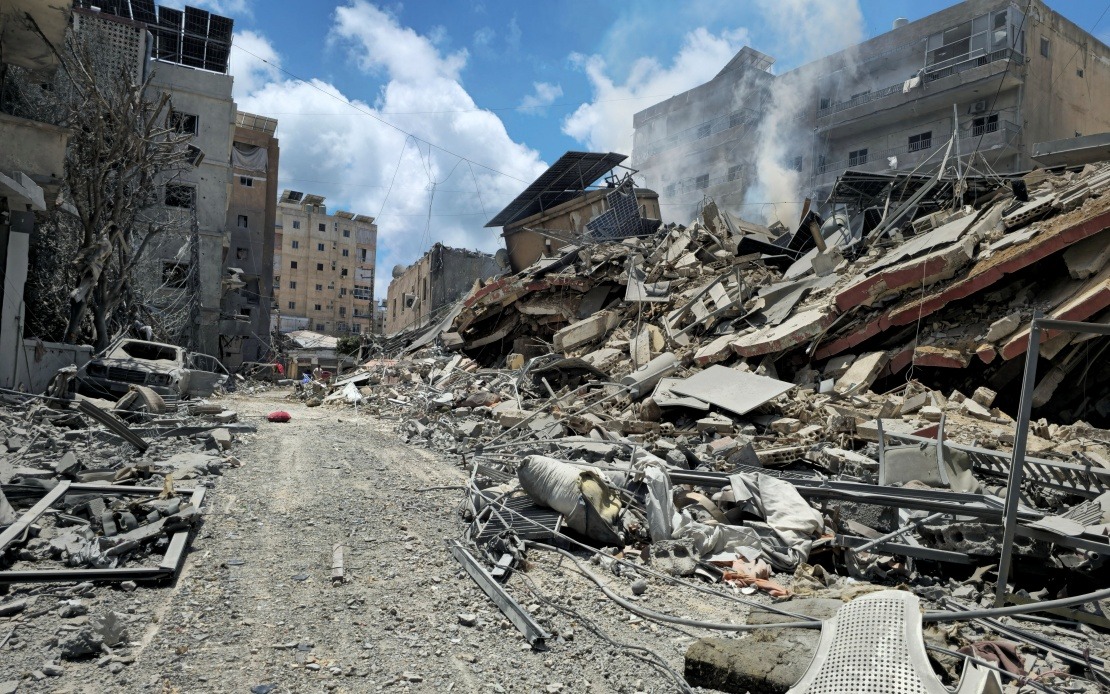
Japan has committed US$15 million in emergency humanitarian assistance to address escalating crises across West Asia, marking Tokyo's latest effort to stabilise a region of considerable strategic importance to the Japanese economy and regional security interests. Foreign Minister Toshimitsu Motegi announced the aid package on Friday, emphasising that the allocation reflects Japan's commitment to supporting vulnerable populations amid ongoing instability and conflict-related suffering across the Middle East.
The breakdown of the assistance reveals Japan's prioritisation of the most acute humanitarian emergencies. Approximately US$10 million has been designated for Iran, which faces compounding pressures from economic sanctions, regional tensions, and the resulting humanitarian toll on ordinary citizens. A further US$4 million will reach Lebanon, a country grappling with economic collapse, infrastructure devastation, and a refugee crisis of unprecedented scale. The remaining US$1 million targets Palestinians in the West Bank, where displacement, resource scarcity, and limited access to essential services have created persistent humanitarian challenges.
The aid will flow through established international organisations rather than direct bilateral channels, a approach that ensures compliance with international humanitarian protocols and maximises the efficiency of relief distribution. The package encompasses food supplies, medical equipment and pharmaceuticals, and other critical necessities that address immediate survival needs in communities facing acute shortages. This modality also provides Japan with operational transparency and reduces the risk of aid diversion or politicisation in sensitive contexts.
Motegi's statement underscores Tokyo's strategic assessment of Middle Eastern stability. For Japan, a resource-dependent island nation heavily reliant on energy imports from the Persian Gulf, regional turmoil threatens shipping lanes, oil price volatility, and broader geopolitical uncertainty that reverberates across Asian markets. Japan's diplomatic positioning seeks to maintain constructive relationships across the region's fractious political landscape while addressing humanitarian imperatives that transcend national boundaries.
The announcement reflects a broader Japanese diplomatic philosophy that attempts to balance humanitarian activism with pragmatic great-power engagement. By channelling aid through multilateral organisations, Tokyo signals support for international humanitarian law and the primacy of the United Nations system, even as major powers pursue competing interests throughout the region. This stance positions Japan as a stabilising, non-partisan actor capable of mobilising resources for civilian welfare without triggering accusations of advancing narrower political agendas.
For Southeast Asian nations, Japan's sustained engagement with Middle Eastern crises carries indirect relevance. Many regional economies depend on Gulf energy supplies and maintain significant trading relationships with Iran, Lebanon, and Palestinian territories. Japan's humanitarian diplomacy provides a template for balancing commercial interests with ethical obligations to vulnerable populations, a challenge that increasingly confronts ASEAN member states navigating geopolitical complexity.
The humanitarian situation across West Asia has deteriorated markedly in recent years. Iran faces triple pressure from international sanctions, internal economic mismanagement, and regional proxy conflicts that drain resources from civilian sectors. Lebanon's state institutions have essentially collapsed, leaving the country dependent on international assistance to prevent complete economic and social breakdown. Palestinian territories continue experiencing protracted occupation-related displacement and resource constraints that fuel chronic humanitarian deficits.
Motegi emphasised Japan's intention to deepen cooperation with affected nations and international organisations to systematically improve humanitarian conditions and contribute to durable peace frameworks. This language suggests Tokyo recognises that emergency aid, while necessary, cannot substitute for political solutions addressing root causes of instability. Japan's approach contemplates parallel tracks: immediate humanitarian relief whilst engaging in longer-term diplomatic efforts toward conflict resolution and regional stabilisation.
The timing of this announcement carries diplomatic significance. By publicly committing substantial resources to populations across competing political spheres—Iran, Lebanon, and the Palestinian territories—Japan signals independence from polarised regional alignments and positions itself as genuinely neutral in sectarian and geopolitical divisions characterising contemporary Middle Eastern politics. This positioning enhances Japan's credibility as a trusted interlocutor capable of facilitating dialogue and mediating disputes.
Japanese officials anticipate that sustained humanitarian engagement creates opportunities for building relationships with civil society organisations, local communities, and international partners operating in these territories. Such engagement generates intelligence, builds diplomatic networks, and demonstrates Japanese commitment to universal humanitarian principles rather than narrow strategic advantage. For populations experiencing deprivation, Japanese assistance provides tangible material support whilst symbolising international concern for their welfare.
The aid commitment also reflects Japan's broader Indo-Pacific strategy, which increasingly recognises that Middle Eastern stability affects Asian security and economic prosperity. Regional conflicts generate refugee flows toward Southeast Asia, disrupt supply chains, and create terrorist recruitment opportunities exploited by transnational extremist networks. By addressing humanitarian root causes of instability, Japan arguably invests in preventing downstream security challenges affecting ASEAN nations and the broader Asian order.

