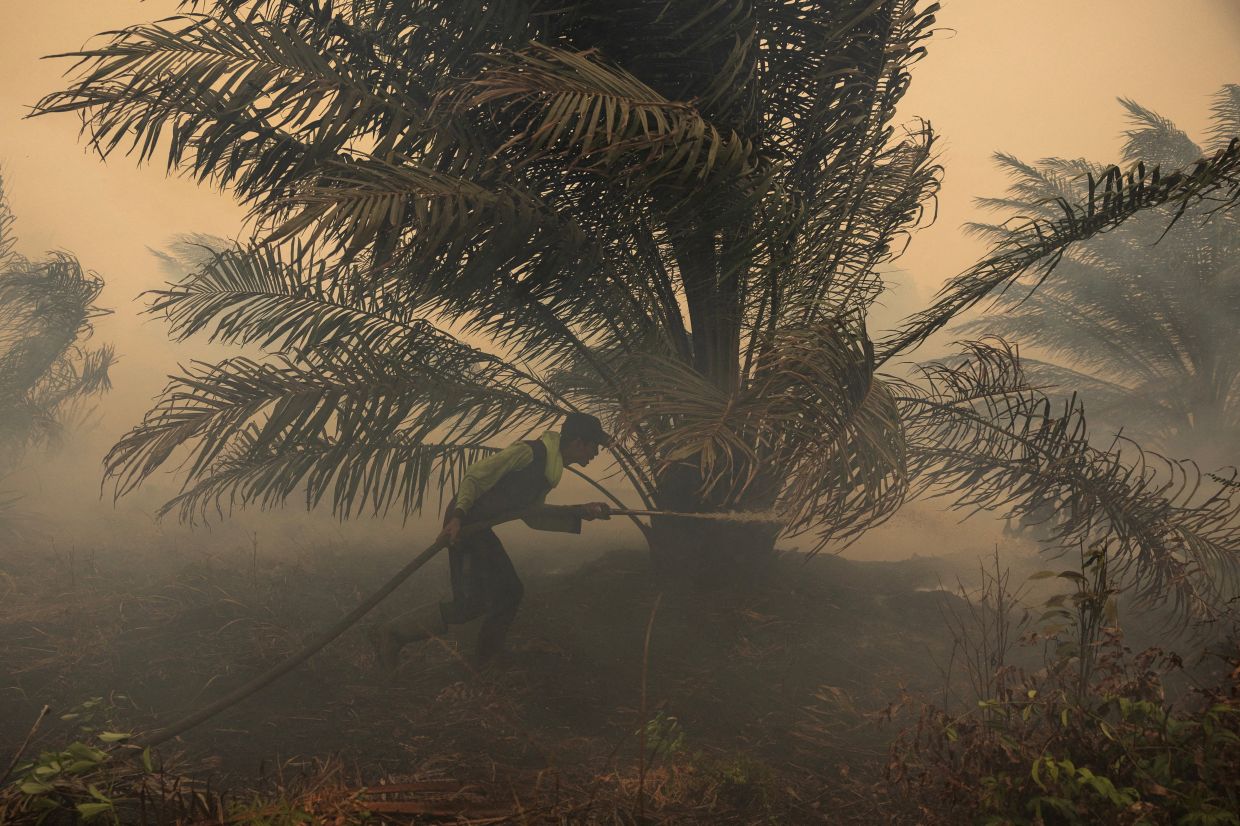
Indonesia is receiving international support in its escalating fight against forest and land fires ravaging Kalimantan, with Japan committing three helicopters to water-bombing operations starting September 10. The deployment comes as air quality measurements in the region have breached hazardous thresholds, with readings exceeding 1,000 on the Air Pollutant Standard Index (ISPU)—a level that poses severe risks to public health and requires immediate intervention. According to Berton Panjaitan, acting head of the National Disaster Mitigation Agency's (BNPB) data and communications division, preparations for the Japanese-assisted missions are advancing, with operational teams conducting site surveys and coordinating technical details for the water-bombing campaign.
The situation in Kalimantan has reached critical proportions, with specific locations recording some of the worst air quality measurements in recent memory. Jekan Raya in Palangka Raya, Central Kalimantan, registered an ISPU reading of 1,108 as of Saturday evening, while South-East Pontianak in West Kalimantan reached 1,075—both classifications placing them firmly in the hazardous category where the general population faces health risks from prolonged exposure. These measurements reflect not merely seasonal agricultural burning but a widespread conflagration across multiple provinces simultaneously, overwhelming local capacity to manage the crisis independently.
The spatial extent of the fire problem underscores the urgency of international assistance. Across West, Central, and South Kalimantan combined, officials counted 9,242 hotspots, with all three provinces experiencing deterioration. West Kalimantan bore the brunt of the escalation, recording an increase of 1,629 hotspots to reach 3,371 total active fire locations. Beyond these thermal anomalies, ground-level fires have actually ignited across the three provinces, with 171 confirmed burning spots adding to the aerial detections. The concentration of fires in Kalimantan's peatland regions amplifies concerns, as these carbon-rich soils burn more intensely and produce denser smoke when ignited, compounding air quality degradation.
Indonesia's existing firefighting infrastructure, while substantial, remains insufficient to contain the crisis without external reinforcement. The BNPB currently operates 52 aircraft dedicated to suppressing the fires, comprising 38 dedicated water-bombing platforms and 14 reconnaissance and weather-modification aircraft. These resources have already dispersed approximately 3.5 million litres of water across six priority provinces, yet the escalating hotspot counts suggest that current operations cannot match the rate at which new fires are igniting. The Japanese contribution of additional helicopters, particularly the heavy-lift Chinook variant capable of carrying substantial water loads, represents a meaningful augmentation to available capacity.
Weather conditions have complicated response efforts, creating uneven effectiveness across the archipelago. The BNPB reported that weather modification operations—cloud-seeding techniques intended to induce rainfall over affected areas—have successfully brought moisture to several Sumatran locations, including parts of Riau, South Sumatra, Jambi, and Lampung. However, the same atmospheric manipulation strategy cannot be deployed in Central and South Kalimantan because meteorological conditions lack sufficient cloud cover necessary for seeding operations. This geographical disparity means that Kalimantan's most severely affected regions cannot benefit from this supplementary rainfall technique, leaving water-bombing by aircraft as the primary active suppression method.
The crisis extends beyond immediate health and environmental concerns to regional implications affecting Malaysia and Singapore, which have historically experienced transboundary haze during peak fire seasons in Kalimantan and Sumatra. Air pollution originating from Indonesian fires routinely drifts across the Strait of Malacca and into Malaysian airspace, degrading air quality in northern Peninsular Malaysia, Sabah, and Sarawak. Previous fire events have forced Malaysian schools to close, disrupted transportation, and triggered health advisories across the region. The current severity of the Kalimantan fires suggests that without rapid containment, neighbouring countries may soon experience significant air quality impacts, making Japan's intervention strategically valuable not only for Indonesia but for broader Southeast Asian stability.
The involvement of Japan reflects the regional nature of Indonesia's fire management challenges and the recognition that combating these events requires coordination across multiple nations. Japan has previously provided disaster relief assistance to Indonesia during natural calamities, positioning it as an established partner in crisis response. The specific commitment of helicopters with water-bombing capability demonstrates targeted technical support addressing the immediate suppression requirement rather than generic humanitarian aid. The September 10 operational commencement date provides a narrow window before conditions potentially worsen further into the peak fire season.
Indonesian authorities face mounting pressure to demonstrate effective crisis management amid escalating public health concerns. The hazardous ISPU readings in major Kalimantan cities threaten respiratory health, particularly among vulnerable populations including children, elderly residents, and individuals with pre-existing lung conditions. Schools and workplaces may require operational adjustments if air quality continues deteriorating, creating economic disruptions alongside health impacts. The BNPB's coordination of multiple firefighting assets, integration of international assistance, and attempted weather modification represents a comprehensive approach, yet the persistence and expansion of hotspots suggests that underlying factors—inadequate land-use enforcement, peatland drainage enabling combustion, and potentially deliberate clearing—continue driving fire initiation faster than suppression can manage.
Longer-term solutions will require addressing root causes beyond immediate emergency response. Indonesia's struggle with recurring fire crises reflects structural challenges in forest governance, agricultural expansion on marginal lands, and the economic incentives driving actors to clear vegetation through burning. While Japan's helicopters will provide crucial short-term relief, sustainable reduction in Kalimantan's fire frequency depends on enforcement of environmental regulations, restoration of degraded peatlands, and development of economic alternatives for communities relying on fire-based land clearing. The international assistance now being mobilized, while essential for current circumstances, underscores the inadequacy of reactive firefighting without corresponding preventive measures addressing the conditions enabling such extensive fires.

