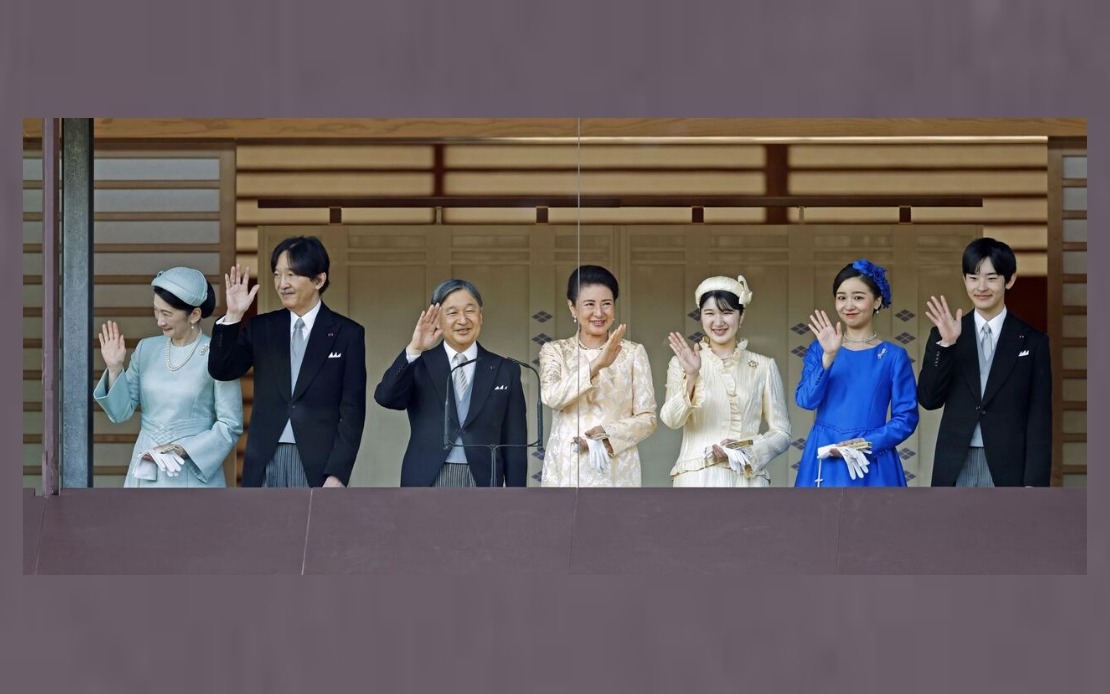
Japan's parliament has approved significant changes to the Imperial House Law, marking the first substantive overhaul of the 1947 legislation governing the world's oldest hereditary monarchy. The revised law represents an attempt to stabilise the imperial institution amid declining royal numbers, though it stops short of addressing the succession question that has animated public debate for years. Prime Minister Sanae Takaichi, Japan's first female premier, championed the reforms as essential to preserving the sustainability of the imperial system through the coming decades.
The legislative package introduces two principal modifications designed to expand the pool of potential imperial family members. The law now permits the adoption of unmarried males aged 15 and over who are descendants of former branch families that trace their lineage through male lines to past emperors. Simultaneously, female members of the imperial family gain the right to maintain their imperial status following marriage to commoners, a provision that represents a notable departure from longstanding practice. These adjustments carry practical significance: approximately 51 members from 11 former branch families were removed from imperial status following the 1947 law's implementation during the postwar American occupation, and the revised framework now creates a pathway for their male-line descendants to rejoin the imperial household.
The immediate context for these reforms is demographic urgency. Japan currently has only three male heirs to Emperor Naruhito, creating a succession pipeline that many policymakers regard as inadequate for institutional continuity. The imperial family has contracted substantially since 1947, when the occupation authorities dramatically reduced the imperial household to enhance constitutional legitimacy. Contemporary debates about succession have become increasingly pressing, particularly as the nation grapples with whether to modify centuries-old patrilineal conventions or risk the throne passing to distant relatives or becoming vacant. The government's strategy through the revised law is to increase the available male lineage pool without fundamentally restructuring succession principles.
Despite the reforms' scope, they represent a conservative approach that has drawn parliamentary criticism. Opposition lawmakers contended that deliberations were insufficient and that the governing coalition—led by the Liberal Democratic Party and its partner the Japan Innovation Party—prioritised preservation of paternal-line succession over broader institutional modernisation. The months of cross-party discussions culminated in a legislative "consensus" among 13 parliamentary parties and groups, yet this consensus conspicuously omitted any discussion of permitting female or maternal-line succession, reflecting the ruling coalition's firm stance on maintaining traditional norms. For many observers, the law confirms that structural change will proceed incrementally rather than through comprehensive reform.
The legal architecture underlying imperial succession remains substantially unchanged since Japan adopted its current constitutional framework under postwar occupation. The 1947 Imperial House Law established that the throne "shall be succeeded to by a male offspring in the male line belonging to the Imperial Lineage," language that persists in current law despite decades of social evolution. The revised law contains no mention of female emperors or maternal-line succession, preserving this foundational principle even as it expands the male lineage eligible for adoption. This consistency reflects the government's determination to maintain what it considers essential to imperial legitimacy, though it creates tension with contemporary expectations about gender equality and institutional adaptation.
Public opinion presents a striking contrast to official conservatism on this matter. A May poll conducted by Kyodo News revealed that 83.0 per cent of respondents supported permitting female emperors, while only 13.1 per cent opposed the concept. This substantial majority preference underscores a generational divide between public sentiment and institutional decision-making. Younger Japanese, particularly women, view imperial succession through the lens of contemporary values regarding meritocracy and gender roles, whereas policymakers emphasise historical continuity and the symbolic importance of unbroken male-line descent to institutional legitimacy. The gap between public opinion and legislative outcomes raises questions about whether the current reforms will ultimately prove sufficient to resolve succession anxieties.
For regional observers in Southeast Asia, Japan's imperial succession debate offers instructive parallels regarding how traditional monarchies navigate modernisation pressures. Many Southeast Asian nations with hereditary monarchies face comparable questions about institutional adaptation, gender representation, and the relationship between constitutional tradition and contemporary democratic values. Japan's approach—incremental reform that preserves core patrilineal principles while expanding the eligible pool—represents one model for managing these tensions, though its limitations may become apparent if succession pressures intensify. The contrast between Japanese public support for female succession and official resistance suggests that purely institutional solutions may prove unsustainable if demographic trends continue unfavourably.
The timing of these reforms under Takaichi's premiership carries symbolic significance, even though the new law makes no provision for female succession. As Japan's first female prime minister shepherding amendments to the imperial succession system, Takaichi occupies an ironic position within a framework that systematically excludes women from the throne. This paradox has not escaped public notice and may generate sustained pressure for more comprehensive reforms in subsequent decades. The current legislative settlement appears designed to purchase stability through the mid-twenty-first century whilst deferring the harder question of whether patrilineal succession itself remains compatible with Japan's democratic values and institutional continuity.
Looking forward, the sustainability of Japan's revised imperial system will depend on demographic outcomes and evolving public expectations. If the expanded male adoption provisions successfully increase the viable male heir pool, the current framework may endure. However, if succession pressures persist despite these measures, future parliaments will face renewed demands for comprehensive reform, potentially including female succession. The 1947 postwar settlement, which fundamentally restructured the imperial institution, occurred under external pressure and constitutional transformation; any future major revision would likely require similarly transformative circumstances. For now, Japan has chosen cautious reform over structural overhaul, reflecting official confidence in preserving tradition through modest expansion rather than fundamental reconceptualisation.

