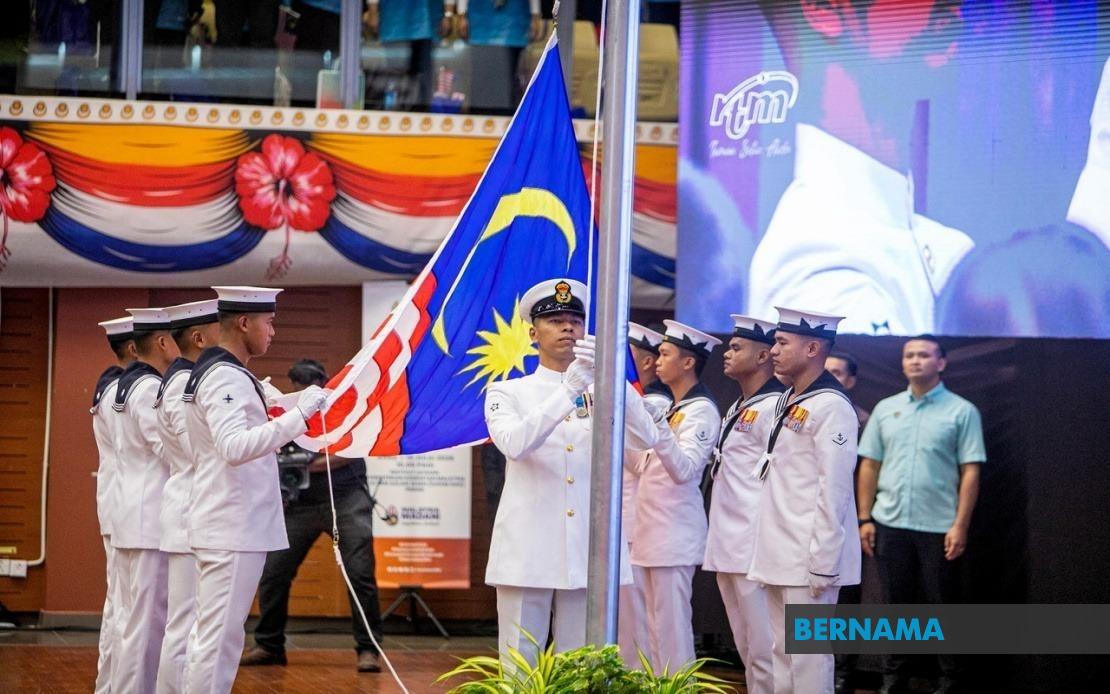
Prime Minister Datuk Seri Anwar Ibrahim oversaw the revival of the Jalur Gemilang raising ceremony in Ipoh on July 19, reinstating a patriotic tradition that had lapsed for two years. The ceremonial occasion unfolded at the Sultan Azlan Shah Ministry of Health Training Institute (ILKKM SAS) in Tanjung Rambutan as part of the nationwide campaign to mark the 2026 National Day and Malaysia Day celebrations. The restoration of this formal flag-raising ritual signals renewed emphasis on national symbolism and civic engagement during Malaysia's patriotic season.
The ceremony commenced with Anwar officially launching the campaign before ceremonially transferring the Jalur Gemilang to a nine-member contingent from the Royal Malaysian Navy's Lumut Base. Led by Chief Petty Officer Mohamad Razif Aliff Md Yusof, the naval team undertook the symbolic responsibility of raising the flag, representing the nationwide reach of the celebration initiative. This handover to the military demonstrated the interconnected nature of the campaign, which engages various government institutions and sectors in promoting national pride.
The flag itself measured 1.82 metres by 3.65 metres, a substantial representation of the national emblem hoisted whilst participants sang the national anthem, Negaraku. The simultaneous recitation of the Rukun Negara pledge by ILKKM SAS trainee Muhammad Ammar Mohd Asri reinforced the foundational values underpinning Malaysian national identity. These layered ceremonial elements combined to create a multisensory expression of patriotism, with attendees standing in respectful silence as the anthem resonated through the venue.
The Fly the Jalur Gemilang campaign functions as an annual initiative designed to encourage Malaysian households, businesses, and public institutions to display the national flag prominently during the National Month period. Beyond mere decoration, the campaign embodies a deeper message about collective national consciousness and shared identity. For Southeast Asia's largest Muslim-majority democracy, such symbolic gestures carry particular resonance in reinforcing social cohesion and reminding citizens of their common stake in the nation's future.
A notable addition to this year's festivities was the unveiling of "Aku Berjanji" as the official theme song for the 2026 celebrations. Composed and performed by singer-songwriter Faizal Tahir, the track became available for public download via the Merdeka360 portal immediately following the ceremony. The integration of contemporary music into traditional patriotic ceremonies reflects efforts to make national celebrations relevant to younger demographic cohorts whilst maintaining ceremonial gravitas.
The broader National Month campaign encompasses a calendar of patriotic activities and programmes extending across Malaysia's thirteen states and federal territories. These initiatives typically include community gatherings, educational seminars, cultural performances, and competitive events that celebrate Malaysian heritage and achievements. By distributing celebrations geographically and temporally throughout the month, authorities aim to generate sustained public engagement rather than concentrating festivities into isolated moments.
The National Day celebration scheduled for August 31 commemorates Malaysia's independence and the establishment of its federal system, whilst Malaysia Day on September 16 marks the formation of the Malaysian federation through the merger of Malaya, Sabah, Sarawak, and Singapore (though Singapore subsequently departed). Together, these observances bookend the National Month period and provide frameworks through which Malaysians reflect on national journey and aspirations.
The two-year hiatus preceding the ceremony's revival reflected disruptions during the Covid-19 pandemic period, when large-scale public gatherings faced restrictions and ceremonial events were curtailed or held in modified formats. The restoration of the full ceremonial format signals normalisation of public life and renewed confidence in conducting in-person national observances. This resumption carries symbolic weight beyond mere procedural restoration, representing the nation's recovery and renewed commitment to collective commemoration.
For regional observers, Malaysia's emphasis on patriotic ceremonies and national unity campaigns reflects broader Southeast Asian patterns of using official celebrations to strengthen national identity. In a region characterised by ethnic, religious, and cultural diversity, such initiatives serve instrumental functions in fostering intercommunal harmony and emphasising shared citizenship. However, they also warrant scrutiny regarding inclusivity and whether all demographic groups feel equally represented in official narratives of national identity.
The involvement of Prime Minister Anwar Ibrahim in presiding over the ceremony underscores the political importance attached to national celebrations. For a prime minister whose administration took office relatively recently, participation in such symbolic events communicates continuity with national traditions whilst demonstrating responsiveness to public expectations regarding leadership visibility during patriotic occasions. The choice of Ipoh—capital of Perak state and former tin-mining hub with significant historical importance—grounds the national celebration in specific regional context rather than concentrating entirely on federal capital dynamics.
Moving forward, the National Month campaign presents opportunities for Malaysians to reflect collectively on shared values and national purpose. The availability of the theme song via digital platforms acknowledges contemporary consumption patterns and generational preferences for online media engagement. Such technological integration demonstrates how traditional patriotic observances increasingly incorporate modern communication channels to extend reach and foster broader participation.

