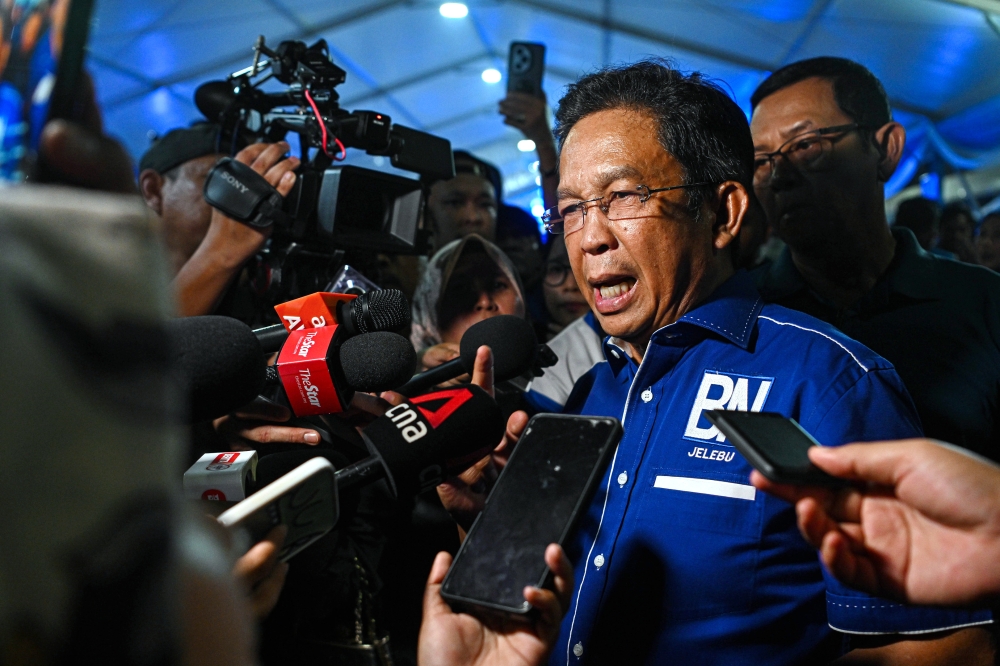
Datuk Jalaluddin Alias, the Umno chief for Negeri Sembilan, took time on July 19 to publicly acknowledge Perikatan Nasional's role in facilitating an alliance arrangement that would see Barisan Nasional lead the state administration if the combined coalition secures victory in forthcoming elections. Speaking in Jelebu, Jalaluddin recognised the political maturity demonstrated by the opposition-aligned bloc in agreeing to step aside in favour of the ruling coalition's preferred leadership structure for Negeri Sembilan.
The gesture signals a broader realignment in Malaysian state-level politics, where traditionally opposed coalitions have found common ground through negotiated power-sharing arrangements. Rather than pursuing competing claims to lead Negeri Sembilan independently, Perikatan Nasional accepted a secondary position within the partnership, reserving its leadership ambitions for other states where it holds stronger support bases. This pragmatic approach reflects the fractious landscape of contemporary Malaysian politics, where no single coalition commands overwhelming dominance across all state contests.
For Barisan Nasional, the arrangement constitutes a significant strategic gain. Negeri Sembilan remains a politically pivotal state with meaningful electoral weight, and securing its leadership through a pre-election coalition agreement reduces uncertainty and potential post-ballot disputes over power distribution. The state's nine parliamentary seats and broader regional influence make it an asset worth pursuing, particularly given Barisan's efforts to rebuild its dominance following setbacks in recent national contests.
Jalaluddin's public acknowledgement carries considerable symbolic weight within Umno and Barisan circles. By explicitly thanking Perikatan rather than simply accepting the arrangement as inevitable, he elevated the gesture above routine political courtesy, framing it as a meaningful concession that deserved recognition. Such language builds goodwill and strengthens the partnership framework, creating positive momentum for coordinated campaigning and voter messaging across both organisations.
The arrangement also reflects Perikatan Nasional's strategic calculations regarding its own positioning. As an opposition-aligned coalition containing PAS, Bersatu, and other components, Perikatan has its strongest footprints in peninsular states where Islamic sentiment runs high and rural constituencies predominate. Rather than expending resources competing against the better-resourced Barisan machine in Negeri Sembilan, focusing energy on states where organisational networks and voter affinity align more closely offers superior returns on political investment.
Negeri Sembilan's specific dynamics make this arrangement logical for both camps. The state has traditionally leaned toward Barisan despite recent volatility, and Umno maintains established party machinery and community connections throughout its districts. Perikatan's agreement to support Barisan leadership there allows the organisation to concentrate its efforts in Terengganu, Kelantan, and other strongholds where it can realistically challenge for state power and resources, maximising its bargaining position within any eventual grand coalition.
This coalition arrangement represents a broader pattern emerging across Malaysian politics. Rather than the binary BN-versus-opposition dynamics that dominated the 2018-2022 period, contemporary electoral contests increasingly feature negotiated multi-party arrangements where pre-election agreements determine post-victory power distributions. Such frameworks introduce greater predictability but also constrain voter choice and can diminish the competitive pressures that drive good governance.
For Malaysian voters, particularly those in Negeri Sembilan, the arrangement presents a more settled political environment but raises questions about substantive policy competition. When major coalitions negotiate predetermined leadership hierarchies before elections, the campaign itself becomes less about competing visions for governance and more about mobilising voter bases already aligned with coalition partners. This structural reality influences campaign messaging, media coverage, and ultimately the slate of developmental priorities each state emphasises.
The Umno chief's remarks also underscored the importance of personal relationships and senior leadership buy-in when managing coalition partnerships. By publicly recognising Perikatan's cooperation, Jalaluddin helped cement an agreement that could otherwise prove fragile when tensions inevitably arise over seat allocation, ministerial portfolios, or resource distribution during implementation. Such acknowledgements serve as informal enforcement mechanisms within loose political coalitions lacking formal institutional structures comparable to stable parliamentary systems.
Regionally, Malaysia's evolving coalition dynamics merit attention from observers across Southeast Asia grappling with similar fragmentation in their own political systems. Thailand, Indonesia, and the Philippines have all experienced comparable processes whereby post-election coalition negotiations become as consequential as pre-election campaigning. Malaysia's shift toward pre-election coalition agreements arguably offers greater transparency and voter clarity, though it potentially ossifies political competition and reduces opportunities for genuine policy-driven electoral competition.
For Barisan Nasional's broader national strategy, the Negeri Sembilan arrangement also serves as a template for potential negotiations with other opposition-aligned parties in states where shared interests might override traditional confrontation. As Barisan attempts to restore its political dominance following losses in Selangor, Penang, and other key states, coalition building becomes essential, and this Negeri Sembilan model demonstrates how competing organisations can find negotiated settlements acceptable to both camps.
Moving forward, the substantive test of this arrangement will emerge through implementation. Coalition stability ultimately depends on post-election resource distribution, ministerial portfolios, and whether agreed-upon governance structures function as intended. Jalaluddin's early expression of gratitude helps establish positive foundations, but the real measure of this alliance's durability will emerge once voting concludes and actual power distribution begins.

