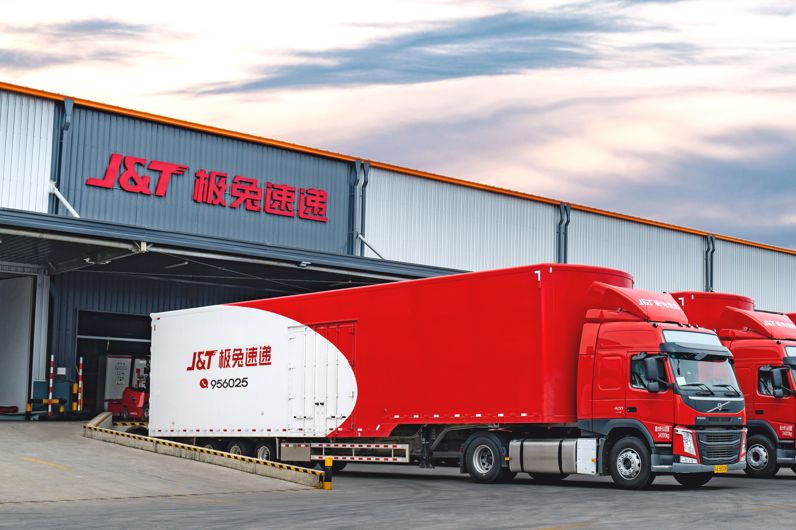
J&T Global Express Ltd, the Hong Kong-listed logistics service provider, has reached a transformative milestone by processing more than 100 million parcels daily during the second quarter of 2026. The achievement underscores the company's expanding footprint across Asia and beyond, as international markets increasingly contribute to overall performance. During the three months ending June, the company processed 9.18 billion parcels, representing a 24.2 percent increase from the same period last year, signalling sustained momentum despite competitive pressures in the global logistics sector.
The company's most striking growth driver remains its international operations, which are reshaping the composition of J&T Express's revenue base. Non-Chinese parcel volumes surged 66.9 percent year-on-year to reach 2.97 billion, now representing approximately 32 percent of the company's global parcel throughput. This diversification beyond China's domestic market reflects a deliberate strategic pivot toward emerging economies and developing logistics infrastructure across multiple continents. For Malaysian readers and regional observers, this shift carries particular significance, as it indicates that Southeast Asian markets are becoming increasingly central to the company's overall business model rather than merely supplementary to Chinese operations.
Southeast Asia emerged as the standout performer during the second quarter, with regional parcel volumes climbing 63.2 percent year-on-year to 2.76 billion units. The region recorded an average daily parcel throughput of 30.3 million, reflecting the explosive growth of cross-border e-commerce and same-day delivery expectations sweeping through the association's major economies. Through the first six months of 2026, Southeast Asian operations handled 5.52 billion parcels, up 71.2 percent from the prior-year period. This acceleration outpaces growth rates in other major markets and demonstrates the region's capacity to absorb rapidly expanding logistics capacity. For Malaysia, which sits within this geographic footprint, the expansion signals rising competitive intensity and infrastructure investment that will likely benefit consumers through faster, more reliable delivery options.
J&T Express's infrastructure investment across Southeast Asia underscores management's confidence in sustained regional demand. By the end of June 2026, the company operated 127 sorting centres throughout the region, an increase of six facilities from the close of 2025. More significantly, the company deployed 75 automated sorting lines across these facilities, an addition of 11 lines during the first half of the year. These capital investments reflect industry recognition that manual sorting capacity cannot sustain the volume growth trajectory anticipated in coming years. Automated sorting technology enables faster processing, reduces labour costs, and minimises sorting errors, translating into competitive advantages in an industry where speed and accuracy determine customer retention.
China continues to represent the largest component of J&T Express's business, though at a more measured growth rate than international operations. During the second quarter, the company processed 6.21 billion parcels domestically, up 10.6 percent year-on-year, generating average daily volume of 68.2 million parcels. The company has adapted to more mature market conditions by restructuring its network topology and refining its customer acquisition and retention strategy. Rather than pursuing undifferentiated volume growth, management has shifted toward higher-margin logistics services and strategic partnerships with major e-commerce platforms. During the first half of 2026, J&T Express installed eight additional automated sorting lines in China, expanding the total to 346, which collectively enhance processing capacity and operational efficiency across the country's most densely populated regions.
Outside Southeast Asia, J&T Express is establishing presence in emerging markets including Latin America and the Middle East, categories that recorded combined second-quarter parcel volume of 211 million, a striking 136.5 percent increase year-on-year. This explosive growth reflects strategic investments in cross-border logistics infrastructure and deepening commercial relationships with multinational e-commerce platforms seeking last-mile delivery partners in underserved markets. While these volumes remain modest compared to Asian operations, the growth rates indicate successful market entry and early-stage customer acquisition. For regional investors and analysts assessing J&T Express's long-term trajectory, these emerging markets represent significant upside potential, particularly as internet penetration and smartphone adoption accelerate consumer participation in online commerce across Latin America and the Middle East.
Wall Street has taken notice of J&T Express's strategic repositioning and international growth acceleration. Morgan Stanley recently upgraded the company to overweight, reflecting analyst confidence that J&T Express will outperform logistics peers over coming quarters. The investment bank specifically cited the company's exposure to higher-growth e-commerce markets in Southeast Asia and South America as justification for the upgraded rating. This analyst validation carries weight in capital markets, potentially broadening the company's investor base and lowering its cost of capital for future growth investments. For Malaysian institutional investors and fund managers evaluating regional logistics exposure, the Morgan Stanley upgrade signals that professional investors perceive sustainable competitive advantages in J&T Express's business model and market positioning.
The company's ability to simultaneously manage rapid growth in developing markets while maintaining profitability in mature Chinese markets reflects sophisticated operational management. J&T Express has avoided the common trap of pursuing growth at any cost, instead balancing volume expansion with unit economics and return-on-capital discipline. This balanced approach appeals to sophisticated investors seeking logistics exposure without the concomitant risks of margin compression and profitability deterioration. For Malaysian and Southeast Asian readers monitoring the logistics industry, J&T Express's performance demonstrates that regional logistics providers can compete globally when armed with capital, technology, and strategic focus. The company's success may inspire confidence in other Southeast Asian enterprises seeking to expand internationally or defend against foreign competitors entering their home markets.

