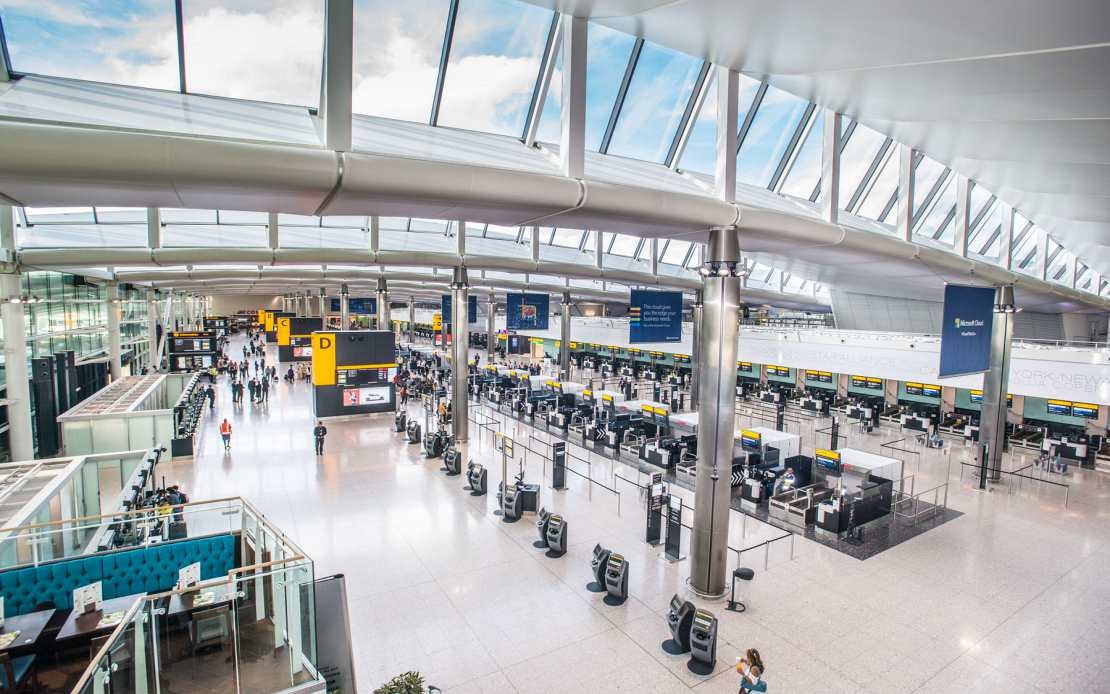
Istanbul's airport has reclaimed the title of Europe's busiest travel hub, displacing London's Heathrow for the first time since the coronavirus pandemic disrupted global aviation. The Turkish gateway processed 8.15 million passengers during July, edging ahead of Heathrow's 7.86 million travellers, marking a significant shift in the continent's aviation hierarchy and providing fresh ammunition for those advocating the British airport's long-contested expansion plans.
Heathrow's loss of status comes despite two decades of dominance. Data from the Airports Council International shows the west London facility held the title from 1996 through 2019, a position it temporarily surrendered in 2020 when Covid-19 lockdowns devastated international travel. The airport bounced back to claim the crown again in 2023, only to lose it once more this summer. The volatility reflects how susceptible major hubs remain to external shocks and changing travel patterns across Europe's complex aviation network.
The dip in Heathrow's numbers carries particular significance when examined against broader trends. Its July passenger count fell 1.5 per cent compared with the same month in 2023, suggesting capacity constraints or reduced demand. In contrast, Istanbul recorded growth of 2.3 per cent year-on-year, indicating the Turkish airport is capturing market share and benefiting from its geographic position straddling Europe and Asia.
Geopolitical tensions have directly impacted Heathrow's performance this summer. The airport's passenger numbers on routes serving West Asia dropped 20.2 per cent compared with July last year, a substantial decline that reflects the reverberations of the United States-Iran conflict on regional aviation patterns. This vulnerability to distant conflicts underscores how international airports depend on stable geopolitical conditions and uninterrupted connectivity with key markets beyond Europe's borders.
Despite operating two runways at near-maximum capacity, Heathrow remains constrained in its ability to capitalize on demand. The airport's management argues expansion has become essential if Britain is to maintain its position as a leading aviation hub and compete with rivals like Istanbul. Heathrow's expansion proposal, championed by its current owners, envisions a third runway capable of accommodating 150 million passengers annually, substantially more than the facility's current throughput.
The timing of Istanbul's ascendancy has bolstered Heathrow's case for expansion. Airport executives pointed out that the milestone underscores the urgency of infrastructure investment, with the facility's statement asserting "the case for expansion has never been clearer." They contend that without additional capacity, Heathrow risks ceding its continental significance to rivals better positioned to absorb growing demand and serve emerging markets.
The British government has begun formal evaluation of the expansion proposal through Transport Secretary Heidi Alexander's June consultation on a revised national policy statement for Heathrow. The consultation sets out framework conditions for potential approval, signalling that policymakers are taking the expansion case seriously. Former Chancellor Rachel Reeves previously committed to beginning construction on the third runway within the current parliamentary term, with a target completion date of 2035.
Yet expansion remains politically contentious within the UK. Prime Minister Andy Burnham, who replaced Reeves, has previously objected to the project on regional equity grounds, warning that concentrating aviation infrastructure in London diverts crucial investment away from economically lagging northern regions. This tension between Heathrow's commercial logic and the political preference for balanced regional development reflects deeper divisions about how Britain should allocate scarce capital.
Heathrow's July performance contained some encouraging signals beyond the headline numbers. The airport recorded its busiest single day on July 19, when 267,000 passengers transited its terminals as summer holidays commenced across British schools. This peak demonstrated sustained appetite for travel through the hub, contradicting any notion of declining interest in accessing the airport's network.
The airport also attracted several new carriers during July, including ITA Airways from Italy, Alaska Airlines from the United States, and Riyadh Air from Saudi Arabia. These additions suggest confidence among airlines in Heathrow's market position and their expectation of continued demand from passengers seeking British connectivity. However, without expansion, the airport's ability to accommodate additional routes and frequency increases remains fundamentally limited.
Heathrow's management framed the Istanbul development as motivation for pushing ahead with expansion ambitions. Chief executive Thomas Woldbye acknowledged strong summer performance but argued the airport must "go further" by expanding its route network and passenger services. He positioned expansion as essential to securing the trade, investment, and tourism benefits that enhanced connectivity provides, framing infrastructure development as central to broader UK economic strategy.
For Malaysia and Southeast Asian readers, Heathrow's situation carries implications for regional aviation connectivity. A more constrained Heathrow would make it harder for Asian carriers to add flights to London or increase capacity on existing routes, potentially reducing competitive pressure on direct Asian-European services and affecting passenger choice on long-haul journeys from Malaysia. Conversely, Istanbul's growing dominance may create opportunities for regional carriers to compete via its network rather than direct to London.
The broader lesson reflects how European aviation is reshaping itself in the post-pandemic era. Geographic positioning, geopolitical stability, and infrastructure investment increasingly determine which hubs prosper. Heathrow's experience suggests that even historically dominant airports cannot rest on past success when competitors invest in capacity and benefit from advantageous location and circumstances. For regional aviation players across Asia, the lesson is that European connectivity will increasingly fragment among multiple hubs, requiring sophisticated route planning and partnership strategies.

