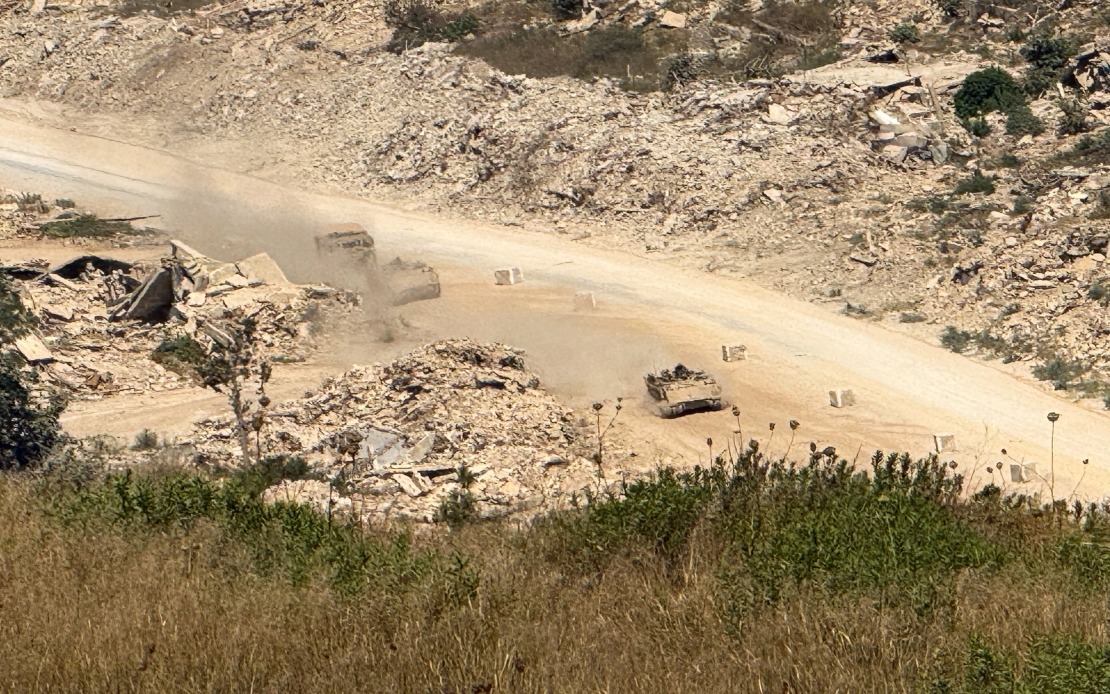
Israeli military forces conducted an extensive series of operations across southern Lebanon on Monday, including artillery bombardments, ground advances, and the burning of residential structures, according to reports from Lebanon's National News Agency. The activities represent the latest in a pattern of military action that persists despite parallel diplomatic efforts aimed at stabilising the volatile border region between the two nations. The strikes targeted multiple locations across the southern provinces, underscoring the complexity of enforcing any ceasefire agreement while negotiations remain incomplete.
The operations unfolded across several towns and municipalities in Lebanon's south. Israeli forces directed machine gun fire towards Wadi al-Salouqi in Nabatieh governorate and subjected the town of Mansouri to overnight artillery shelling and two separate explosions. In the same region, a major explosion was recorded in Kfar Tebnit, whilst the outlying areas of Nabatieh al-Fawqa experienced intermittent shelling from Israeli positions. Additionally, Israeli forces burned multiple residential buildings in Khiam whilst continuing operations there, and advanced into the western edges of Mays al-Jabal accompanied by artillery fire targeting individual structures. Low-altitude drone flights were also reported over the Zahrani area, indicating sustained reconnaissance and surveillance operations.
The timing of these military activities is particularly significant given recent diplomatic developments. Just days prior, on Thursday, the seventh round of Lebanese-Israeli ceasefire negotiations concluded in Rome under American sponsorship. Those discussions centred on implementing a framework agreement initially reached on June 26, which established the foundation for potential de-escalation. Lebanese President Joseph Aoun subsequently stated during a Cabinet meeting on Friday that the Rome talks had yielded positive progress on critical issues including border demarcation and the status of detained individuals, suggesting some momentum in the peace process.
The framework agreement itself envisages a phased Israeli withdrawal from occupied Lebanese territory, beginning with designated pilot zones. In exchange, the agreement stipulates deployment of Lebanese Army forces and the disarmament of armed groups, a reference widely understood to address Hezbollah's military capabilities and infrastructure. This arrangement represents a complex bargain requiring goodwill and sustained cooperation from both parties to succeed. However, the continuation of military operations raises questions about the sincerity of commitment to the negotiated framework and whether the ground situation on the border remains too volatile for meaningful implementation.
For Malaysian observers and policymakers monitoring Middle Eastern stability, the disconnect between diplomatic talks and battlefield activity presents a familiar and troubling pattern in regional conflicts. The persistence of military operations despite active negotiations suggests that one or both parties may be using the talks as diplomatic cover whilst maintaining strategic advantage through force. This dynamic has significant implications for broader Middle Eastern peace architecture and the credibility of international mediation efforts, particularly those involving American sponsorship.
The scale of displacement and casualty figures underscore the humanitarian dimensions of the ongoing conflict. Israeli military operations that began on March 2 have resulted in 4,335 deaths and 12,277 injuries according to Lebanese authorities, whilst displacing over one million civilians from their homes. These numbers represent one of the largest displacement crises in the region in recent years and have created substantial humanitarian challenges for neighbouring countries, including those in Southeast Asia with Lebanese diaspora communities who maintain family connections to the affected areas.
Israeli military presence in southern Lebanon extends far beyond the current campaign. Israel continues to occupy territories in the south that it has held for decades, supplemented by areas seized during the 2023-2024 war and territory captured during the current operations, with Israeli forces having penetrated more than ten kilometres into Lebanese territory. This layered occupation, combining historical territorial control with recent acquisitions, complicates any withdrawal framework and suggests that resolving the conflict requires addressing not just the immediate ceasefire but also decades of outstanding territorial and sovereignty disputes.
The broader geopolitical context further complicates the Lebanese-Israeli situation. Israel simultaneously maintains occupation of Palestinian territories and Syrian territory, refusing to withdraw from these areas or permit the establishment of an independent Palestinian state as called for in relevant United Nations resolutions. This interlocking pattern of occupations and territorial disputes across multiple fronts suggests that any resolution in Lebanon exists within a much larger regional architecture of unresolved conflicts. For Southeast Asian nations seeking stable regional order and respect for territorial sovereignty, the perpetuation of these disputes challenges the principle of international law that underpins regional stability.
The role of the United States in sponsoring the Lebanese-Israeli negotiations reflects Washington's continued investment in Middle Eastern diplomacy despite shifting global priorities. American involvement signals an attempt to manage regional tensions and prevent further escalation, yet the continued military operations suggest that diplomatic channels alone may be insufficient to constrain military actors committed to pursuing battlefield advantages. This dynamic has relevance for Southeast Asia, where international mediation in regional disputes often requires enforcement mechanisms beyond diplomatic persuasion.
The prospect for meaningful implementation of any ceasefire framework faces substantial obstacles. The continued military operations indicate that at least some Israeli military commanders or civilian political leaders believe that maintaining pressure through military action will yield better negotiating outcomes than restraint would provide. This logic, whilst strategically comprehensible, undermines the confidence-building measures necessary for ceasefire implementation and risks triggering escalatory cycles that ultimately make agreement less likely to hold.
For regional observers in Southeast Asia, the Lebanese-Israeli situation offers cautionary lessons regarding the importance of establishing credible verification mechanisms and enforcement procedures for any ceasefire agreement. Without clear consequences for violations and without demonstrated commitment to restraint during negotiations, even carefully negotiated frameworks risk becoming merely diplomatic theatre that masks continuing conflict. The gap between the Rome talks and the Monday operations suggests that negotiation schedules and military timetables remain misaligned, creating opportunities for spoilers on either side to derail progress through calculated provocations or perceived violations.

