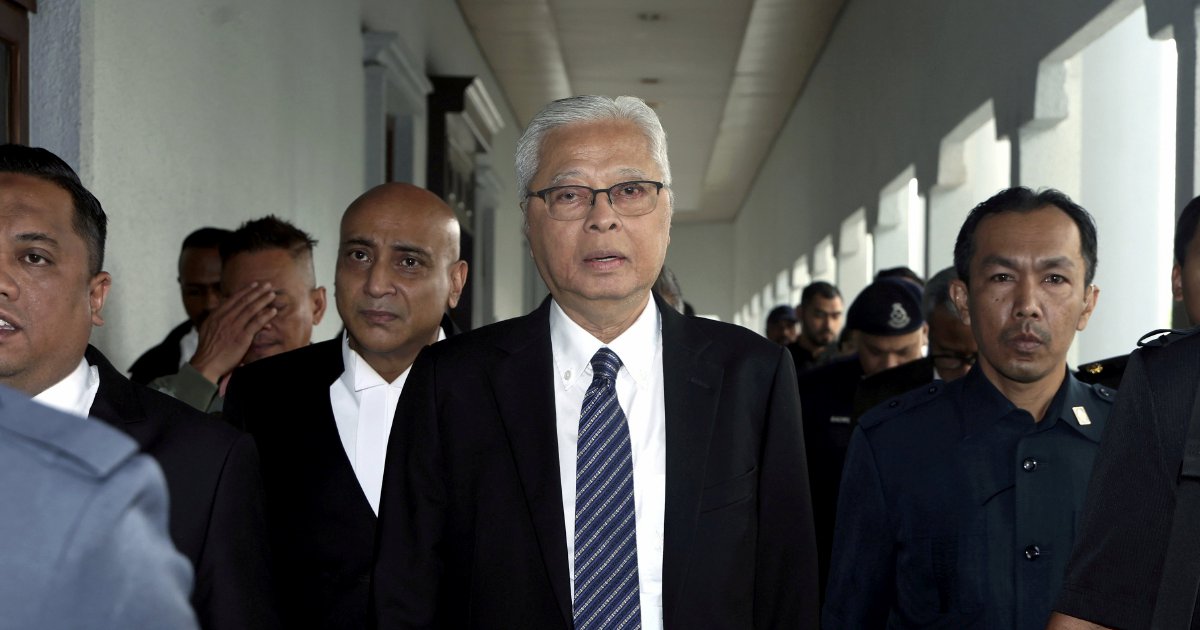
The defence counsel for Datuk Seri Ismail Sabri Yaakob has mounted a procedural challenge to charges brought against the former prime minister, characterising the allegation as an anomalous application of Malaysian anti-corruption law. According to the lawyer's assessment, the charge lodged against Ismail Sabri duplicates subject matter that had previously been examined and adjudicated under an alternative provision of the Malaysian Anti-Corruption Commission Act, raising questions about prosecutorial consistency and the appropriateness of multiple charges stemming from identical conduct.
This legal objection strikes at a fundamental principle within criminal jurisprudence—the notion that an individual should not face successive charges for the same underlying facts or conduct. The distinction between the statutory provisions being invoked becomes crucial in understanding the defence team's argument. Rather than introducing new factual allegations, the prosecution appears to be reframing the same conduct under a different legal framework, a tactic that defence lawyers frequently contest as procedurally irregular and potentially constituting an abuse of process.
For Malaysian readers accustomed to following high-profile corruption investigations, this development signals a strategic pivot in how authorities approach former political leaders. The Malaysian Anti-Corruption Commission has intensified enforcement actions against individuals holding senior government positions in recent years, yet the approach employed here—charging the same conduct under alternative statutes—represents a particular investigative methodology that legal practitioners have questioned. Such tactics raise concerns about whether prosecutorial resources are being deployed efficiently or whether legal manoeuvring is substituting for substantive evidence.
The substantive implications extend beyond Ismail Sabri's individual circumstances. Questions about the latitude afforded to enforcement agencies in charging decisions reverberate through Malaysia's legal ecosystem. Courts must balance prosecutorial discretion against principles of fairness and procedural regularity. When the same facts can be prosecuted under multiple sections of legislation, the potential for strategic or duplicative charging becomes a matter of genuine concern for legal commentators and civil society observers monitoring judicial independence and the rule of law.
Ismail Sabri's tenure as Prime Minister, which concluded in August 2022 after barely nineteen months in office, has been followed by intensified scrutiny of his administration's actions. The formation of his government involved complex political manoeuvring, as he assembled a coalition during a period of significant instability within Malaysia's ruling party structure. Against this backdrop, various investigations have been initiated into matters occurring during his premiership, and the current charge represents one component of broader accountability mechanisms being directed toward senior figures from his administration.
The lawyer's characterisation of the charge as peculiar gains additional weight when considered alongside Malaysia's experience with corruption investigations involving former leaders. The Anti-Corruption Commission operates within a framework that grants substantial investigative authority, yet the use of overlapping statutory provisions to charge identical conduct remains contentious. Legal professionals frequently argue that such approaches undermine the predictability and consistency that citizens rightfully expect from law enforcement, particularly when high-profile individuals are involved.
For Southeast Asian observers monitoring Malaysia's institutional developments, this legal skirmish illustrates broader tensions within the region's anti-corruption frameworks. While enforcement agencies must retain flexibility to pursue wrongdoing effectively, they simultaneously remain subject to legal constraints designed to protect fundamental fairness. The tension between these imperatives—vigorous enforcement versus procedural integrity—defines contemporary debates about accountability within Malaysia and comparable jurisdictions across the region.
The technical distinction between different provisions of anti-corruption legislation may appear esoteric to general audiences, yet it carries profound implications for how legal systems manage accountability. When prosecutors invoke alternative statutory provisions to charge identical behaviour, courts must scrutinise whether such conduct genuinely constitutes distinct violations or represents attempts to circumvent established legal principles regarding double jeopardy and prosecution restraint.
Ismail Sabri's defence team appears positioned to argue that the prosecution lacks the legal foundation to proceed under this alternative provision when the same matter was previously investigated or charged under differing statutory language. This objection, if sustained, could result in the charge being withdrawn or fundamentally restructured, potentially affecting the trajectory of investigations into his administration's activities. The outcome of this procedural challenge will reverberate through Malaysia's legal community and potentially shape how future cases involving former senior officials are prosecuted.
The broader context of Malaysian politics adds another layer to this dispute. Ismail Sabri's government, assembled through complex coalition arrangements, ultimately fractured as internal party dynamics shifted. Subsequent administrations have adopted varying approaches toward investigating his tenure, and the current charging decision may reflect broader political currents influencing prosecutorial decisions. Whether the charge reflects genuine legal concerns about duplicitous prosecution or represents legitimate enforcement action remains the core question that Malaysian courts must resolve.

