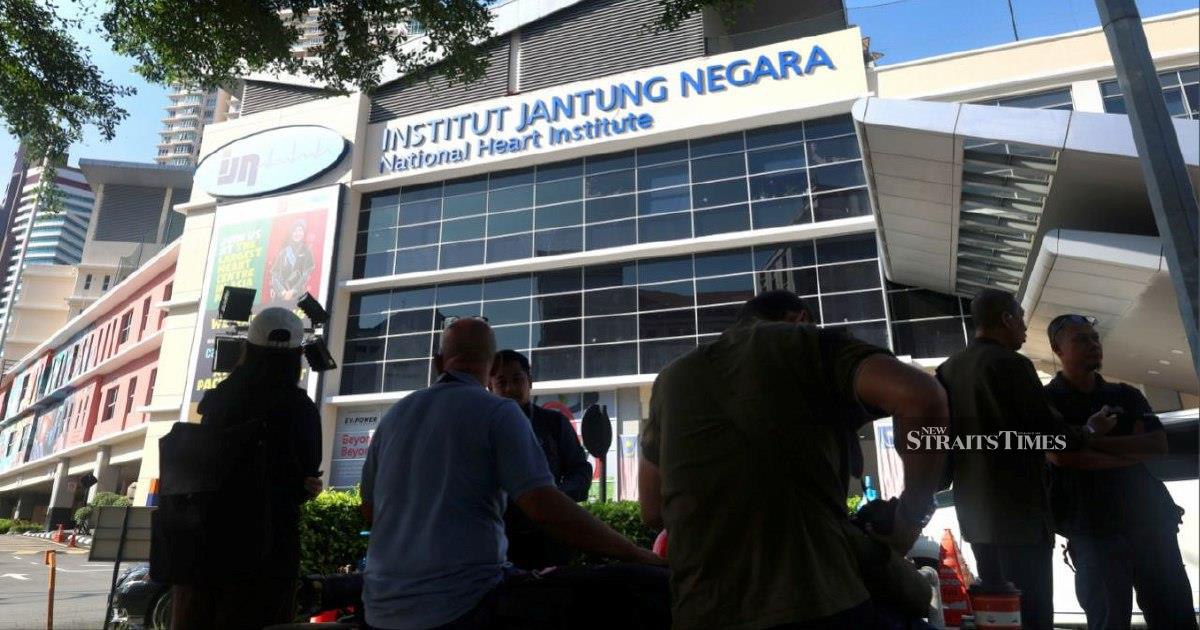
Former Prime Minister Datuk Seri Ismail Sabri Yaakob will undergo a pacemaker implant procedure at the National Heart Institute (IJN) in Kuala Lumpur, his legal representatives announced. The planned intervention follows a diagnosis of irregular heartbeat, a condition that required urgent medical attention from the country's leading cardiac facility.
The decision to implant a pacemaker represents a significant medical intervention for the former leader, who served as Prime Minister from August 2021 to September 2022. Pacemakers are sophisticated medical devices designed to regulate heart rhythm abnormalities, ensuring that the heart maintains a steady and appropriate beat. The procedure itself is routinely performed at major cardiac centres, though it remains a substantive intervention requiring careful post-operative care and monitoring.
The National Heart Institute, where Ismail Sabri will undergo the procedure, stands as Malaysia's premier cardiac facility and the only dedicated heart hospital in the nation. Established over two decades ago, IJN has earned recognition throughout Southeast Asia for its advanced cardiac care capabilities and experienced surgical teams. The choice of this institution underscores the serious nature of the condition and the necessity for expert intervention.
Irregular heartbeat, clinically termed arrhythmia, encompasses various conditions where the heart's electrical system misfires, causing the organ to beat too slowly, too quickly, or erratically. Such conditions can range from benign and asymptomatic to life-threatening, depending on the specific type and severity. When symptomatic or persistent, arrhythmias may cause dizziness, breathlessness, chest discomfort, or fatigue, necessitating intervention to restore normal cardiac rhythm and prevent complications.
Pacemaker technology has evolved considerably over recent decades, with modern devices capable of monitoring heart activity continuously and adjusting their output to maintain optimal rhythm. These implantable devices communicate wirelessly with external monitoring systems, allowing cardiologists to track patients remotely and adjust settings without additional procedures. The implantation procedure itself, typically performed under local anaesthesia with sedation, involves creating a small incision where the device is positioned beneath the skin near the collarbone, with leads threaded into the heart.
For a figure of Ismail Sabri's public prominence, the announcement of his medical procedure carries broader implications for political discourse and public interest. The former prime minister has remained an active voice in Malaysian politics since stepping down from his post, serving as Member of Parliament for Bera and maintaining involvement in Umno party matters. His health status has therefore commanded attention from media observers and political analysts tracking developments within the country's leadership landscape.
The timing of such a medical intervention also raises questions about the leadership demands on former senior government officials. The role of Prime Minister remains among the world's most demanding positions, requiring sustained mental acuity, physical stamina, and the capacity to make consequential decisions under pressure. The stress associated with high-level political responsibility has long been documented as a potential risk factor for cardiovascular complications, though causation remains complex and multifactorial.
From a healthcare perspective, the prominence of Ismail Sabri's procedure potentially serves an educational function for the Malaysian public. Cardiovascular disease remains a leading cause of mortality in Malaysia, with conditions like arrhythmias affecting millions nationwide. The visibility of a public figure undergoing treatment at IJN may encourage greater awareness among ordinary Malaysians about cardiac screening and the importance of seeking specialist evaluation for symptoms such as palpitations, syncope, or unexplained fatigue.
The recovery period following pacemaker implantation typically spans several weeks, during which patients gradually resume normal activities while adhering to specific precautions. Individuals with newly implanted devices must avoid certain activities that might interfere with the device's function, including contact sports or proximity to powerful magnetic fields. Regular follow-up appointments with cardiologists ensure optimal device function and allow for any necessary adjustments to settings based on the patient's cardiac response.
The announcement also reflects the comprehensive medical infrastructure available to senior members of Malaysian society, encompassing both private and public healthcare institutions of international standard. IJN's capacity to accommodate prominent cases alongside routine patient care demonstrates the institution's role as a national healthcare anchor. For Malaysian readers seeking cardiovascular care, the successful treatment of high-profile cases can reinforce confidence in domestic medical expertise and facilities.
Moving forward, the successful completion of Ismail Sabri's procedure and his subsequent recovery will likely be monitored closely by both media observers and political figures. The former prime minister's return to normal activities following his hospitalisation may also provide a real-world example of how individuals can manage serious cardiac conditions while maintaining active professional and public roles, potentially serving as an encouraging narrative for other Malaysians facing similar health challenges.

