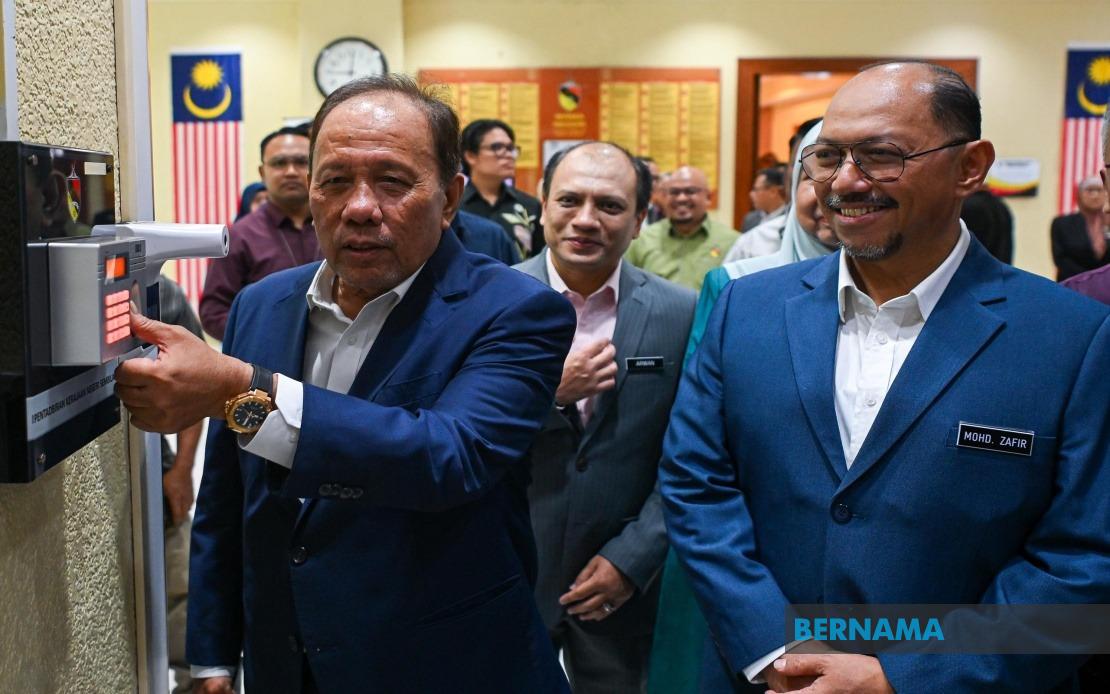
Datuk Ismail Lasim has moved to defend the legitimacy of his appointment as Negeri Sembilan Menteri Besar, insisting that the process followed all prescribed constitutional and administrative procedures without deviation. Speaking to reporters after formally taking up his post at Wisma Negeri in Seremban on Monday, the newly installed state leader stressed his confidence in how the appointment had been handled, signalling an end to the procedural questions that had surfaced in recent days.
The appointment process has drawn scrutiny from prominent figures outside the state administration, most notably Tan Sri Rais Yatim, chairman of the Wawasan think tank, who publicly questioned whether the selection had adhered to Negeri Sembilan's constitutional requirements. Rais Yatim's concerns went beyond mere procedural doubts, encompassing allegations that external parties may have exercised undue influence over decisions that should properly rest within the state's own institutional and customary frameworks. Such questions about external interference carry particular weight in Malaysia's federal system, where state-level appointments remain matters of significant constitutional sensitivity.
Ismail's appointment followed the Negeri Sembilan state election, in which he successfully contested the Juasseh state seat, establishing himself as a notable electoral candidate within his political coalition. The formal swearing-in ceremony took place before Yang Dipertuan Besar of Negeri Sembilan Tuanku Muhriz Tuanku Munawir at Istana Besar Seri Menanti the previous Sunday, confirming his constitutional status through the state's traditional monarchical structures. This ceremonial dimension underscores how such appointments remain embedded within Malaysia's constitutional monarchy system, where the rulers retain formal authority over chief minister selections.
The political mathematics in Negeri Sembilan provided a relatively clear foundation for government formation. Barisan Nasional secured 18 of the state assembly's 36 seats in the recent polls, while Perikatan Nasional obtained seven, together commanding the two-thirds supermajority required for stable administration. This comfortable numerical position might ordinarily have rendered the appointment process straightforward, yet the emergence of procedural questions suggests underlying factional tensions within one or both coalitions, or disagreements about how succession decisions should be made within traditional frameworks.
The distinction between formal procedure and actual political process remains crucial for understanding such controversies. While Ismail's assertion that prescribed procedures were followed addresses the technical and administrative dimension, questions about external influence touch upon a different concern entirely—namely, whether decisions were made through proper channels of state leadership and royal consultation, or whether actors outside these traditional structures shaped outcomes. In Malaysia's context, where state rulers possess constitutional prerogatives in appointing chief ministers, such distinctions between internal and external actors carry constitutional weight.
The timing of Ismail's statement, delivered immediately upon assuming office, suggests an intent to move past these early controversies and establish the legitimacy of his administration through action rather than further explanation. By framing the appointment as compliant with established procedures, he appeals to institutional norms and constitutional propriety as the basis for accepting his leadership. This approach reflects a broader Malaysian political strategy in which leaders facing questions about legitimacy often emphasize procedural correctness and royal sanction.
For regional observers, the Negeri Sembilan situation exemplifies recurring tensions in Malaysian state-level politics around how chief ministers are selected and whether such processes remain insulated from national coalition dynamics. The fact that both Barisan Nasional and Perikatan Nasional achieved supermajorities theoretically offered multiple pathways to government formation, potentially creating space for negotiations that extended beyond the elected assembly itself. Such scenarios frequently generate questions about genuine consensus within legislative bodies versus leadership decisions made in closed-door negotiations.
The invocation of constitutional and customary procedures by Ismail also highlights the continuing relevance of Malaysia's traditional institutions in validating modern political processes. While the country operates as a constitutional democracy with electoral competitions, royal endorsement remains a necessary component of executive legitimacy. Ismail's emphasis on having followed proper procedures thus serves as an implicit reminder that his appointment carries the stamp of traditional authority alongside democratic foundations.
Looking forward, the resolution of these early procedural questions will likely depend on whether Ismail's administration can deliver effective governance that satisfies both coalition partners and the broader Negeri Sembilan electorate. In Malaysian politics, initial controversies surrounding appointment processes frequently fade once a new chief minister demonstrates administrative capacity and political skill. Conversely, administrative missteps or coalition instability can resurrect earlier doubts about whether the appointment process genuinely reflected consensus or merely papered over underlying disagreements. The months ahead will reveal whether Ismail's defense of the appointment process represents genuine closure or merely the opening chapter in a longer story of factional contestation within Negeri Sembilan's political structure.

