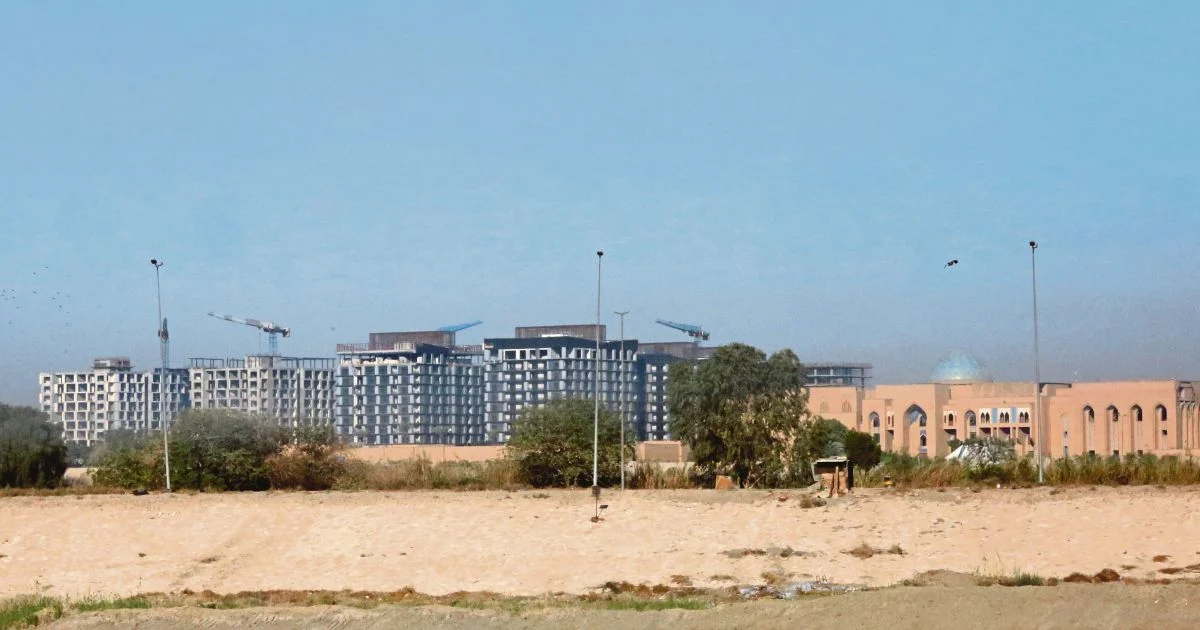
Iraqi security forces descended on Baghdad's heavily protected Green Zone in the early hours of Sunday, executing a series of coordinated raids that resulted in the detention of numerous government officials and members of parliament on suspicion of corruption-related offences. The operation, marked by a visible military presence throughout the diplomatic and administrative enclave, represents a significant escalation in Iraq's ongoing struggle to address systemic graft that has long plagued state institutions and undermined public confidence in governance.
The Green Zone, officially known as the International Zone, has long served as the nerve centre of Iraqi governance and sits as one of the world's most heavily fortified enclaves. The fact that security forces chose to conduct such high-profile operations within this guarded space underscores the seriousness with which authorities are now treating corruption allegations that previously might have been overlooked or handled with discretion. Such raids signal a departure from past practices where political connections often shielded officials from meaningful investigation or prosecution.
The specific identities and portfolios of those detained remain partly unclear, though the operation's scope indicates multiple ministries and parliamentary blocs were affected. This breadth suggests authorities are pursuing cases that cross traditional political and factional lines, challenging the entrenched networks of patronage that have characterised Iraqi politics since the post-2003 transition. The involvement of sitting MPs is particularly noteworthy, as parliamentarians have historically enjoyed certain protections and immunities that complicate efforts to hold them accountable.
For Southeast Asian observers, the developments in Iraq offer relevant lessons about institutional integrity and the mechanisms required to combat entrenched corruption. Malaysia and other regional countries facing similar challenges in elevating accountability standards may find instructive parallels in how Iraq attempts to navigate the political costs of anti-corruption enforcement. The challenge of pursuing high-ranking officials without triggering broader political destabilisation remains acute in societies where power is distributed among competing factions and communities.
The timing and scale of the operations suggest planning at the highest levels of Iraq's security establishment, likely with coordination from executive authorities. Such concentrated action requires not only logistical capability but also political will to override the usual protections that surround senior officials. Whether this reflects a sustained commitment or represents a periodic gesture toward reform remains a critical question for observers assessing Iraq's governance trajectory.
Corruption in Iraq has contributed to the deterioration of essential services, including healthcare, education, and infrastructure maintenance. Billions of dollars meant for reconstruction and development have allegedly disappeared through false contracts, inflated invoices, and embezzlement schemes. Citizens and independent analysts have repeatedly documented the connection between corrupt procurement practices and the collapse of public service delivery, making anti-corruption efforts directly relevant to Iraq's security and stability.
The deployment of security personnel throughout the Green Zone during these raids serves multiple functions beyond the immediate operational requirement of arresting suspects. It sends a visible signal to both the domestic population and international observers that a serious enforcement effort is underway. Simultaneously, it carries risks, as visible security operations can be perceived as politically motivated or heavy-handed if not accompanied by transparent legal processes and due process protections.
Iraq's legal system, weakened by decades of conflict and institutional decline, faces substantial challenges in prosecuting complex corruption cases. Investigation techniques, forensic accounting capabilities, and court procedures require strengthening to successfully convert arrests into convictions that withstand scrutiny. Previous high-profile corruption cases have sometimes resulted in acquittals or light sentences, eroding public confidence in the justice system's capacity to deliver accountability.
The parliamentary dimension of these raids deserves particular attention, as it highlights tension between Iraq's bicameral legislature and executive enforcement action. MPs may claim immunity from arrest on the grounds that only parliament can authorise such action, creating potential constitutional disputes. How security forces navigated these legal technicalities and what parliamentary factions have sanctioned these operations will shape the operation's political aftermath.
International partners, particularly the United States and European nations that have invested considerable diplomatic and military effort in Iraq, have repeatedly emphasised anti-corruption as essential to state stabilisation. The World Bank and IMF have similarly made governance improvements conditional to future financial assistance. These Sunday raids may reflect pressure from international actors and recognition that institutional credibility requires visible enforcement action against officials at all levels.
The broader implications for Iraq's post-conflict recovery agenda are substantial. Countries emerging from prolonged conflict typically experience elevated corruption as institutions weaken and informal networks replace formal procedures. However, failing to address graft during the early phases of reconstruction entrenches bad practices and makes later reform exponentially more difficult. Iraq's current moment presents an opportunity to reset institutional expectations, though the success of that effort remains uncertain given competing political pressures and factional interests.
Public reaction to these raids will prove revealing. If Iraqis perceive the operation as genuine reform rather than factional targeting, public support for similar actions may strengthen. Conversely, if the detainees are eventually released without charges or convicted under questionable proceedings, scepticism about institutional independence will deepen. Transparency in investigation methods and adherence to due process will determine whether this enforcement action contributes to long-term institutional improvement or merely reinforces cynicism about Iraqi governance.

