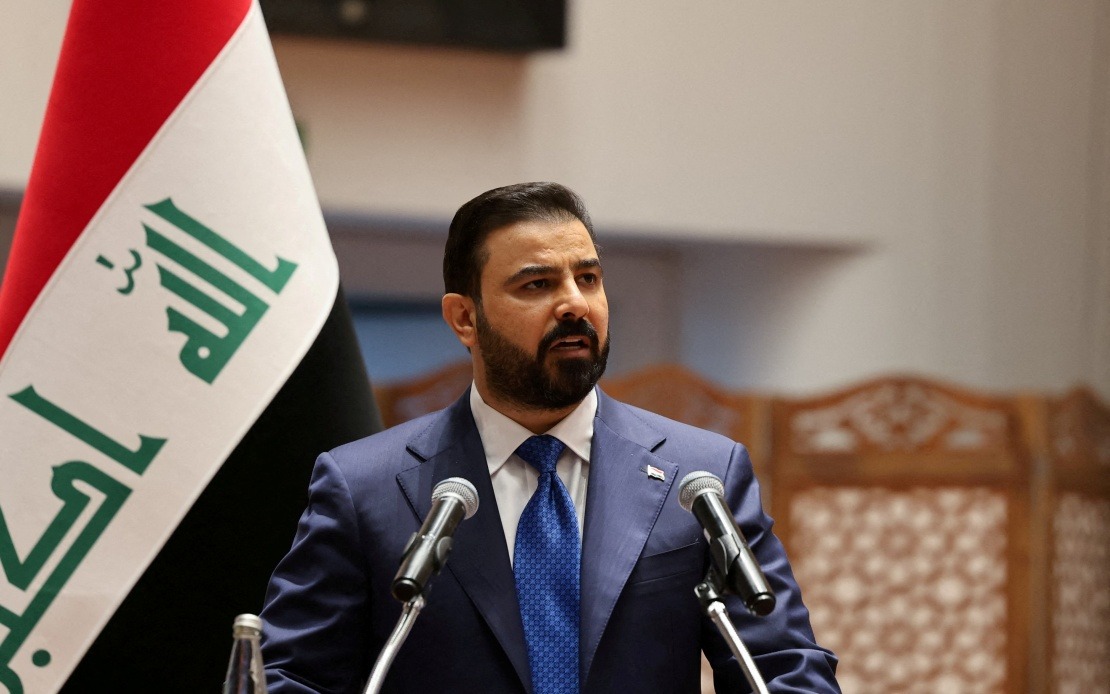
Iraq's government has signalled its unwavering commitment to the Organisation of the Petroleum Exporting Countries, with Prime Minister Ali Al-Zaidi dismissing any notion of withdrawal from the cartel. Speaking to Al-Hadath broadcaster on Thursday, Al-Zaidi emphasised that Baghdad's future lies within OPEC's institutional framework, though he coupled this affirmation with a pointed appeal for fairer treatment in the organisation's allocation system. The statement reflects Baghdad's delicate balancing act within a cartel where production quotas have become a contentious issue affecting member states' revenues and geopolitical standing.
The timing of Al-Zaidi's remarks carries particular significance given mounting tensions within OPEC over production discipline and quota fairness. Iraq's historically volatile relationship with the cartel—marked by past suspensions and disputes—makes the prime minister's reassurance noteworthy for regional oil markets and investor sentiment. By explicitly ruling out departure, Baghdad is signalling stability at a moment when other producers have questioned their membership value. The emphasis on "fair" quotas, however, suggests Iraqi frustration with its current allocation relative to its stated production capacity and regional prominence as one of the world's largest proven oil reserves holders.
Just over a month earlier, OPEC's decision-making body announced production adjustments for select member states in a move designed to fine-tune the cartel's output strategy. Kuwait received clearance to boost production by 16,000 barrels per day, raising its ceiling to 2.66 million bpd as of August. Oman, a smaller producer, was permitted an increase of 5,000 bpd to reach 836,000 bpd. Iraq, as the second-largest OPEC producer after Saudi Arabia, secured approval for a more substantial increment: 26,000 bpd, allowing it to lift output to 4.405 million bpd. While this adjustment appears generous on paper, Baghdad's underlying frustration suggests officials believe the quota still falls short of what Iraq's infrastructure and reserves justify.
The question of Iraq's true production capacity has become central to the quota debate. In June, Salim Al-Ruqabi, spokesman for Iraq's Oil Ministry, disclosed that OPEC+ had initiated a comprehensive assessment of Iraq's oil production capabilities with the explicit goal of reassessing the country's quotas. This technical review signals recognition within the cartel that previous allocations may not accurately reflect Iraq's potential output. Such assessments typically involve on-the-ground inspections and data verification, a process that can take months and reflects the cartel's attempt to balance production management with member satisfaction. For Iraq, this evaluation represents an opportunity to argue for higher quotas based on demonstrated capacity, though geopolitical considerations within OPEC often override purely technical factors.
Iraq's insistence on fair treatment carries weight given its recent economic recovery and investment in oil sector modernisation. Following years of conflict and instability, the country has undertaken significant efforts to rehabilitate and expand production infrastructure. American companies, European operators, and regional contractors have invested in Iraqi oilfields, gradually increasing output from devastated levels. These capacity improvements provide Baghdad with concrete evidence that it can and should produce more crude than current quotas permit. The fairness argument thus rests on tangible grounds: Iraq possesses the infrastructure to increase production, yet cartel quotas constrain this potential, limiting government revenues when the country desperately needs oil income for reconstruction and public services.
The broader context of OPEC+ dynamics cannot be overlooked. Since 2016, OPEC has coordinated with non-member Russia and other producers through the OPEC+ framework, creating complex voting and consensus requirements that sometimes disadvantage smaller players. Iraq has occasionally clashed with Saudi Arabia and the United Arab Emirates over quota distribution within this expanded grouping. Questions about Iraq's compliance with agreed quotas have also created friction; Baghdad has historically struggled to meet or exceed assigned production ceilings due to technical constraints and political instability. These compliance issues may inform why OPEC moves cautiously in raising Iraq's quotas, even as the country protests unfairness.
For Malaysian and Southeast Asian energy markets, Iraq's position within OPEC carries implications for regional oil prices and supply stability. Iraq's production represents a significant share of global crude supply, and any disruption or major shift in Baghdad's output affects prices regionally and globally. Malaysia, as an ASEAN oil exporter itself, watches OPEC deliberations closely, understanding that cartel decisions influence competitive dynamics for Southeast Asian producers. Should Iraq somehow exit OPEC or become deeply marginalised within the organisation, it could theoretically pursue independent production strategies, potentially flooding markets with additional crude and impacting margins for other exporters.
The economic stakes for Iraq's government are substantial. Oil revenues account for over 90 percent of Baghdad's fiscal income, making quota increases critical for funding the military campaign against ISIS remnants, infrastructure reconstruction, and salary payments to public employees. A higher quota could inject billions of additional dollars into Iraq's treasury annually. Conversely, if OPEC maintains current restrictions, Baghdad faces continued fiscal pressure and domestic political pressure from citizens demanding improved services and living standards. Al-Zaidi's public commitment to OPEC membership combined with his pushback on quotas reflects this tension: loyalty to the institution paired with demands for better treatment.
The technical assessment initiated by OPEC+ offers a potential pathway forward. If the review concludes that Iraq's production capacity genuinely exceeds current quotas, the cartel faces diplomatic pressure to adjust allocations accordingly. However, OPEC quota negotiations rarely follow purely technical logic. Saudi Arabia and others maintain that production discipline is essential for price stability, meaning that even capacity-justified increases may be resisted if cartel leadership believes markets cannot absorb additional output without price declines. Iraq's strategy appears to be building a technical case whilst maintaining OPEC membership, avoiding the isolation that would result from withdrawal while keeping pressure on the organisation to recognise its claims.

