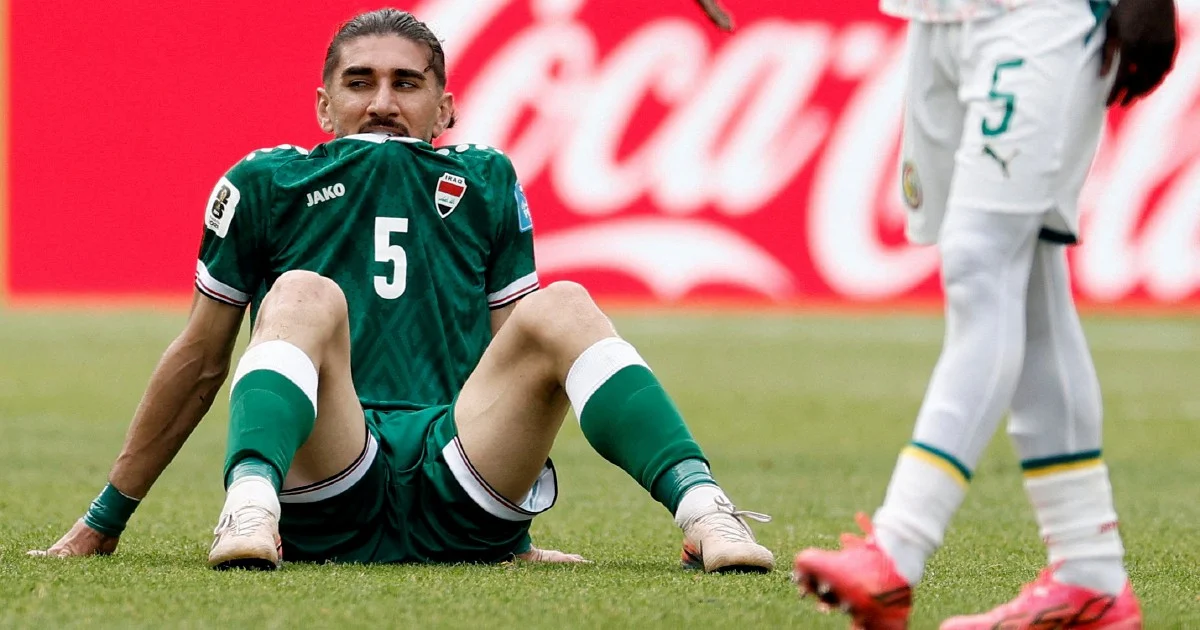
The Iraqi Olympic Committee announced on Monday that it intends to conduct a thorough examination of the national football team's recent World Cup campaign, which fell short of expectations, while simultaneously developing a strategic roadmap aimed at preventing similar underperformance in tournaments ahead.
The decision reflects growing frustration within Iraqi sports administration over the team's inability to compete effectively on the global stage. Such inquiries are typically undertaken when national teams fail to meet predetermined benchmarks or public expectations, serving both as an accountability mechanism and a diagnostic tool to identify systemic weaknesses within the organisation.
For Malaysian and Southeast Asian observers, Iraq's situation underscores the broader challenges facing developing football nations attempting to establish competitive programmes against established powerhouses. The region has witnessed similar soul-searching exercises among its own federations following disappointing international results, making the Iraqi case instructive for understanding how football governance structures grapple with performance deficits.
The investigation will likely scrutinise multiple dimensions of the team's preparation and execution, including tactical decisions during matches, squad selection criteria, coaching staff competence, training methodologies, and the quality of opposition faced in preparatory fixtures. Understanding these elements proves crucial for any meaningful reform programme, as surface-level changes rarely produce sustainable improvement in competitive outcomes.
Iraq's football administration faces particular constraints that differ markedly from those confronting wealthier regional rivals. The nation's sporting infrastructure has faced considerable disruption over recent decades, affecting the development pathway for young players and limiting the resources available for elite athlete preparation. These structural disadvantages must be acknowledged alongside questions of management capability when assessing World Cup performance.
The commitment to preventative measures suggests that Iraqi officials recognise the necessity of long-term structural change rather than reactive tinkering following each disappointing result. This perspective aligns with contemporary best practice in football development, where successful nations invest substantially in youth academies, coaching education, and systematic talent identification systems operating years before senior team selection becomes relevant.
The investigation's findings will likely lead to recommendations affecting coaching appointments, training centre facilities, player welfare provisions, and competition scheduling. Implementation of such recommendations depends critically on securing adequate financial resources and political will within Iraqi sports administration—challenges that have historically constrained ambitious reform efforts throughout the Middle East and South Asia.
Comparable investigations across Asia have occasionally produced substantive changes in organisational structure and personnel. However, success rates vary significantly depending on whether resulting recommendations receive genuine backing from decision-makers and adequate funding commitments. Iraq's ability to translate investigation findings into tangible improvements will partly determine whether this exercise represents meaningful reform or merely performative accountability.
The timing of this announcement matters within the broader context of international football calendars. Depending on Iraq's World Cup qualification path and the next tournament cycle, the investigation period provides a defined window for implementing changes before senior team preparation intensifies. This temporal aspect influences the practicality of various reform proposals and the sequencing of administrative decisions.
For regional football observers, Iraq's experience illustrates the continuing gap between aspiration and achievement in developing Asian football nations. While established powers like Japan and South Korea have built robust competitive programmes through sustained investment and institutional stability, emerging programmes struggle to maintain momentum across multiple tournament cycles. The Iraqi case demonstrates both the necessity and complexity of addressing such disparities through systematic analysis and targeted intervention.
The investigation also carries potential political dimensions, as football performance intersects with national pride and public expectations in Iraq as elsewhere. Officials must balance demands for accountability with the imperative of building stable institutions capable of generating medium-term improvement rather than seeking scapegoats for structural limitations. How effectively the committee navigates this balance will influence public confidence in the reform process itself.
Regional federation officials across Southeast Asia and the wider Asian confederation will likely monitor Iraq's investigation and subsequent reforms with considerable interest. The lessons derived from this process—both successes and failures—may inform how other developing football nations approach their own performance challenges and organisational restructuring efforts. Iraq's path forward thus carries implications extending well beyond its immediate borders.

